




The Balance Bundle
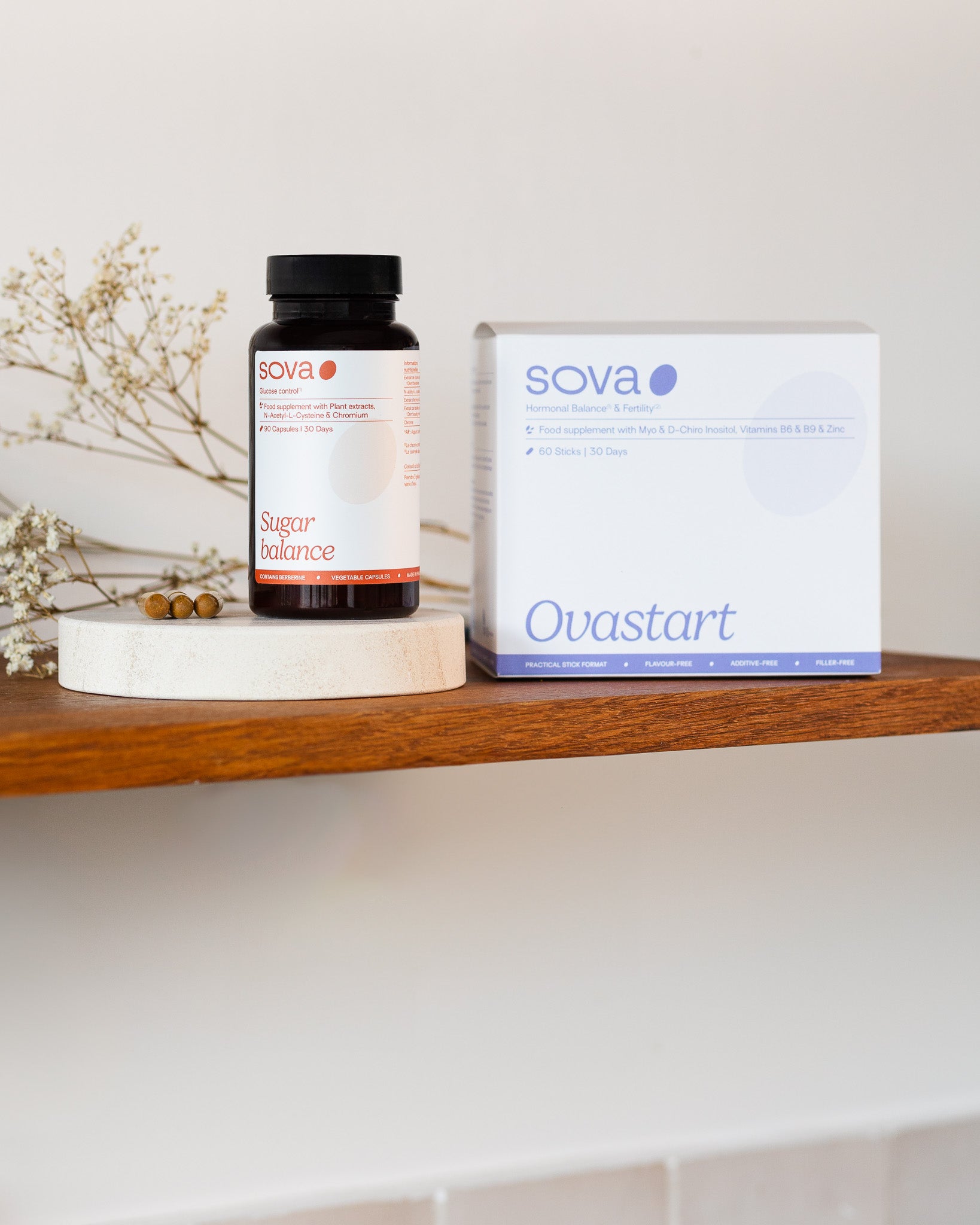
The Hormone Balance Supplements Built for PCOS - Two Products, One Complete System
From £53

Sugar Balance
Berberine Supplement UK - Blood Sugar, Insulin & Metabolic Support for Women with PCOS
From £26
Table of contents
If you have PCOS and have been trying to figure out which foods to avoid, you're not alone - the internet is full of contradictory advice. Is red meat bad for PCOS? Is chicken okay? Should you cut out entire food groups? The truth is, a PCOS-friendly diet isn't about eliminating foods completely - it's about understanding which ones drive inflammation and raise blood sugar, and cutting back on those in a way that's realistic and sustainable.
Sugar – A pro-inflammatory food

Yes, unfortunately, sugar is not our best ally. Wondering why? Let me explain:
-
Excess sugar can promote inflammation: Elevated blood sugar levels trigger substantial insulin secretion. High insulin levels in the blood promote inflammation which in turn may lead to an overproduction of androgen hormones, potentially worsening your symptoms.
-
Excess sugar can lead to diseases like type 2 diabetes: About 75% of women with PCOS have what’s called insulin resistance. In essence, the insulin secreted by the pancreas fails to do its job as it can’t enter cells to help bring in the excess sugar it carries from the blood. As a result, there’s always too much sugar in the blood, leading to the secretion of even more insulin in response. This promotes inflammation and the onset of type 2 diabetes.
💡 If insulin resistance is one of your key concerns, you may benefit from SOVA’s Sugar Balance, formulated with patented, clinically studied ingredients to support metabolic health.
But in practice, what do we do? Do we completely stop eating sugar?
The goal is not to ban sugar as a restrictive diet can lead to eating disorders.
Additionally, statistics show that women with polycystic ovary syndrome are more prone to such disorders. So no, we don’t recommend a strict ban on sugar. Always remember that your diet should remain a source of pleasure; you need to find a balance between tastes, lifestyle habits, and PCOS (don’t hesitate to seek help if you feel the need).
- Favour homemade foods! This way, you can control the ingredients, limit added sugars, and choose lower glycaemic index sugars like coconut sugar.
- Avoid eating foods on their own. For example, if you want to have a cookie for a snack, pair it with a skyr yogurt, which is protein rich; this will help control blood sugar spikes. Additionally, proteins have a significant satiating effect (goodbye cravings!). You can also opt for a hazelnut cookie. Hazelnuts are full of omega-3s, which help curve insulin secretion. Omega-3s are also powerful anti-inflammatories!
- Moderate sweets intake (candies, cakes, biscuits, pastries, dessert creams...). Such products should be eaten occasionally, not daily.
- Eat them after a fiber-rich meal. Fiber, found in vegetables, helps limit blood sugar spikes.
- Watch the number of fruits you eat: Fruits mostly contain fructose, which is sugar, so avoid consuming a fruit alone. Pair it with a yogurt or a handful of almonds, for example.
- Read the ingredients of the products you buy: Many industrial products contain hidden sugars.
- Cut down on sugary drinks like sodas and even fruit juices. Indeed, a glass of fruit juice contains a significant amount of sugars (fructose) and few fibers. So go for a whole fruit instead.
👉 For actionable strategies on curbing sugar cravings, read our guide on PCOS and cutting out sugar: 7 techniques to reduce your intake.
Animal-based dairy products (cow, goat, sheep...)
It’s advisable to limit (not eliminate) animal-based dairy products like cheese, milk, yogurt, skyr yogurt, cottage cheese, etc.
Why? Because these products contain many endocrine disruptors. Endocrine disruptors are molecules that mimic our hormones in the body, causing imbalances. Additionally, they may contain natural hormones, which can worsen your hormonal imbalance. So, I recommend limiting yourself to two servings per day.
If you want to eat some more, you can choose plant-based alternatives (almond milk, oat milk, etc.). Be cautious with coconut milk, though, as it’s high in saturated fats and can promote inflammation.
👉 Following a plant-based diet? Read our guide on how to adapt your diet if you are vegetarian or vegan.
Some meats: red meat, fatty meat, and processed meat
These meats contain long-chain saturated fatty acids that can worsen inflammation. It’s advisable to limit such meats to twice a week. Prefer lean meats like poultry instead.
However, red meat is beneficial for its iron content. So, I recommend having it once a week.
Gluten

Some studies suggest that gluten may trigger an immune response and therefore inflammation. Since we aim to limit inflammation, we should lean towards a gluten-poor diet.
But what exactly is gluten? Gluten is a protein found in various cereals: wheat, oats, spelt, barley, and rye, as well as all their derivatives (flour, bread, pasta, biscuits, etc.).
To cut down on gluten, you need to pay attention to the cereals you eat.
Nowadays, you can find many gluten-free products on the market, like gluten-free pasta. There are various kinds, including corn and rice pasta, buckwheat pasta, legume pasta (lentil pasta, chickpea pasta, split pea pasta, etc.). You can also find gluten-free oats, especially around organic stores or sections. As far as bread is concerned, some bakeries offer gluten-free options. But be cautious with those found in supermarkets, as they might have a poor ingredient list and contain many additives. You can also find gluten-free crackers: buckwheat flour crackers, chestnut flour crackers, chickpea flour crackers, etc. For flour, you can find gluten-free flour mixes. They are easier to use than individual gluten-free flours.
Some starchy foods are naturally gluten-free, so you should prioritize these. This includes rice, potatoes, corn, sweet potatoes, and legumes (lentils, split peas, chickpeas, etc.).
👉 Looking for delicious, hormone-balancing meal ideas? Try our 22 easy PCOS lunch recipes.
Other foods to limit
-
Alcohol is obviously very inflammatory. Therefore, limit your consumption of alcoholic beverages. You could, for example, save alcohol for special occasions or weekends. Be cautious with very sweet alcohols like cocktails or beers.
-
Industrial products like cakes, ready-made meals (ravioli, cordon bleu, lasagna, etc.) or industrial pastries(puff pastry, pizza dough, etc.) should be used sparsely. It’s crucial to check their ingredients with, for example, dedicated apps like Yuka. You can also ensure that the ingredients used are those you would use to make the dish yourself. For pastries, you may prefer to get them from a bakery as they’ll be much better than industrial ones! Otherwise, always favour homemade foods and short ingredient lists.
-
Hot spices like pepper, chili, or various curries can promote what’s called intestinal permeability,transforming the intestinal wall into some kind of sieve. The problem is that the intestinal wall acts as a crucial filter. If it acts like a “sieve,” it will let through unwanted molecules which may trigger an immune response from your body and thus promote inflammation.
Conclusion: no food is forbidden
To conclude, remember that the key word is BALANCE!
There’s no need to eliminate or ban any food category. Doing so could lead to a poor relationship with food, frustration, and eating disorders.
Food should always be a source of PLEASURE.
So, don’t take on a restrictive diet, don’t frustrate yourself, don’t eliminate food categories you love, adjust your diet step by step, be patient with yourself and your body, and don’t try to do everything at once all the while hoping for a miracle.
Above all, don’t hesitate to seek support during this dietary transition if needs be. Some professionals specialize in PCOS to help you, so don’t be ashamed to ask for help.
🧡 Want help identifying your symptoms and finding the right support? Take the SOVA quiz and we’ll guide you to the most suitable solution—based on science, not guesswork.
- Insulin resistance : A condition common in PCOS where cells respond poorly to insulin, leading to higher blood sugar and insulin levels. It can worsen androgen excess and symptoms such as weight gain and irregular periods.
- Low glycaemic index (GI) foods : Foods that cause a slower rise in blood sugar. Low-GI foods are generally recommended for PCOS to help stabilise insulin levels.
- Chronic inflammation : A low-grade, long-term inflammatory state often present in PCOS. Certain foods can worsen inflammation and contribute to metabolic and hormonal imbalance.
- Androgens : Hormones such as testosterone that are naturally present in women. In PCOS, excess androgens can cause symptoms like acne, hair loss, and excessive hair growth.
- Ultra-processed foods : Industrial foods high in refined sugars, additives, and poor-quality fats. They may worsen insulin resistance and inflammation in PCOS.
- Endocrine disruptors : Substances found in some food packaging and processed foods that can interfere with hormone function and potentially aggravate PCOS symptoms.
- Metformin : A medication often prescribed to women with PCOS to improve insulin sensitivity. Diet plays an important role alongside metformin treatment.
Over 50,000 women have already adopted our routines, rating us an excellent 4.7/5 average (from 3,300+ reviews). Our supplements are formulated in French laboratories using clean, carefully sourced ingredients, with a maximum of patented active ingredients proven for their effectiveness.
- Founded by women with PCOS, we understand the reality of hormonal disorders.
- Clinically studied: High-quality ingredients, including patented forms like Quatrefolic® and an optimal Myo-/D-Chiro Inositol ratio.
- Holistic support: Formulated for hormonal balance, metabolic health, inflammation, mood, and cycle regulation.
- Science-led formulas: Transparent ingredients with absolutely no unnecessary additives.
The Hormone Balance Supplements Built for PCOS - Two Products, One Complete System
Berberine Supplement UK - Blood Sugar, Insulin & Metabolic Support for Women with PCOS