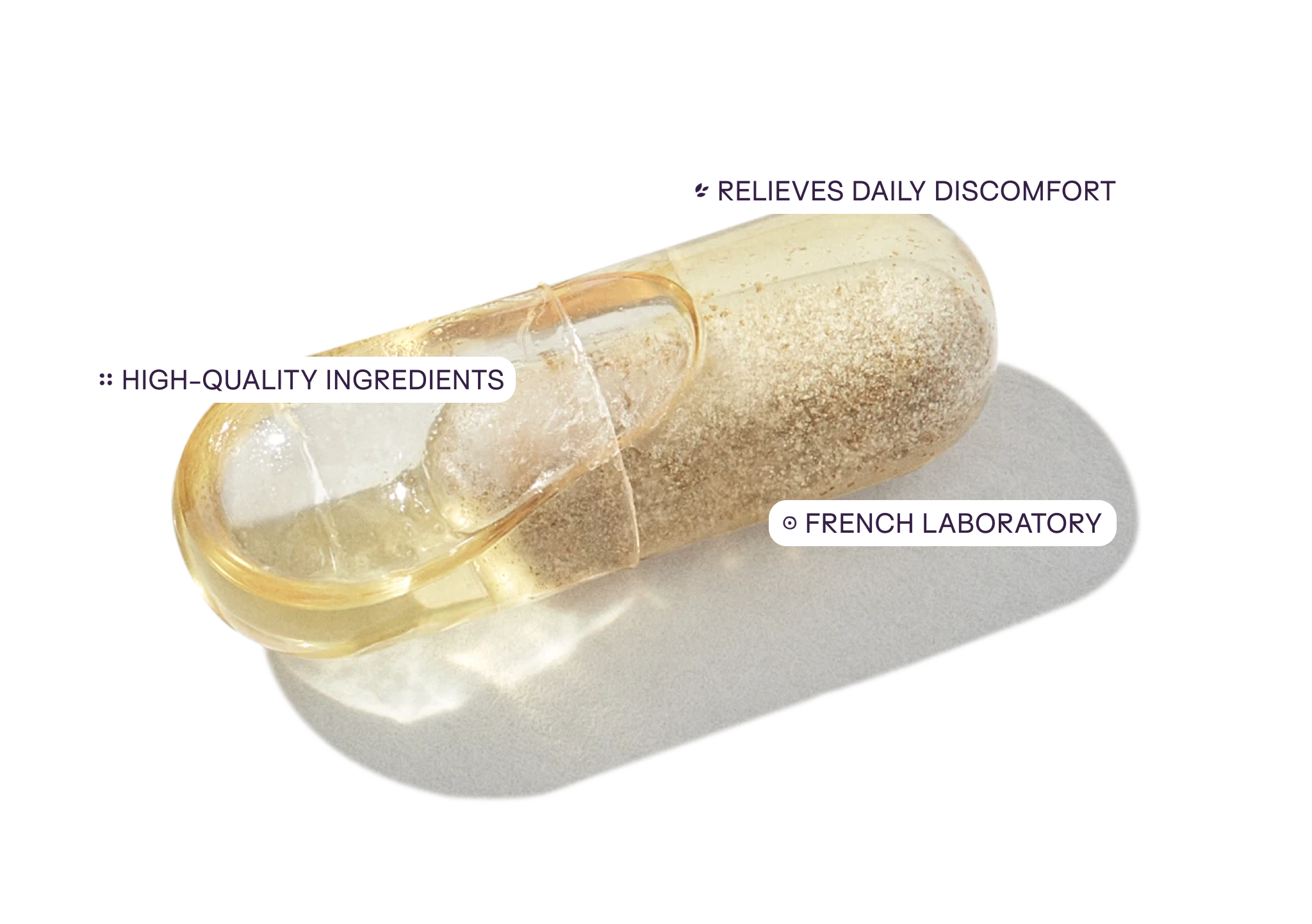
Hormone balance supplements are formulas designed to support the body's endocrine system - the network of glands and hormones that regulates your cycle, mood, metabolism, and fertility. They don't replace hormones or override the body's natural processes. What they do is address the nutritional, metabolic, and inflammatory imbalances that can quietly disrupt hormonal function. For many women, the evidence is clear: targeted supplementation, as part of a broader lifestyle approach, can make a meaningful difference.
Why Hormonal Imbalance Is So Common - and So Underdiagnosed
Hormonal imbalance isn't a single condition. It's an umbrella term for a wide range of disruptions across the endocrine system - from elevated androgens in PCOS, to oestrogen dominance in the luteal phase, to cortisol dysregulation driven by chronic stress. What makes it so difficult to identify is that the symptoms - fatigue, irregular periods, skin changes, mood swings, weight shifts - are easy to attribute to other causes or simply dismiss as "just how you are."
PCOS alone affects roughly 1 in 10 women of reproductive age and remains significantly underdiagnosed, in part because its presentation varies so widely between individuals (1). Thyroid disorders, PMS, perimenopause, and post-pill hormonal recalibration all create their own patterns of disruption. The common thread across many of these conditions is a set of underlying mechanisms - insulin resistance, chronic low-grade inflammation, micronutrient deficiency, and HPA axis dysregulation - that targeted nutrition can genuinely support.
The Key Supplements for Hormonal Health - and the Science Behind Them
Inositol for PCOS and Insulin Resistance
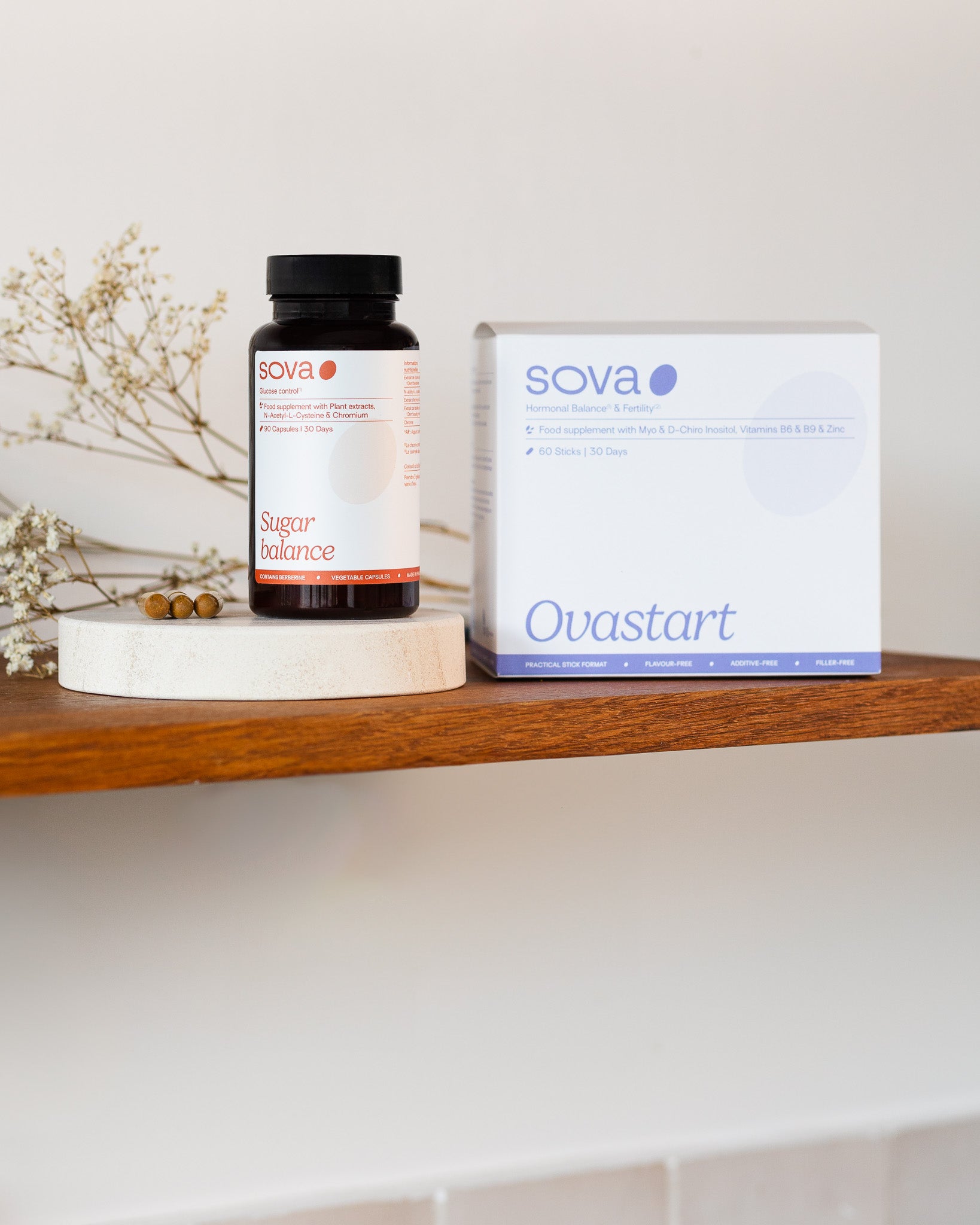
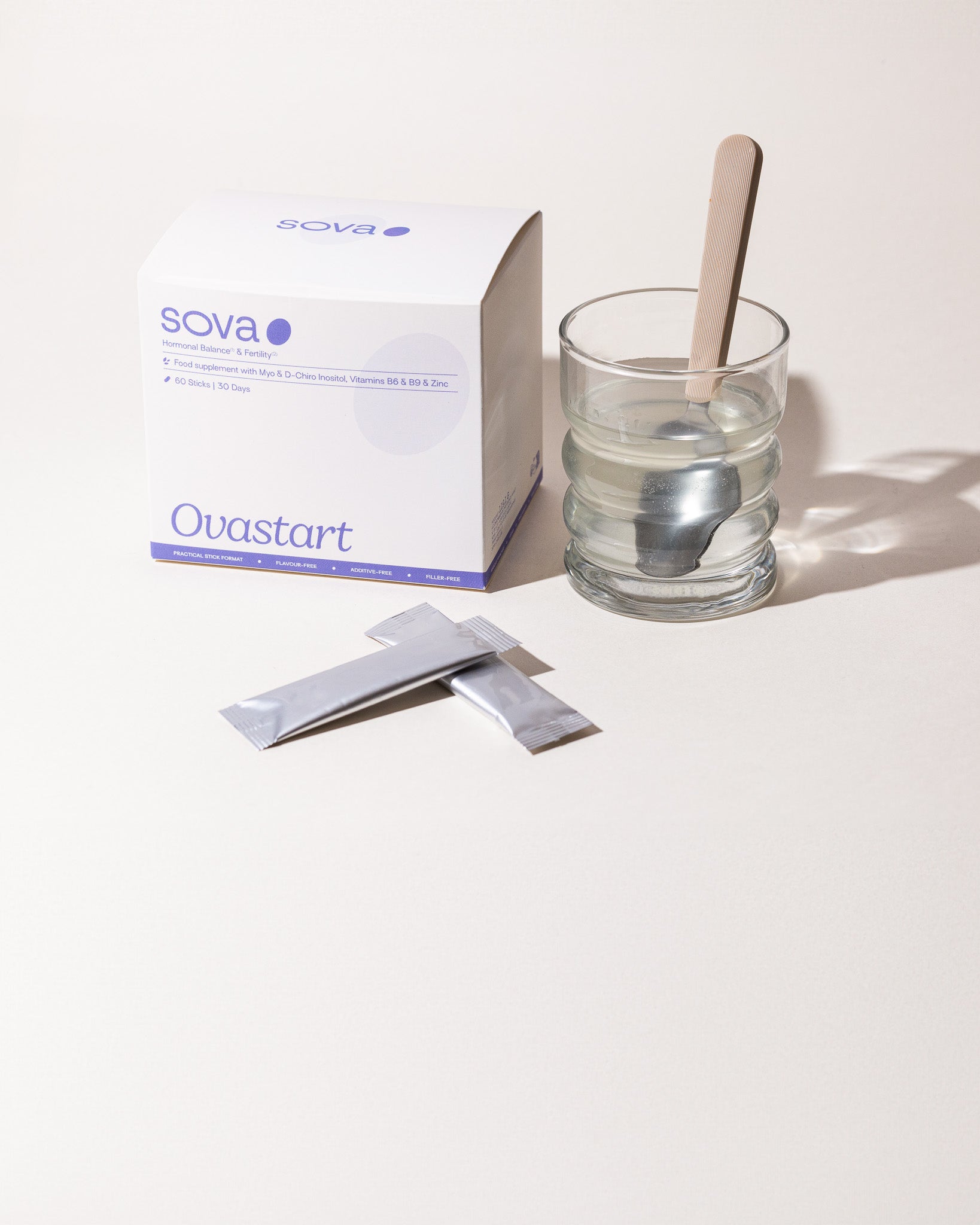
Inositol - particularly the combination of myo-inositol and D-chiro-inositol - is one of the most studied supplements for female hormonal health. It functions as a secondary messenger in insulin signalling: when insulin sensitivity is impaired (as is common in PCOS), the downstream effects disrupt ovulation, elevate androgens, and create cycle irregularity. Research has shown that inositol supplementation can improve insulin sensitivity, support more regular ovulation, and reduce elevated testosterone in women with PCOS (2). It's not a hormone, but it helps recreate the metabolic environment hormones need to function normally. Ovastart (https://sova-care.co.uk/products/complex-myo-inositol-d-chiro-inositol) is SOVA's dedicated inositol formula, formulated for women navigating PCOS and cycle irregularity.
Magnesium: The Foundation Many Women Are Missing
Magnesium is involved in over 300 enzymatic reactions - several of which are directly relevant to hormonal health. It supports the liver's ability to metabolise and clear excess oestrogen, plays a role in regulating cortisol output from the adrenal glands, and has been shown to reduce PMS severity, particularly mood-related symptoms and cramping (3). Research also links adequate magnesium intake to improved insulin sensitivity, which is relevant not only for PCOS but for the broader picture of hormonal regulation (4). Deficiency is more common than most people realise, particularly in women under chronic stress, which depletes magnesium rapidly. SOVA's Magnesium Bisglycinate (https://sova-care.co.uk/products/magnesium-bisglycinate) uses a highly bioavailable form to support absorption and efficacy.
Omega-3 Fatty Acids and Inflammation
Chronic low-grade inflammation is a driver - and a consequence - of many hormonal imbalances, from PCOS to endometriosis to severe PMS. Omega-3 fatty acids (EPA and DHA) help modulate the production of prostaglandins, signalling molecules that influence inflammation and pain. Studies suggest that a higher dietary omega-3 to omega-6 ratio is associated with reduced inflammatory markers and improved hormonal outcomes in women with PCOS (5). They're not a standalone intervention, but as part of a targeted supplement routine they create a more favourable environment for hormonal balance. Discover SOVA's Omega-3 (https://sova-care.co.uk/products/omega-3).
Blood Sugar Balance and the Hormonal Cascade
Few things destabilise hormones as quickly or as consistently as blood sugar dysregulation. When blood glucose spikes repeatedly - whether from diet, stress, or poor sleep - insulin rises in response. Over time, chronically elevated insulin elevates androgens, suppresses sex hormone-binding globulin, and disrupts the hormonal signalling that drives ovulation. Supporting blood sugar stability is therefore one of the most direct levers for improving hormonal health. Sugar Balance (https://sova-care.co.uk/products/sugar-balance) is SOVA's formula designed to support healthy glucose metabolism, and it works well alongside Ovastart for women managing PCOS. The two together form The Balance Bundle (https://sova-care.co.uk/products/balance-pack-ovastart-sugarbalance).
Building a Supplement Routine That Actually Works
The most common mistake with hormone balance supplements is expecting rapid, dramatic results from a single product. Hormonal health is systemic - it reflects months or years of cumulative inputs. Supplements work by addressing specific nutritional or metabolic deficiencies, not by overriding biology. This means consistency matters enormously: most women notice meaningful changes in energy and mood within four to six weeks, while cycle-level changes typically require two to three months of sustained supplementation.
Timing and combination also matter. Inositol is best taken split across two daily doses to maintain steady plasma levels. Magnesium is best taken in the evening, when its relaxing effect on the nervous system is most useful. Omega-3s are fat-soluble and should be taken with food. Stacking supplements without a clear understanding of why you're taking them leads to wasted money and muddled results - start with the mechanism that's most relevant to your symptoms.
What Diet and Lifestyle Can - and Can't - Do
Supplements work best as part of a broader approach, not instead of one. Diet has a direct influence on the hormonal environment: diets rich in fibre support the clearance of excess oestrogen via the gut; adequate protein provides the amino acid precursors for hormone synthesis; reducing refined carbohydrates lowers the insulin load on the body (6). The impact of sleep is often underestimated - even partial sleep deprivation raises cortisol, disrupts glucose regulation, and suppresses the hormonal axis that governs ovulation (7).
Chronic stress is one of the most potent disruptors of hormonal health. Sustained elevation of cortisol down-regulates reproductive hormones - a biological prioritisation of survival over reproduction that made sense in an ancestral context but creates real problems in modern life. Managing stress is therefore not optional when addressing hormonal imbalance: it's central to it. Movement, outdoor time, and deliberate rest are all evidence-supported ways to lower cortisol and support hormonal recovery.
That said, diet and lifestyle alone don't always close the gap - particularly when nutrient deficiencies are longstanding, when the hormonal disruption has a structural cause like PCOS, or when the demands of daily life make ideal habits difficult to sustain. This is exactly where targeted supplementation earns its place: not as a shortcut, but as a practical tool that supports what you're already doing.
If you're not sure which supplements are right for your specific pattern of symptoms, SOVA's free diagnostic quiz (https://sova-care.co.uk/pages/diagnostic) can help you find a starting point.
Sources
- Bozdag G et al. (2016). The prevalence and phenotypic features of polycystic ovary syndrome: a systematic review and meta-analysis. Human Reproduction, 31(12), 2841-2855. DOI: 10.1093/humrep/dew218
- Unfer V et al. (2017). Myo-inositol effects in women with PCOS: a meta-analysis of randomized controlled trials. Endocrine Connections, 6(8), 647-658. DOI: 10.1530/EC-17-0243
- Boyle NB, Lawton C, Dye L (2017). The effects of magnesium supplementation on subjective anxiety and stress - a systematic review. Nutrients, 9(5), 429. DOI: 10.3390/nu9050429
- Guerrero-Romero F, Rodríguez-Morán M (2011). Magnesium improves the beta-cell function to compensate variation of insulin sensitivity: double-blind, randomized clinical trial. European Journal of Clinical Investigation, 41(4), 405-410. DOI: 10.1111/j.1365-2362.2010.02422.x
- Vargas ML et al. (2011). Dietary omega-3 fatty acids and PCOS: a systematic review. Reproductive Biology and Endocrinology, 9, 68. DOI: 10.1186/1477-7827-9-68
- Barrea L et al. (2019). Adherence to the Mediterranean diet, dietary patterns and body composition in women with polycystic ovary syndrome. Nutrients, 11(10), 2278. DOI: 10.3390/nu11102278
- Leproult R, Van Cauter E (2010). Role of sleep and sleep loss in hormonal release and metabolism. Endocrine Development, 17, 11-21. DOI: 10.1159/000262524