What are the best supplements for hormonal acne?
The most evidence-backed supplements for hormonal acne are zinc (lower in acne sufferers and shown to reduce inflammatory lesions), myo-inositol (helps regulate androgens linked to PCOS-related breakouts), omega 3 (anti-inflammatory, often deficient in acne patients), vitamin D (frequently low in those with inflammatory acne) and probiotics (support the gut-skin axis). Together, they tackle inflammation, sebum production and hormonal imbalances at the root.
Why does hormonal acne happen, and why won't it just go away?
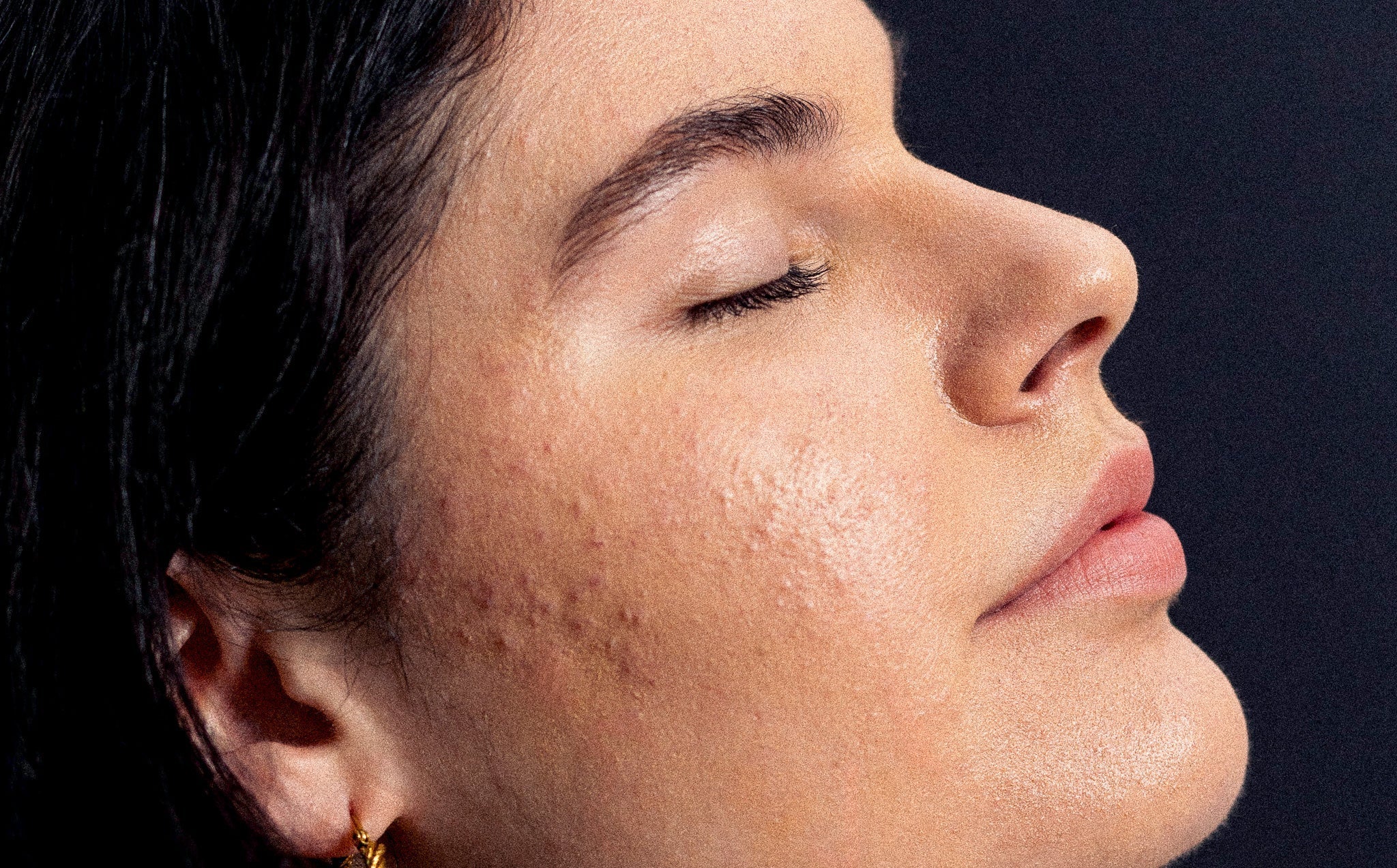
If you've ever woken up with the same painful spots flaring along your jawline or chin right before your period, you already know hormonal acne isn't your average breakout. It's deep, cystic, cyclical and stubbornly resistant to the cleansers that worked when you were a teen.
Hormonal acne is driven by what's happening inside your body, not just on your skin. Fluctuations in oestrogen, progesterone and androgens (like testosterone and DHEA) can ramp up sebum production, clog pores and trigger inflammation in the pilosebaceous unit, the tiny structure where hair and oil glands meet (1). Add insulin resistance, chronic stress or a condition like PCOS, and the picture becomes even more complex.
This is why topical treatments often fall short on their own. To get to the root of hormonal acne, you need to support your skin from the inside.
Which supplements actually help hormonal acne?
Not all supplements are created equal. Some have decades of clinical research behind them, others are mostly hype. Here are the ones with the strongest scientific evidence for hormonal and inflammatory acne.
Zinc: the mineral your skin is probably missing
Zinc is one of the most studied minerals for acne, and for good reason. Women with acne consistently show lower zinc levels than those with clear skin, and supplementation has been shown to significantly reduce the number of inflammatory papules (2). Zinc helps regulate sebum production, calms inflammation and supports skin healing. It also plays a role in modulating the immune response inside breakouts.
If you struggle with painful, red, inflamed spots (the ones that lurk under the skin for days), zinc is often a smart starting point.
One important note: long-term zinc supplementation (beyond a few weeks at higher doses) can interfere with copper absorption in the gut, leading to a secondary copper deficiency. If you plan to take zinc continuously, it's wise to either choose a formula that includes a small amount of copper, take breaks every few weeks, or have your levels checked with your healthcare practitioner.
Myo-inositol: the hormone balancer, especially for PCOS-related acne
If your breakouts are tied to insulin resistance or excess androgens, myo-inositol is one of the most exciting compounds science has to offer. Studies show that myo-inositol can lower circulating androgens (including testosterone and DHEAS) and visibly improve acne and hirsutism, even in women who don't have officially "abnormal" hormone levels (3, 4).
It works by improving insulin sensitivity, which in turn calms the overproduction of male-pattern hormones that drive jawline acne, oily skin and unwanted hair growth. For women with PCOS, the dual combo of myo-inositol and D-chiro-inositol is considered the gold standard.
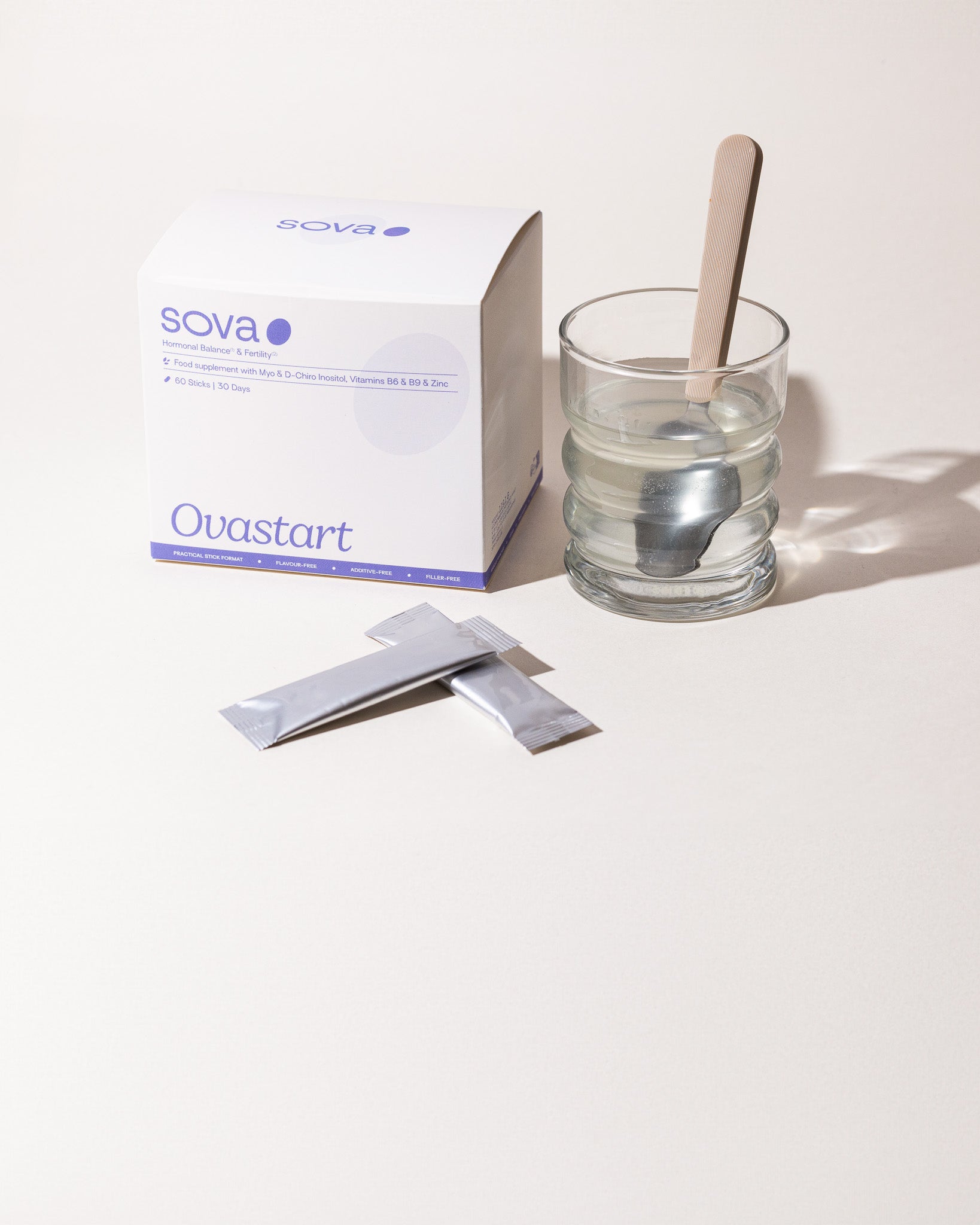
Want to dive deeper? Our complete guide to myo-inositol breaks down exactly how it works. You can also explore OvaStart, our flagship myo-inositol & D-chiro-inositol formula.
Omega 3: the anti-inflammatory essential
Most people are walking around with an omega 3 deficit, and women with acne are no exception. In fact, research found that 96% of acne patients had omega 3 levels outside the recommended range (5). That matters, because EPA and DHA (the two key omega 3 fatty acids) are powerful anti-inflammatory agents.
Clinical trials show that 10 to 16 weeks of omega 3 supplementation can significantly reduce both inflammatory and non-inflammatory acne lesions (6). They also help regulate prostaglandins, the inflammatory messengers also involved in painful periods.
You'll find a high-quality, third-party tested option in our Omega 3, or bundled with OvaStart for hormonal and skin support in the OvaStart & Omega 3 bundle.
Vitamin D: the often-overlooked skin ally
Nearly half of acne patients are deficient in vitamin D, compared to around 22% of those with clear skin (7). And the lower the vitamin D level, the more severe the inflammatory acne tends to be. Supplementing with vitamin D in deficient patients has been shown to significantly reduce inflammatory lesions after just 8 weeks.
Vitamin D plays a key role in immune regulation and helps calm the chronic inflammation that fuels hormonal breakouts. If you live in the UK, where sunlight is in short supply for most of the year, this is one to take seriously.
Probiotics: the gut-skin connection
You've heard about the gut-skin axis, but here's why it matters for acne: the gut microbiome directly influences systemic inflammation, immune responses and even sebum production. Recent randomised controlled trials show that oral probiotics can significantly improve the global severity of acne and reduce non-inflammatory lesions compared to placebo (8). They appear to work by modulating the gut-skin axis through a reduction in systemic inflammatory markers like IL-1α and TNF-α, which is particularly relevant for women with PCOS, where low-grade chronic inflammation is part of the underlying picture.
If you're also dealing with bloating, digestive discomfort or IBS-type symptoms alongside your acne, probiotics could be a game-changer.
Spearmint tea: the natural anti-androgen
If your acne flares along the jawline and chin (a classic sign of androgen excess), spearmint tea is worth a closer look. Clinical trials show that drinking two cups of spearmint (Mentha spicata) tea daily can significantly lower free testosterone levels in women with hormonal imbalances, with visible effects on acne and hirsutism after just one month (9). It's not a replacement for the foundational supplements above, but a beautiful addition to your daily ritual, especially for women with PCOS-related breakouts.
Magnesium: stress, sleep and the right form matter
Stress is one of the most underestimated triggers of hormonal acne. When cortisol stays elevated, it disrupts your sex hormones and ramps up inflammation. Magnesium helps regulate the stress response, supports better sleep and contributes to hormonal balance.
But the form of magnesium really matters. Magnesium oxide, the cheapest and most common form, is poorly absorbed and known for its laxative effect (which is exactly what you don't want for daily use). Magnesium bisglycinate, by contrast, is bound to glycine, which makes it highly bioavailable, gentle on the digestive system and particularly calming for the nervous system. That's why we chose this form for our Magnesium Bisglycinate.
How long before you see results?
The honest answer is: it depends. Most clinical trials on supplements for acne run between 8 and 16 weeks, because that's how long it takes for skin cell turnover, hormonal recalibration and inflammation to meaningfully shift.
What you can expect:
- The first 4 weeks: less inflammation, fewer painful cystic spots
- Weeks 8 to 12: noticeable improvement in lesion count and skin texture
- 3 to 6 months: hormonal rebalancing fully kicks in, and breakouts become much less frequent
Consistency is everything. Supplements are a long-term investment in your hormonal and skin health.
How to choose the right combination for you
Hormonal acne looks different for everyone, which is why there's no one-size-fits-all answer. A few starting points:
If you have PCOS or suspect insulin resistance: myo-inositol (or the combined inositols) should be your foundation, alongside omega 3 for inflammation. The Balance Bundle combines OvaStart with Sugar Balance for full metabolic and hormonal support.
If your acne is mainly inflammatory and red: prioritise zinc, omega 3 and vitamin D.
If you have digestive symptoms alongside acne: probiotics combined with omega 3 work beautifully together.
If stress and sleep are major triggers: magnesium becomes essential, ideally paired with the foundational supplements above.
If you're not sure where to start, our full range is designed to be combined intelligently.
Beyond supplements: the lifestyle factors that matter
Supplements work best when paired with consistent foundations. A diet lower in refined sugar and ultra-processed foods, regular movement, good sleep and stress management all play their part in calming the hormonal cascade behind acne. None of this has to be perfect. Small, consistent shifts are what move the needle, both for your skin and your hormones.
Sources
- Ju, Q., Tao, T., Hu, T., Karadağ, A. S., Al-Khuzaei, S., & Chen, W. (2017). Sex hormones and acne. Clinics in Dermatology, 35(2), 130-137. See also: Zouboulis, C. C. et al. (2022). Journal der Deutschen Dermatologischen Gesellschaft. https://doi.org/10.1111/ddg.14454
- Yee, B. E., Richards, P., Sui, J. Y., & Marsch, A. F. (2020). Serum zinc levels and efficacy of zinc treatment in acne vulgaris: A systematic review and meta-analysis. Dermatologic Therapy, 33(6), e14252. https://doi.org/10.1111/dth.14252 Note: long-term zinc supplementation requires monitoring of copper status.
- Fruzzetti, F., Capozzi, A., Canu, A., & Lello, S. (2017). Skin appendages alteration in young women with polycystic ovary syndrome (PCOS): effect of a combination of myo-inositol and alpha-lipoic acid. Gynecological Endocrinology. PMID: 29042031.
- Costantino, D., Minozzi, G., Minozzi, E., & Guaraldi, C. (2019). Efficacy and Safety of Tracnil™ Administration in Patients with Dermatological Manifestations of PCOS: An Open-Label Single-Arm Study. Dermatology Research and Practice, 2019, 3382807. https://doi.org/10.1155/2019/3382807
- Guertler, A. et al. (2024). Deficit of Omega-3 Fatty Acids in Acne Patients—A Cross-Sectional Pilot Study in a German Cohort. Life, 14(4), 519. https://doi.org/10.3390/life14040519
- Jung, J. Y., Kwon, H. H., Hong, J. S., Yoon, J. Y., Park, M. S., Jang, M. Y., & Suh, D. H. (2014). Effect of Dietary Supplementation with Omega-3 Fatty Acid and Gamma-linolenic Acid on Acne Vulgaris: A Randomised, Double-blind, Controlled Trial. Acta Dermato-Venereologica, 94(5), 521-525. https://doi.org/10.2340/00015555-1802
- Lim, S. K., Ha, J. M., Lee, Y. H., Lee, Y., Seo, Y. J., Kim, C. D., Lee, J. H., & Im, M. (2016). Comparison of Vitamin D Levels in Patients with and without Acne: A Case-Control Study Combined with a Randomized Controlled Trial. PLoS One, 11(8), e0161162. https://doi.org/10.1371/journal.pone.0161162
- Rinaldi, F., Marotta, L., Mascolo, A., Amoruso, A., Pane, M., Giuliani, G., & Pinto, D. (2024). A Randomized Clinical Trial to Evaluate the Efficacy of an Oral Probiotic in Acne Vulgaris. Acta Dermato-Venereologica, 104, adv33206. https://doi.org/10.2340/actadv.v104.33206
- Grant, P. (2010). Spearmint herbal tea has significant anti-androgen effects in polycystic ovarian syndrome. A randomized controlled trial. Phytotherapy Research, 24(2), 186-188. https://doi.org/10.1002/ptr.2900