Fertility supplements are not a shortcut to pregnancy - but for many women, they're a genuinely useful tool for optimising the conditions in which conception can happen. The right nutrients, taken consistently over the right timeframe, can support egg quality, restore ovulation, improve hormonal balance, and reduce the inflammation that quietly disrupts reproductive function. This guide explains what the evidence actually shows, which supplements are worth prioritising, and how to build a routine that works for your situation.
Why Fertility Is About More Than Timing
When conception takes longer than expected, the instinct is often to focus on timing. But for many women, the difficulty isn't about when they're trying - it's about the hormonal and metabolic environment in which conception needs to happen.
Ovulation is the cornerstone of natural fertility, and it's more fragile than most people realise. Insulin resistance, elevated androgens, chronic inflammation, nutrient deficiencies, and chronic stress can all suppress or disrupt the ovulatory signal. PCOS - which affects roughly 1 in 10 women of reproductive age - is the most common hormonal cause of ovulatory dysfunction, but it's far from the only one (1). Thyroid imbalances, elevated prolactin, poor luteal phase support, and post-pill hormonal recalibration can all play a role.
This is where targeted nutrition and supplementation make a real difference. Not by overriding biology, but by correcting the specific imbalances that are getting in the way.
The Supplements With the Strongest Evidence for Female Fertility
Inositol for PCOS and Ovulatory Dysfunction
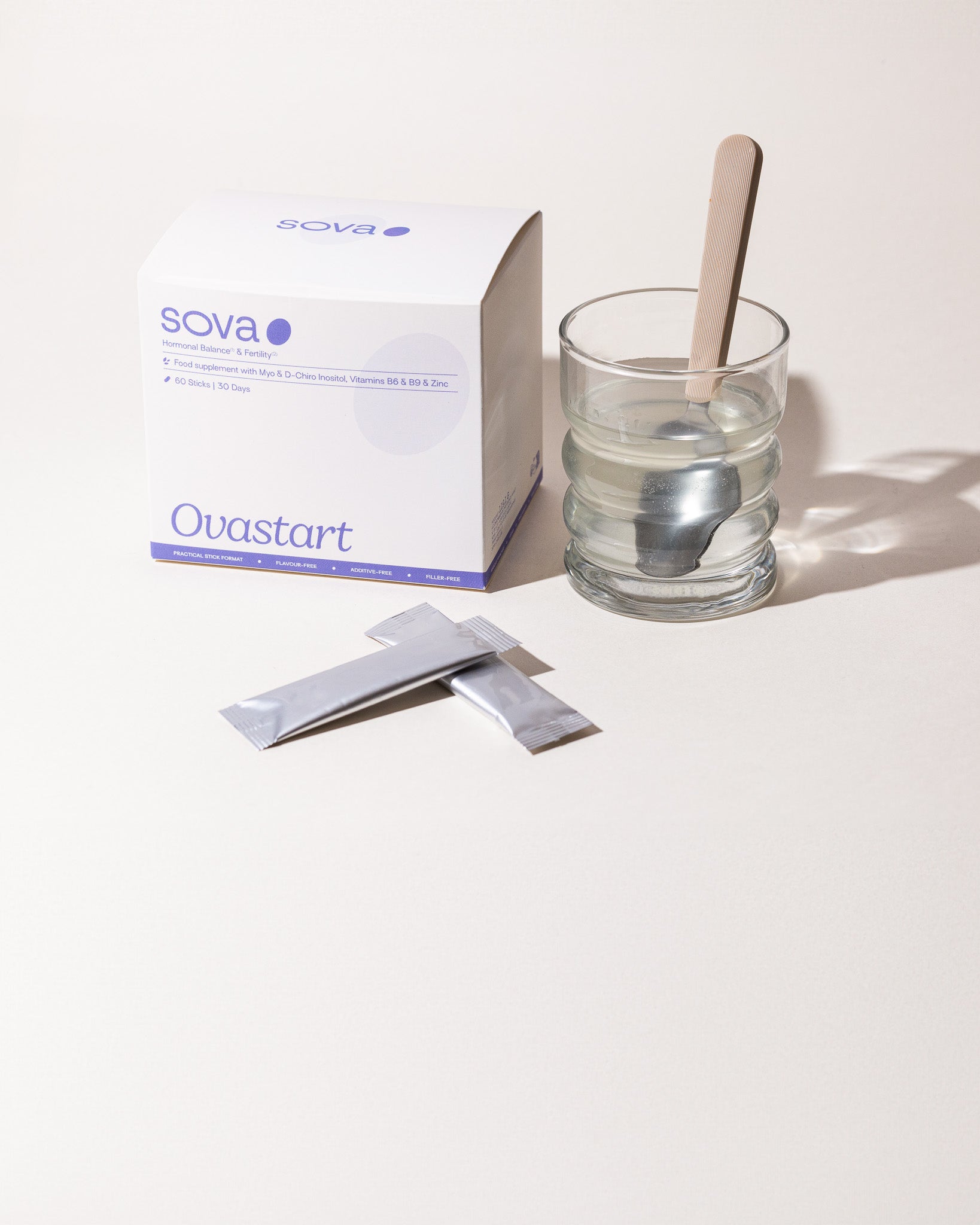
For women with PCOS or insulin resistance, inositol is one of the most researched and clinically supported fertility supplements available. The combination of myo-inositol and D-chiro-inositol works by restoring insulin signalling, which has a direct effect on androgen production, ovulation regularity, and egg quality. Clinical studies have shown meaningful improvements in cycle regularity, reductions in elevated testosterone, and better embryo quality in women undergoing IVF (2). It's not a hormone - it works by improving the metabolic environment that hormones depend on to function normally. Ovastart is SOVA's inositol formula, combining myo-inositol and D-chiro-inositol with zinc to support both metabolic and hormonal balance.
Folate: The Non-Negotiable Foundation
Folate - ideally in its active form, methylfolate - is the one supplement that has near-universal scientific and clinical consensus behind it for preconception use. It supports healthy cell division from the earliest stages of embryo development, helps prevent neural tube defects, and plays a role in DNA methylation, which affects how genes are expressed in the developing embryo. The NHS recommends 400mcg of folic acid daily for anyone trying to conceive. For women with the MTHFR gene variant, which impairs folic acid conversion, the methylated form is particularly important.
Omega-3 Fatty Acids and Egg Quality
Omega-3 fatty acids - EPA and DHA - support fertility through several overlapping mechanisms. They reduce systemic inflammation, which can otherwise interfere with implantation and disrupt the hormonal environment. They also influence prostaglandin production, which affects uterine receptivity and menstrual regularity. Research suggests that higher omega-3 intake is associated with improved egg quality and better outcomes in assisted reproduction (3). For women with endometriosis or PCOS - both of which have a significant inflammatory component - omega-3s are particularly relevant. Discover SOVA's Omega-3.
Magnesium and the Stress-Fertility Connection
Magnesium is one of the most underappreciated nutrients in preconception care. It supports progesterone production, helps regulate cortisol output from the adrenal glands, and plays a role in the enzymatic reactions involved in hormone synthesis. Chronic stress - and the elevated cortisol that comes with it - directly suppresses the hypothalamic signalling that drives ovulation. Magnesium helps break that cycle by supporting both the nervous system and the hormonal axis simultaneously. Many women are deficient without knowing it, particularly those under sustained stress, which depletes magnesium rapidly. SOVA's Magnesium Bisglycinate uses a highly bioavailable form to support absorption.
Sugar Balance as a Fertility Lever
Insulin resistance is one of the most common - and most overlooked - drivers of ovulatory dysfunction. When blood glucose spikes repeatedly, insulin rises in response. Over time, chronically elevated insulin stimulates the ovaries to produce more androgens, suppresses sex hormone-binding globulin, and disrupts the LH surge that triggers ovulation. Stabilising blood sugar is therefore one of the most direct nutritional levers for restoring regular ovulation - particularly for women with PCOS. Sugar Balance is SOVA's formula designed to support healthy glucose metabolism, and it works well alongside Ovastart for women managing PCOS. The two together form The Balance Bundle.
How Long Do Fertility Supplements Take to Work?
This is one of the most important things to understand before you start. Egg maturation - the process by which a follicle develops into a mature egg ready for ovulation - takes approximately 90 days. This means that the nutritional environment during that three-month window directly influences the quality of the eggs available for fertilisation.
Supplements taken for just a few weeks before ovulation won't have had sufficient time to act at the cellular level. For meaningful improvements in egg quality, hormonal balance, and cycle regularity, consistent supplementation over at least two to three months is needed. Most women notice earlier changes - in energy, sleep, and mood - within four to six weeks, which is a sign the foundations are being addressed even before the cycle-level changes become visible.
What Diet and Lifestyle Can Realistically Do
Supplements work best alongside a nutritional and lifestyle foundation - not instead of one. A diet that prioritises slow-release carbohydrates, adequate protein, healthy fats, and plenty of antioxidant-rich vegetables directly supports the hormonal environment for fertility. Reducing alcohol and caffeine, maintaining a healthy weight, and getting consistent, moderate physical activity all contribute meaningfully.
Sleep is particularly important and frequently overlooked. Even modest sleep deprivation raises cortisol and disrupts glucose regulation - both of which have direct downstream effects on ovulation (4). Creating conditions for 7 to 9 hours of quality sleep is one of the most effective, zero-cost fertility interventions available.
Where diet and lifestyle reach their limits - particularly when nutrient deficiencies are longstanding or when hormonal disruption has a structural cause like PCOS - targeted supplementation fills the gap. Not as a replacement for those foundations, but as a practical extension of them.
Not sure where to start? SOVA's free diagnostic quiz can help you identify the right supplements for your specific situation.
Sources
- Bozdag G et al. (2016). The prevalence and phenotypic features of polycystic ovary syndrome: a systematic review and meta-analysis. Human Reproduction, 31(12), 2841-2855. DOI: 10.1093/humrep/dew218
- Unfer V et al. (2017). Myo-inositol effects in women with PCOS: a meta-analysis of randomized controlled trials. Endocrine Connections, 6(8), 647-658. DOI: 10.1530/EC-17-0243
- Nehra D et al. (2012). Prolonging the female reproductive lifespan and improving egg quality with dietary omega-3 fatty acids. Aging Cell, 11(6), 1046-1054. DOI: 10.1111/acel.12006
- Leproult R, Van Cauter E (2010). Role of sleep and sleep loss in hormonal release and metabolism. Endocrine Development, 17, 11-21. DOI: 10.1159/000262524