You eat well, you move, and yet the weight won't shift. If that sounds familiar, you're not imagining it - and it's not a willpower problem. For women with PCOS, weight management is genuinely more complex, and the reasons are hormonal.
Understanding what's really happening in your body is the first step. From there, the right support can make a real difference.
Why PCOS makes weight loss harder
Up to 80% of women with PCOS have some degree of insulin resistance - and this is the key mechanism to understand (1). When cells stop responding efficiently to insulin, the pancreas compensates by producing more. That excess insulin sends a clear signal to the body: store fat, particularly around the abdomen, and don't release it.
The result? You can eat in a calorie deficit and still feel like nothing moves. Because on a hormonal level, your body is actively resisting fat loss.
Insulin resistance also drives the blood sugar fluctuations that cause intense cravings, energy crashes after meals, and persistent hunger. Elevated testosterone levels - common in PCOS - shift fat distribution towards the abdomen and disrupt the hunger hormones leptin and ghrelin, making satiety signals less reliable (2). Chronic low-grade inflammation adds another layer, worsening insulin resistance and making the body less responsive to lifestyle changes alone (3).
The supplements most studied for PCOS and metabolism
Not all supplements are equal. The ones with the strongest evidence for PCOS share a common thread: they work at a cellular and hormonal level, targeting root causes rather than suppressing appetite.
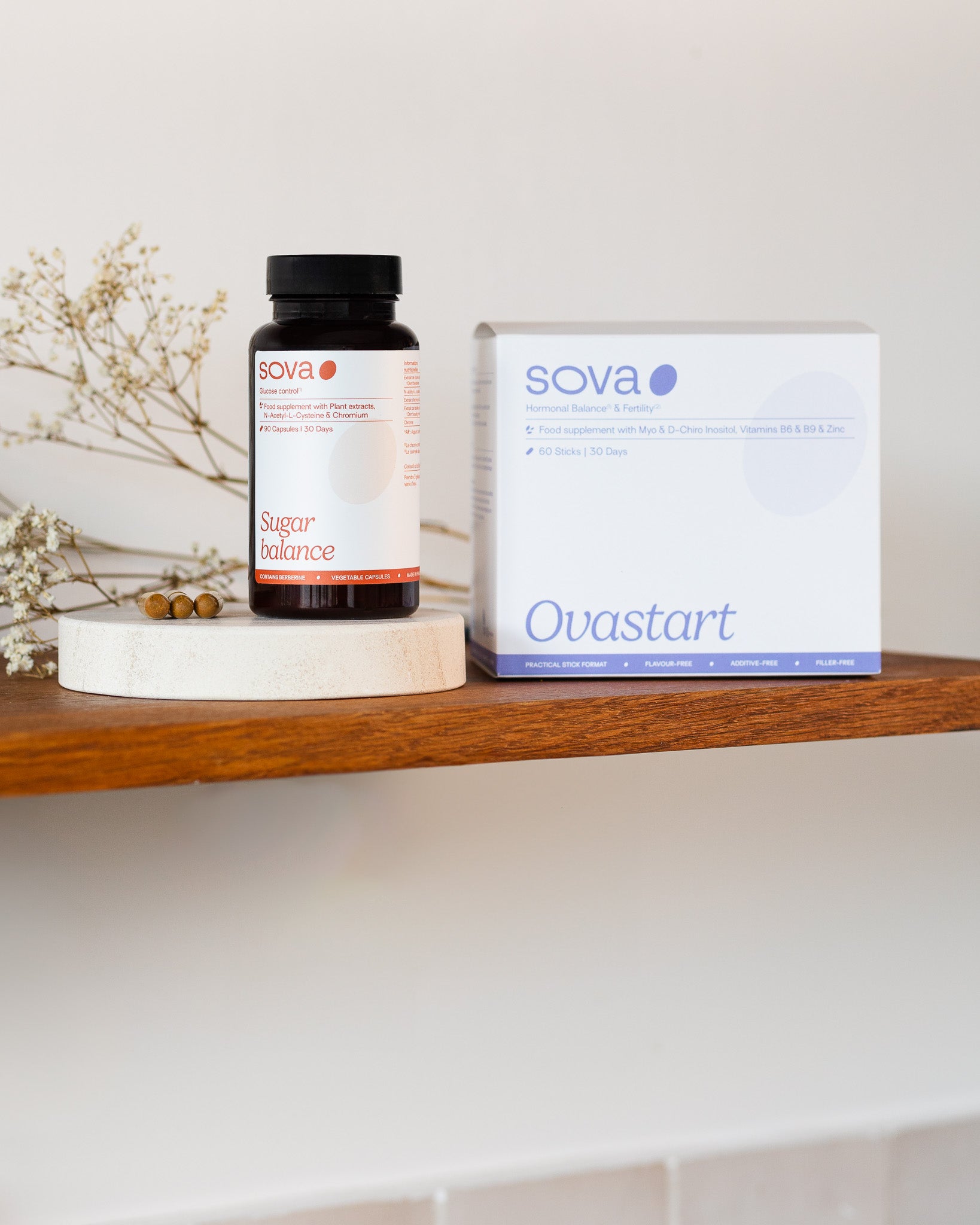
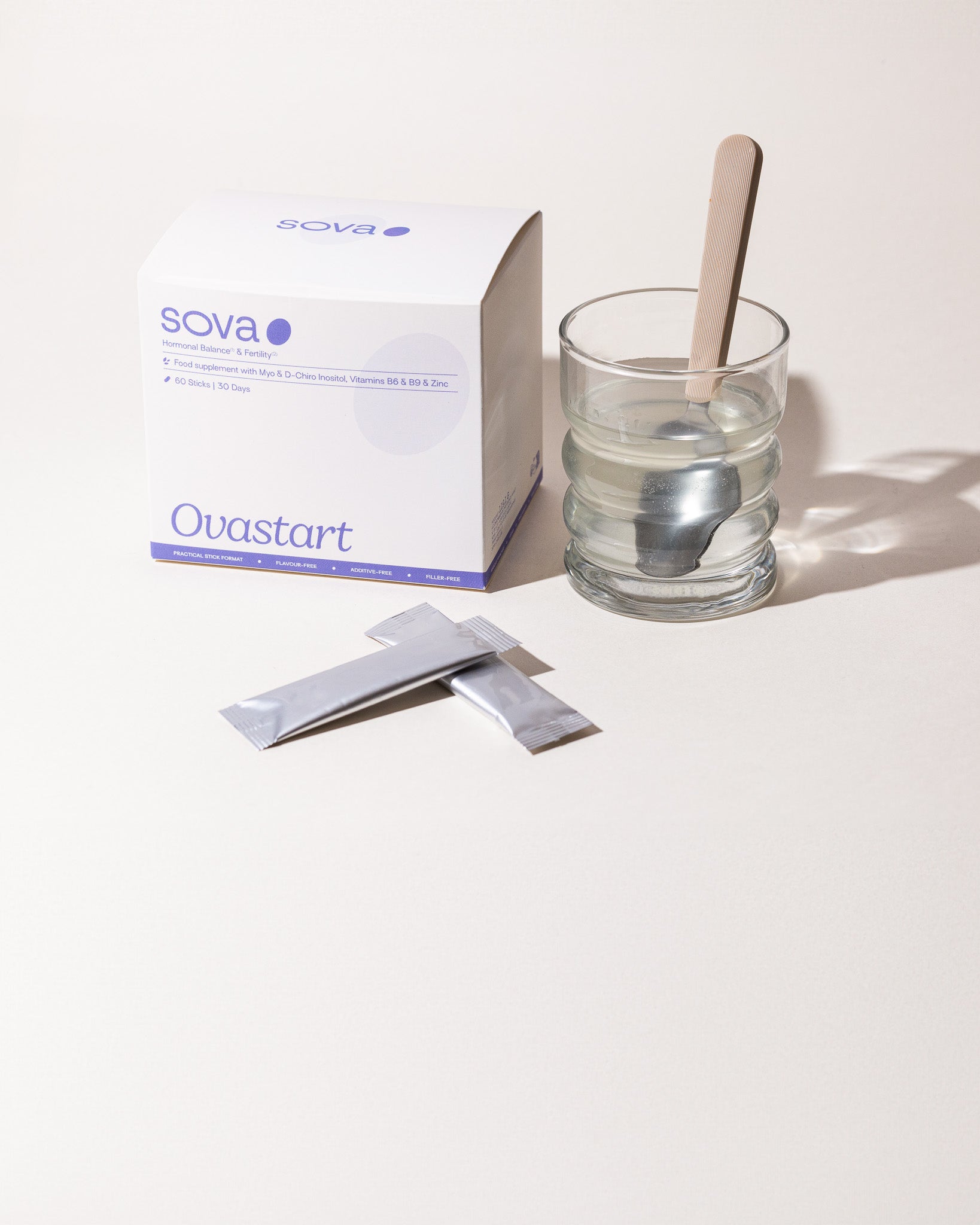
Myo-inositol acts as a secondary messenger for insulin - helping cells respond more efficiently to the hormonal signal. Systematic reviews consistently show that inositol supplementation improves insulin sensitivity, supports cycle regularity and reduces metabolic markers in women with PCOS (4, 5). Ovastart combines Myo and D-Chiro inositol with active B-vitamins and Zinc bisglycinate, in a clean powder stick that's gentle on the stomach.
Berberine activates an enzyme called AMPK - sometimes described as the body's metabolic switch — which helps cells absorb glucose more efficiently and supports fat burning (6). Meta-analyses of randomised controlled trials show it can significantly reduce fasting blood sugar and insulin resistance markers (7). Sugar Balance combines Berberine with NAC, Chromium, Cinnamon and Gymnema - a synergistic formula designed to stabilise blood sugar, reduce cravings and support metabolic function throughout the day.
Chromium is an essential trace mineral that supports the normal function of insulin receptors and contributes to normal glucose metabolism, as recognised by the EFSA (8). Clinical data suggests supplementation can help reduce sugar cravings and blood sugar fluctuations.
Magnesium is involved in over 300 enzymatic reactions, including those central to insulin signalling. Several meta-analyses confirm that supplementation improves insulin sensitivity and fasting blood glucose - and deficiency is common in women with PCOS (9, 10). SOVA's Magnesium Bisglycinate uses the highly bioavailable bisglycinate form, well tolerated and supportive of both metabolic function and sleep quality.
Omega-3 fatty acids (EPA and DHA) address the chronic low-grade inflammation that underlies both insulin resistance and weight difficulties in PCOS. Research suggests omega-3 supplementation can reduce inflammatory markers and support insulin sensitivity in women with PCOS (11). SOVA's Omega-3 provides high-purity EPA and DHA to complement a PCOS-focused supplement routine.
How to structure your routine
The most effective approach combines several ingredients working on different mechanisms simultaneously. Most women begin noticing differences in cravings, energy and bloating within the first four to six weeks - with more significant changes typically visible around the three-month mark.
For a complete system addressing both the hormonal and metabolic dimensions of PCOS, The Balance Bundle combines Ovastart and Sugar Balance into a single routine - the most comprehensive starting point for women with PCOS looking to support their weight and hormonal health together.
Beyond supplements: what actually moves the needle
No supplement replaces a coherent lifestyle - but the right approach for PCOS looks different to generic weight loss advice.
The dietary patterns with the strongest evidence are those that reduce glycaemic load and inflammation. The Mediterranean and DASH diets are among the most studied - both prioritise whole foods, fibre, healthy fats and antioxidants (12). In practice: build meals around lean proteins and complex carbohydrates, and avoid the blood sugar spikes that come from refined carbs and added sugars.
Exercise matters, but the type counts. Excessive high-intensity training raises cortisol, which worsens hormonal imbalance. A combination of resistance training and moderate cardio tends to work better for PCOS - muscle tissue improves insulin sensitivity with every session (13).
Even modest weight loss of around 5% of body weight has been shown to meaningfully improve PCOS symptoms, including cycle regularity, androgen levels and insulin sensitivity (14). Small, consistent changes compound over time. 💜
Not sure where to start? Take the SOVA quiz to find the products best suited to your symptoms and goals.
Sources
- Stepto, N. K., Cassar, S., Joham, A. E., et al. (2013). Women with polycystic ovary syndrome have intrinsic insulin resistance on euglycaemic-hyperinsulaemic clamp. Human Reproduction, 28(3), 777–784. PMID 23257174
- Escobar-Morreale, H. F. (2018). Polycystic ovary syndrome: definition, aetiology, diagnosis and treatment. Nature Reviews Endocrinology, 14(5), 270–284. PMID 29569621
- Hotamisligil, G. S. (2006). Inflammation and metabolic disorders. Nature, 444(7121), 860–867. DOI: 10.1038/nature05485
- Unfer, V., Facchinetti, F., Orrù, B., Giordani, B., & Nestler, J. (2017). Myo-inositol effects in women with PCOS: a meta-analysis of randomized controlled trials. Endocrine Connections, 6(8), 647–658
- Greff, D., Juhász, A. E., Váncsa, S., et al. (2023). Inositol is an effective and safe treatment in polycystic ovary syndrome: a systematic review and meta-analysis of randomized controlled trials. Reproductive Biology and Endocrinology, 21(1), 10. PMC9878965
- Lee, Y. S., Kim, W. S., Kim, K. H., et al. (2006). Berberine activates AMP-activated protein kinase with beneficial metabolic effects in diabetic and insulin-resistant states. Diabetes, 55(8), 2256–2264. PMID 16873688
- Liang, Y., Xu, X., Yin, M., et al. (2019). Effects of berberine on blood glucose in patients with type 2 diabetes mellitus: a systematic literature review and meta-analysis. Endocrine Journal, 66(1), 51–63
- European Food Safety Authority (EFSA). Scientific Opinion on the substantiation of health claims related to chromium. EFSA Journal, 2010; 8(10):1732
- Veronese, N., Dominguez, L. J., Pizzol, D., et al. (2021). Oral magnesium supplementation for treating glucose metabolism parameters in people with or at risk of diabetes: a systematic review and meta-analysis. Nutrients, 13(11), 4074. PMC8619199
- Simental-Mendía, L. E., Sahebkar, A., Rodríguez-Morán, M., & Guerrero-Romero, F. (2016). Effects of magnesium supplementation on insulin sensitivity and glucose control. Pharmacological Research, 111, 272–282. PMID 27329332
- Khani, B., Mardanian, F., & Fesharaki, S. J. (2017). Omega-3 supplementation effects on polycystic ovary syndrome symptoms and metabolic syndrome. Journal of Research in Medical Sciences, 22, 64. PMC5461594
- Moran, L. J., Ko, H., Misso, M., et al. (2013). Dietary composition in the treatment of polycystic ovary syndrome: a systematic review to inform evidence-based guidelines. Journal of the Academy of Nutrition and Dietetics, 113(4), 520–545. PMID 23420000
- Harrison, C. L., Lombard, C. B., Moran, L. J., & Teede, H. J. (2011). Exercise therapy in polycystic ovary syndrome: a systematic review. Human Reproduction Update, 17(2), 171–183. PMID 20833639
- Lim, S. S., Hutchison, S. K., Van Ryswyk, E., et al. (2019). Lifestyle changes in women with polycystic ovary syndrome. Cochrane Database of Systematic Reviews, Issue 3. CD007506. PMID 30921477