


Table of contents
- 01. The Big Question: Can You Get Pregnant with Endometriosis?
- 02. Understanding the Biology: How Endometriosis Affects Your Reproductive System
- 03. Adenomyosis: The Co-Existing Condition That Changes the Picture
- 04. Assessing Your Fertility: Building Your Personal Picture
- 05. Pre-Conception Planning: Preparing Your Body
- 06. Hormonal Suppression Therapy: What It Means for Conception Timing
- 07. Strategies for Conceiving: Natural, IUI, and IVF
- 08. You Are Pregnant: Managing Endometriosis During the Nine Months
- 09. Navigating the Healthcare System: A UK Perspective
- 10. The Emotional Weight: Mental Health and Endometriosis
- 11. After the Baby Arrives: The Post-Partum Reality
- 12. Key Takeaways
- 13. Key Terms Explained
If you are living with endometriosis and hoping to become pregnant, this guide is written for you - with clinical accuracy and without alarm. Understanding what is happening inside your body is one of the most empowering things you can do.
Endometriosis is one of the most common - and most misunderstood - gynaecological conditions in the world. According to the World Health Organisation, it affects approximately 190 million women and girls of reproductive age globally [1] - roughly 1 in 10. Despite that, the average time to diagnosis in the UK remains between 7 and 8 years. [2]
The relationship between endometriosis and fertility is nuanced and deeply individual. A diagnosis does not mean you cannot conceive. For many women, the path to pregnancy simply requires a clearer map - and that is exactly what this guide aims to provide.
We will walk through the underlying biology, how to assess your personal fertility profile, what your options are for conceiving naturally and with medical support, and what to expect once you are pregnant. We also cover two topics that are rarely addressed together but matter enormously: adenomyosis as a co-existing condition, and the fertility implications of hormonal suppression therapy.
The Big Question: Can You Get Pregnant with Endometriosis?
Yes - and many women do. Fertility outcomes in endometriosis are far more variable than any single statistic suggests, and stage alone is a poor predictor of an individual woman's chances.
The European Society of Human Reproduction and Embryology (ESHRE), whose guidelines represent the gold standard in endometriosis care, estimates that 60 to 70% of women with stage I or II (mild to moderate) endometriosis are able to conceive naturally over time. [3] Even in more advanced stages, conception - whether natural or assisted - remains achievable for many.
What shapes your individual outcome is not just your stage, but a combination of: the location and extent of endometriosis, your ovarian reserve (the quantity and quality of your remaining eggs), your age, the presence or absence of a co-existing condition called adenomyosis, how long you have been trying, and your overall health. All of these can be assessed - and most can be supported.
Think of your fertility with endometriosis not as a fixed ceiling, but as a landscape that can be understood, navigated, and in many ways optimised. The evidence for this is real and growing.
Understanding the Biology: How Endometriosis Affects Your Reproductive System
Endometriosis occurs when tissue similar - though not identical - to the uterine lining grows outside the uterus. This tissue, called ectopic endometrium, typically implants on the ovaries, fallopian tubes, pelvic peritoneum, and sometimes the bowel or bladder. Like the uterine lining, it responds to hormonal cycles - thickening, breaking down, and bleeding - but because it has nowhere to drain, it triggers a cycle of chronic inflammation, scarring, and adhesion formation.
There are three distinct ways this process can interfere with conception.
Physical Obstruction: Adhesions and "Kissing Ovaries"
The most visible effect is structural. Over time, repeated cycles of inflammation and healing produce fibrotic adhesions - bands of scar tissue that can fuse the fallopian tubes, ovaries, uterus, or bowel together. When adhesions distort or block the tubes, they prevent the egg from reaching the uterus after ovulation.
In severe cases, the ovaries can adhere to the back of the uterus in a position described as "kissing ovaries" - a term for what is clinically called posterior deep infiltrating endometriosis. In this position, ovarian function and egg accessibility are significantly reduced. A review in Fertility and Sterility identified tubal distortion as one of the primary structural drivers of infertility in stage III and IV disease. [4]
The Peritoneal Inflammatory Environment: A Direct Threat to Egg Quality
Even when the fallopian tubes are physically clear, endometriosis creates a biochemically hostile environment around the reproductive organs. This is one of the mechanisms most relevant to fertility - and one that is frequently under-discussed.
In women with endometriosis, the peritoneal fluid that bathes the pelvic organs shows significantly elevated levels of pro-inflammatory cytokines - signalling proteins of the immune system - including interleukin-1 beta (IL-1β), interleukin-6 (IL-6), interleukin-8 (IL-8), and tumour necrosis factor alpha (TNF-α). A landmark review by Gazvani and Templeton published in Human Reproduction Update demonstrated that these cytokines directly impair follicular development and oocyte (egg) maturation. [5]
Alongside cytokine-mediated inflammation, the peritoneal environment also shows increased reactive oxygen species (ROS) - unstable molecules that cause oxidative stress and can damage the DNA within developing eggs. Research by Szczepanska et al. confirmed significantly elevated oxidative stress markers in the peritoneal fluid and follicular fluid of women with endometriosis, linking this directly to reduced oocyte quality and fertilisation rates. [6]
This biochemical picture explains why addressing inflammation - through diet, targeted supplementation, and lifestyle - is not peripheral to fertility planning for women with endometriosis. It is central to it. Our article on the benefits of omega-3 for hormonal health covers the evidence base for omega-3 fatty acids in modulating pelvic inflammation in detail.
Progesterone Resistance and Impaired Decidualisation
A third mechanism operates at the level of implantation itself - and it involves a phenomenon called progesterone resistance. In healthy endometrial tissue, progesterone triggers a transformation called decidualisation: the process by which the uterine lining restructures itself to become receptive to an implanting embryo. This is one of the most finely orchestrated events in human reproduction.
Research by Bulun and colleagues, published in Molecular and Cellular Endocrinology, demonstrated that in women with endometriosis, endometrial stromal cells show a reduced sensitivity to progesterone - meaning the decidualisation signal is weakened or aberrant. [7] This impaired decidualisation creates a uterine environment that is less receptive to embryo implantation, and is thought to contribute both to difficulties conceiving and to early pregnancy loss.
Understanding this mechanism is clinically useful because it explains why fertility in endometriosis is not simply a mechanical problem. Even when tubes are open and eggs are present, the uterine environment itself may require assessment and support.
Adenomyosis: The Co-Existing Condition That Changes the Picture
One of the most important - and most frequently overlooked - aspects of endometriosis-related fertility is the possibility of a co-existing condition called adenomyosis. Adenomyosis occurs when endometrial glands and stroma grow within the muscular wall of the uterus itself (the myometrium), rather than outside it.
Studies suggest that between 20 and 35% of women with endometriosis also have adenomyosis [8] - a figure likely to be an underestimate given the diagnostic limitations of ultrasound and MRI. The two conditions share similar hormonal drivers and inflammatory mechanisms, but adenomyosis has its own distinct implications for fertility.
How Adenomyosis Specifically Affects Implantation and Miscarriage Risk
Adenomyosis disrupts fertility through two primary mechanisms. The first is mechanical: the infiltration of glandular tissue into the uterine muscle causes local inflammation and fibrosis that can distort the uterine cavity and alter blood flow to the endometrium.
The second is biochemical: like endometriosis, adenomyosis is associated with impaired decidualisation and progesterone resistance in the endometrium. Research by Vercellini and colleagues demonstrated that adenomyosis is independently associated with a higher rate of implantation failure and early miscarriage in women undergoing IVF, after controlling for other variables. [9]
A 2023 systematic review and meta-analysis published in Human Reproduction found that women with adenomyosis had a significantly higher rate of miscarriage and lower clinical pregnancy rate in IVF compared to controls - independent of endometriosis status. [10]
This matters in practice: if adenomyosis has not been specifically assessed in your diagnostic workup, raising it with your specialist is worthwhile. It is diagnosable via transvaginal ultrasound (by an experienced sonographer) or MRI, and its presence may influence the choice of fertility treatment and the timing of embryo transfer.
If you have endometriosis and have experienced repeated early pregnancy loss or failed IVF cycles, adenomyosis is one important consideration worth discussing with your team - even if it has not been mentioned before.
Assessing Your Fertility: Building Your Personal Picture
A diagnosis of endometriosis gives you important information - but it does not give you a complete fertility forecast. Two women with the same stage of endometriosis can have very different fertility outcomes. The goal of a fertility assessment is to understand your individual profile across several key dimensions.
The ASRM/AFS Staging System (Stages I-IV) Explained
The most widely used classification system for endometriosis was developed by the American Society for Reproductive Medicine (ASRM) and scores the condition on a scale of I to IV based on the size, location, depth, and extent of endometriotic lesions and adhesions. [11]
It is worth understanding an important limitation of this system: the stage does not reliably predict pain severity or fertility outcomes on its own. Some women with stage IV experience minimal symptoms, while others with stage I find conception difficult. The staging system remains useful as a guide and a communication tool, but it should always be interpreted alongside AMH levels, tubal status, and age.
|
Stage |
What it means |
Impact on natural conception |
Approx. natural conception rate |
|
Stage I Minimal |
Small, shallow implants on pelvic lining. Minimal adhesions. |
Natural conception usually achievable. Fertility impact is limited. |
~70-80% |
|
Stage II Mild |
More implants, slightly deeper. No significant structural distortion. |
Most women in this group conceive naturally over time, with support. |
~60-70% |
|
Stage III Moderate |
Deep implants, small endometriomas, visible adhesions around tubes. |
Natural conception is harder. IUI or IVF is often recommended sooner. |
~30-50% |
|
Stage IV Severe |
Large endometriomas, dense adhesions, possible "kissing ovaries." |
Natural conception significantly reduced. Assisted reproduction usually advised. |
~20-35% |
Sources: ASRM classification system [11]; ESHRE Endometriosis Guideline 2022 [3]. Natural conception rates are approximate ranges cited in the literature and will vary based on individual factors including age and ovarian reserve.
Testing Your Ovarian Reserve: The AMH Test
Endometriosis - particularly when endometriomas (ovarian cysts formed from endometriotic tissue) are present - can reduce your ovarian reserve: the pool of eggs remaining in your ovaries and their capacity to mature into viable embryos.
The most reliable single marker of ovarian reserve is the Anti-Mullerian Hormone (AMH) blood test. AMH is secreted by small follicles in the ovary and gives an estimate of the remaining egg pool. A study by Raffi and colleagues, published in the Journal of Clinical Endocrinology and Metabolism, confirmed that women with endometriomas had significantly lower AMH levels than women without ovarian cysts - and that surgical removal of endometriomas further reduced AMH, highlighting the importance of timing any decisions about surgery carefully. [12]
If you have not yet had an AMH test, discussing this with your GP or gynaecologist is a practical first step. The result will help you and your medical team understand how much time you have and which pathway - natural, IUI, or IVF - makes most sense for your individual situation. Clinical guidelines from ESHRE also recommend antral follicle count (AFC) via ultrasound as a complementary measure of ovarian reserve. [3]
Our guide on how to monitor your cycle offers further context on interpreting cycle-related hormonal markers.
Pre-Conception Planning: Preparing Your Body
The period before actively trying to conceive is one of the most impactful for women with endometriosis. A proactive approach to reducing inflammation, supporting egg quality, and assessing your anatomy can meaningfully improve your starting position - whether you go on to conceive naturally or through assisted reproduction.
|
Pre-Conception Planning: A Practical Guide |
|
|
✓ |
Request an AMH blood test to assess your ovarian reserve - this one number can shape your whole timeline. |
|
✓ |
Ask your GP for a referral to a BSGE-accredited endometriosis centre. NICE guidelines support your right to specialist care. |
|
✓ |
If endometriomas are present, discuss with your specialist whether surgical removal is appropriate before trying to conceive. |
|
✓ |
If you have recently completed GnRH agonist therapy, ask your specialist about the optimal waiting period before trying to conceive. |
|
✓ |
Begin an anti-inflammatory diet: prioritise oily fish, leafy greens, berries, legumes, and olive oil. Reduce processed foods, red meat, trans fats, and alcohol. |
|
✓ |
Start taking folic acid (400 mcg daily) at least three months before trying to conceive, as recommended by NHS guidelines. |
|
✓ |
Consider adding a high-quality omega-3 supplement (EPA/DHA) to support reduction of pelvic inflammation and egg quality. |
|
✓ |
Track your cycle precisely using LH strips or basal body temperature - endometriosis can cause subtle ovulation irregularities. |
|
✓ |
Explore pelvic floor physiotherapy if you experience pelvic pain, as improved blood flow can support reproductive health. |
|
✓ |
Prioritise sleep (7-9 hours) and stress regulation - chronic cortisol elevation disrupts ovulation and worsens inflammation. |
|
✓ |
Keep a symptom diary (the Endometriosis UK app is helpful) to spot patterns and prepare for consultant appointments. |
The Role of Anti-Inflammatory Nutrition and Omega-3s
Diet is one of the most modifiable factors in peritoneal inflammation. A 2013 review by Parazzini and colleagues in Reproductive BioMedicine Online found that higher intakes of omega-3 fatty acids, fresh fruits, vegetables, and fibre were associated with reduced endometriosis risk and improved fertility markers, while high consumption of red meat and trans fats was associated with greater disease activity. [13]
Omega-3 fatty acids - specifically EPA (eicosapentaenoic acid) and DHA (docosahexaenoic acid) - are of particular clinical interest because of their direct anti-inflammatory action. EPA and DHA are precursors to anti-inflammatory lipid mediators (resolvins and protectins) that actively counteract the cytokine-driven inflammation characteristic of endometriosis. Supplementation with high-quality omega-3s has been shown in multiple trials to reduce key inflammatory markers including CRP, IL-6, and TNF-α. [14]
For a detailed look at the evidence, see our article on the benefits of omega-3 for PCOS and hormonal health. The anti-inflammatory mechanisms discussed there apply equally to endometriosis-related pelvic inflammation.

Hormonal Suppression Therapy: What It Means for Conception Timing
Many women with endometriosis are treated with GnRH (gonadotropin-releasing hormone) agonists - medications such as leuprorelin (Prostap) or goserelin (Zoladex) - which suppress ovarian hormone production and create a temporary, medically-induced menopause. This treatment reduces endometriotic lesion activity and manages pain effectively, but it also temporarily prevents natural conception.
The fertility implications of GnRH agonist therapy depend significantly on context - specifically, whether you are planning natural conception or moving directly to IVF. Understanding the difference matters.
GnRH Agonists Before IVF: Strong Evidence for Improved Outcomes
If IVF is the planned route, the evidence strongly supports the use of GnRH agonists in the months before egg collection. A Cochrane systematic review by Sallam and colleagues found that women with endometriosis who received three to six months of GnRH agonist therapy before IVF had significantly higher clinical pregnancy rates than those who went straight into a standard IVF protocol - with odds ratios suggesting an approximately four-fold improvement in some subgroups. [15] ESHRE guidelines recommend considering this approach in moderate to severe endometriosis. [3]
GnRH Agonists Followed by Natural Conception: The Washout Period
For women hoping to conceive naturally after a course of GnRH agonist therapy, the picture is more nuanced. GnRH agonists are not a fertility treatment - they suppress ovulation during use and do not directly improve natural conception rates. What they can do is reduce active disease to a point where, after stopping, the reproductive environment is less hostile.
After stopping GnRH agonist therapy, ovarian function typically resumes within one to three months. Clinical guidance generally recommends a washout period of one to three cycles before attempting natural conception, to allow the hormonal environment to stabilise. A conversation with your specialist about the ideal timing for your specific situation - taking into account your age, ovarian reserve, and disease severity - is strongly recommended.
|
Scenario |
Potential benefit |
Clinical consideration |
|
GnRH agonist then natural conception |
Hormonal environment may be more receptive after suppression of active disease. |
A washout of 1-3 months is generally recommended before attempting conception. Discuss the timing with your specialist. |
|
GnRH agonist then IVF (long protocol) |
Strong evidence for improved IVF outcomes after 3-6 months of GnRH agonist therapy in moderate-severe endo. |
Cochrane review data supports this approach. Your fertility team will guide the protocol timing. |
|
Conceiving immediately after surgery (no GnRH) |
Reduces the delay to conception. Post-operative period is often considered an "optimal fertility window." |
Many specialists recommend trying naturally for 3-6 months post-laparoscopy before moving to assisted reproduction. |
Strategies for Conceiving: Natural, IUI, and IVF
Optimising Natural Conception
For women with stage I or II endometriosis and a healthy ovarian reserve, natural conception remains the recommended first approach - with time-limited attempts (typically 6 to 12 months) before progressing to assisted reproduction. ESHRE guidelines suggest that operative laparoscopy to remove endometriotic lesions in stage I and II disease can modestly improve natural conception rates compared to diagnostic laparoscopy alone. [3]
Tracking your fertile window accurately is especially valuable in endometriosis, because subtle ovulatory irregularities are more common than in the general population. Ovulation predictor kits (OPKs) measuring luteinising hormone (LH) surge, combined with basal body temperature charting, give a much clearer picture of your actual fertile window than calendar methods alone.
IUI (Intrauterine Insemination): A Step-Up Option
Intrauterine insemination involves placing prepared sperm directly into the uterus at the time of ovulation, reducing the distance sperm must travel and increasing the concentration at the point of fertilisation. IUI may be considered when mild adhesions are present but the fallopian tubes remain open, or when there is a mild sperm factor contributing to difficulty conceiving.
The evidence for IUI in endometriosis is more limited than for IVF, and ESHRE guidelines note that the benefit is modest in the context of endometriosis-related infertility compared to unexplained infertility. [3] However, for some women - particularly in stage I and II disease - it represents a less invasive and lower-cost step before IVF.
IVF (In Vitro Fertilisation): When and Why
IVF is the recommended first-line assisted reproduction treatment for women with stage III or IV endometriosis, blocked or damaged fallopian tubes, significantly reduced ovarian reserve, or when natural conception and IUI have not been successful. In IVF, eggs are retrieved from the ovaries, fertilised in the laboratory, and the resulting embryo is transferred to the uterus - bypassing many of the physical barriers created by endometriosis.
It is accurate - and important - to know that IVF success rates in women with endometriosis are on average slightly lower than in age-matched women without endometriosis, particularly in severe disease or following repeated surgeries. [16] However, outcomes vary considerably depending on the specialist centre, the protocol used, ovarian reserve, and whether adenomyosis is present. Many women with endometriosis do successfully conceive through IVF - and outcomes continue to improve with expert, personalised protocols.
A helpful strategy before IVF is to discuss with your specialist whether pre-IVF treatment with GnRH agonists and/or surgical removal of endometriomas above a certain size is appropriate in your case. Both have evidence supporting improved IVF outcomes in specific clinical scenarios - though both also carry considerations around ovarian reserve and timing.
You Are Pregnant: Managing Endometriosis During the Nine Months
Can You Have a Healthy Pregnancy with Endometriosis?
Yes - the majority of women with endometriosis have healthy pregnancies and healthy babies. However, a body of research identifies a modest but real increase in certain obstetric risks that you and your antenatal team should be aware of and monitor carefully.
A landmark systematic review and meta-analysis by Saraswat and colleagues, published in BJOG, found that women with endometriosis had a statistically significant increased risk of miscarriage, preterm birth, placenta praevia, and caesarean section compared to women without the condition. [17] These risks are real - but for the majority of women with endometriosis, particularly those with mild to moderate disease, the pregnancy proceeds safely with standard monitoring.
The risk of ectopic pregnancy (implantation in the fallopian tube rather than the uterus) is also elevated, particularly where the tubes are affected by adhesions. An early transvaginal ultrasound at 6 to 7 weeks to confirm intrauterine location of the pregnancy is strongly recommended for women with a history of tubal endometriosis or prior ectopic pregnancy.
Closely monitored antenatal care - including any additional scans recommended by your specialist - is the most effective way to detect and manage complications early.
Is Pregnancy Painful with Endometriosis?
For many women, pregnancy brings a significant and welcome reduction in endometriosis-related pain. This is primarily due to the elevated progesterone levels of pregnancy, which suppress menstruation and reduce endometriotic lesion activity. Many women describe the first trimester as one of the most pain-free periods they have experienced in years.
That said, pregnancy brings significant physical changes - including round ligament stretching, uterine growth, and changes in posture - that can generate pelvic discomfort unrelated to endometriosis. Any new, severe, or unusual pain during pregnancy, particularly if accompanied by bleeding, should always be reported to your midwife or obstetrician promptly.
Navigating the Healthcare System: A UK Perspective
Your Rights Under NHS and NICE Guidelines
NICE guideline NG73 on endometriosis (published 2017, updated 2024) sets clear standards for endometriosis care in England. Among its key recommendations: women with endometriosis who wish to conceive should have their fertility needs discussed at every stage of their care, and those with suspected deep or complex endometriosis should be referred to a BSGE-accredited endometriosis centre. [18]
BSGE (British Society for Gynaecological Endoscopy) centres are specialist multi-disciplinary units meeting rigorous standards for endometriosis diagnosis and treatment. Being seen at a BSGE centre means access to surgeons, fertility specialists, radiologists, and specialist nurses who work together - rather than in silos.
Referral is your right. If your GP has not discussed this with you, or if you feel your care has been limited to pain management without fertility planning, raising NG73 directly in your appointment is entirely appropriate. A list of accredited centres is available at bsge.org.uk.
Five Questions Worth Raising with Your Fertility Specialist
• AMH and timeline: "What is my AMH level, and given my age and stage, how would you describe my conception timeline?"
• Adenomyosis assessment: "Has adenomyosis been specifically assessed? Could it be contributing to my fertility challenges?"
• Surgery timing: "Would surgical removal of endometriomas or adhesions improve my chances before trying to conceive - and what would be the impact on my ovarian reserve?"
• GnRH therapy: "If you recommend GnRH agonist treatment, what is the evidence-based timing for attempting conception afterwards?"
• IVF protocol: "If we progress to IVF, is a long-protocol approach with GnRH downregulation appropriate for my profile?"
The Emotional Weight: Mental Health and Endometriosis
Acknowledging What This Journey Actually Feels Like
Living with endometriosis while trying to conceive is a particular kind of difficult. It is not just the physical symptoms. It is the uncertainty, the waiting, the monthly cycle of hope and disappointment, the appointments that feel like dead ends, and the grief that comes with every negative test.
Research consistently confirms what many women already know: endometriosis is associated with significantly higher rates of anxiety and depression than the general population, not only because of pain, but because of its impact on fertility, relationships, and self-perception. A critical narrative review by Culley and colleagues in Human Reproduction Update described these psychosocial impacts as "profound" and systematically under-acknowledged in clinical practice. [19]
It is also clinically relevant: chronic psychological stress elevates cortisol, which disrupts the hypothalamic-pituitary-ovarian axis - the hormonal communication pathway that governs ovulation. Addressing mental health is not separate from fertility management. It is part of it.
Seeking emotional support - whether through therapy, peer groups, or simply talking openly with your GP - is not a sign of struggling. It is one of the most evidence-informed things you can do for your overall health and your fertility.
Support Resources in the UK
Endometriosis UK (endometriosis-uk.org) - The leading UK charity for endometriosis support. Offers a helpline, peer support groups, and a free symptom diary app.
Tommy's (tommys.org) - Specialist information on pregnancy complications, premature birth, and pregnancy after recurrent miscarriage.
The Miscarriage Association (miscarriageassociation.org.uk) - Compassionate support and information for anyone affected by pregnancy loss at any stage.
BSGE Patient Resources (bsge.org.uk) - Information on specialist centres, surgical options, and preparing for consultant appointments.
After the Baby Arrives: The Post-Partum Reality
Does Endometriosis Improve After Childbirth?
Pregnancy is not a cure for endometriosis - and it is important to approach the post-partum period with clear expectations. While the hormonal environment of pregnancy often suppresses endometriotic activity, and some women experience a meaningful period of symptom improvement after delivery, this effect is generally temporary.
A widely cited study by Guo, published in Human Reproduction Update, reported that endometriosis lesions recur in the majority of women within two years of delivery if no further management is in place. [20] Breastfeeding delays the return of menstruation and may extend symptom relief for some women, but this effect varies considerably.
For women who wish to have more than one child, this recurrence pattern is one reason some specialists suggest attempting a second pregnancy without prolonged delay, while the post-partum hormonal window is still present. A proactive conversation with your gynaecologist about longer-term disease management - whether that involves hormonal therapy, lifestyle strategies, or monitoring - is the evidence-based approach.
Our article on how to manage hormonal health post-pregnancy covers related hormonal rebalancing strategies that may be relevant in the post-partum period.
Supporting your body through every stage of the journey
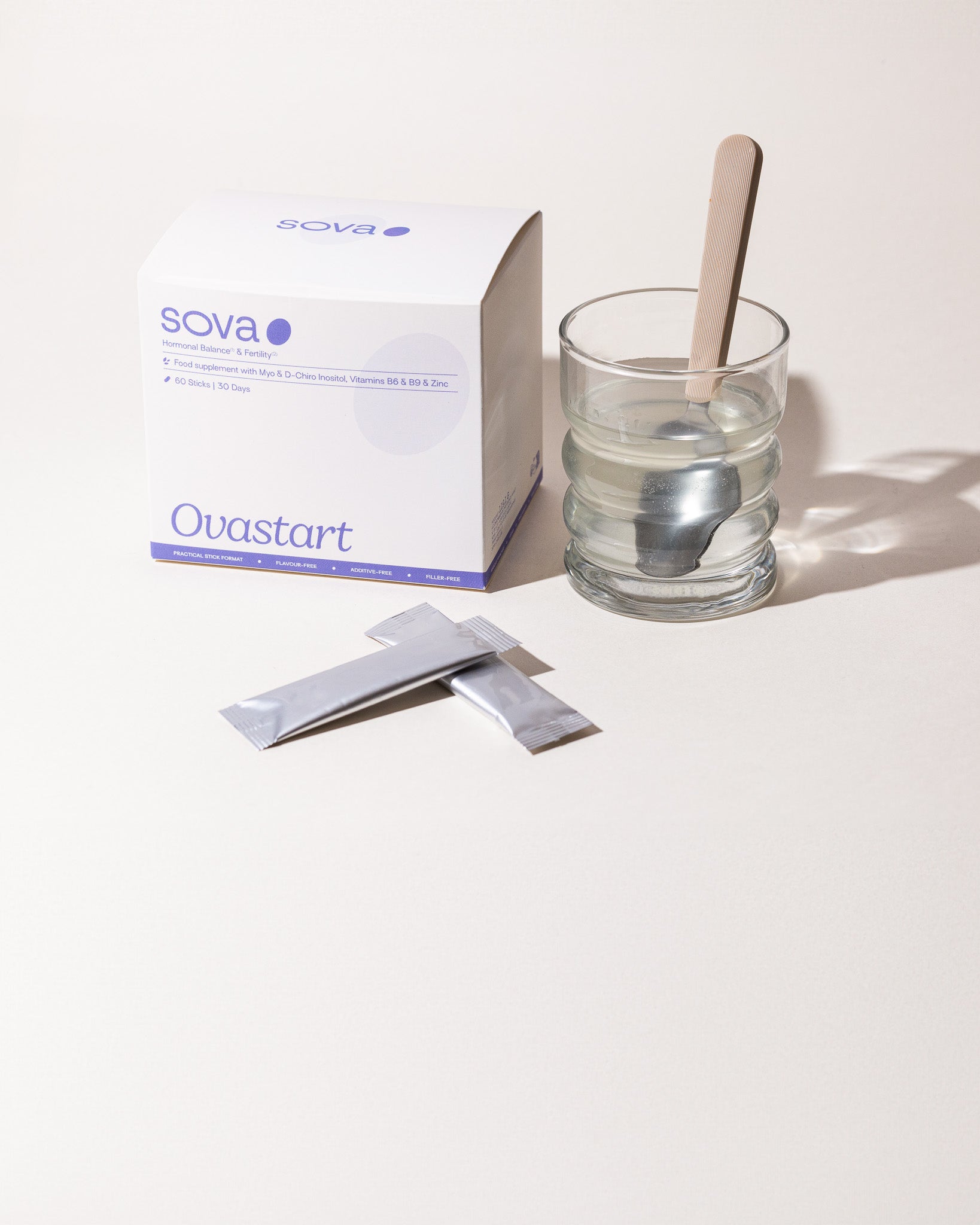
SOVA's fertility-focused supplements are formulated to support women managing complex hormonal conditions - combining clinical evidence with clean, carefully sourced ingredients.
Explore our fertility range at sova-care.co.uk/collections/fertility
Key Takeaways
|
Endometriosis & Pregnancy - Key Takeaways |
|
Pregnancy is possible: Most women with mild to moderate endometriosis can conceive - naturally or with targeted support. Stage is a guide, not a verdict. |
|
Assess your ovarian reserve early: An AMH blood test is the single most useful starting point. It shapes the timeline and helps your team guide you efficiently. |
|
Adenomyosis matters too: If adenomyosis co-exists with your endometriosis, discuss this with your specialist - it affects implantation and miscarriage risk differently. |
|
Inflammation is addressable: Anti-inflammatory diet, omega-3 supplementation, sleep, and stress reduction all have evidence behind them - and they are within your reach. |
|
GnRH therapy has timing implications: If you have had hormonal suppression therapy, ask your specialist about the optimal conception window afterwards. |
|
Pregnancy often relieves pain: Many women experience a reduction in endometriosis symptoms during pregnancy due to elevated progesterone - though this varies. |
|
Post-partum, a plan is important: Endometriosis symptoms return in most women within two years of delivery. Proactive management with your specialist is the evidence-based approach. |
|
You have rights on the NHS: NICE guideline NG73 supports your right to referral to a BSGE-accredited specialist centre. Ask your GP if you have not been referred yet. |
A final word ��
Endometriosis is a complex, chronic condition - and navigating it while trying to build a family is genuinely hard. This guide is not designed to minimise that. It is designed to ensure that you understand your options, know your rights, and feel equipped to have the conversations with your healthcare team that you deserve to have.
The science has advanced considerably in recent years. The understanding of adenomyosis, peritoneal cytokine inflammation, progesterone resistance, and impaired decidualisation now gives specialists and patients alike a far more precise picture of what is happening - and what can be done about it.
If you are exploring the wider landscape of hormonal fertility health, our articles on how to get pregnant with PCOS, the role of myo-inositol in hormonal balance, and managing inflammatory PCOS offer further relevant context.

You are not navigating this alone. ��
Key Terms Explained
Adenomyosis: A condition in which endometrial glands and stroma grow within the muscle wall of the uterus (myometrium), causing it to thicken. Often co-exists with endometriosis and can independently impair implantation.
AMH (Anti-Mullerian Hormone): A blood test marker secreted by ovarian follicles, used to estimate ovarian reserve - the quantity of eggs remaining in the ovaries.
Cytokines: Signalling proteins of the immune system. Elevated cytokines (IL-1β, IL-6, TNF-α) in the peritoneal fluid of women with endometriosis impair egg development and fertilisation.
Decidualisation: The transformation of the uterine lining in preparation for embryo implantation, triggered by progesterone. Impaired in endometriosis due to progesterone resistance.
Endometrioma: An ovarian cyst formed from endometriotic tissue, sometimes called a "chocolate cyst." Can significantly reduce ovarian reserve and egg accessibility.
GnRH agonists: Medications (e.g., leuprorelin, goserelin) that suppress ovarian hormone production, used to treat endometriosis. Associated with improved IVF outcomes when used before egg collection.
Kissing ovaries: An informal term for posterior deep infiltrating endometriosis in which the ovaries adhere to the back of the uterus, restricting their mobility and function.
Peritoneal fluid: The fluid that fills the pelvic cavity and bathes the reproductive organs. In endometriosis, this fluid has an abnormal inflammatory and oxidative profile that affects egg quality.
Progesterone resistance: A reduced sensitivity to progesterone signals in endometrial tissue. Leads to impaired decidualisation and reduced uterine receptivity in women with endometriosis.
Reactive oxygen species (ROS): Unstable molecules produced during inflammation that cause oxidative damage to cellular DNA, including within developing eggs.
Scientific References
Over 50,000 women have already adopted our routines, rating us an excellent 4.7/5 average (from 3,300+ reviews). Our supplements are formulated in French laboratories using clean, carefully sourced ingredients, with a maximum of patented active ingredients proven for their effectiveness.
- Founded by women with PCOS, we understand the reality of hormonal disorders.
- Clinically studied: High-quality ingredients, including patented forms like Quatrefolic® and an optimal Myo-/D-Chiro Inositol ratio.
- Holistic support: Formulated for hormonal balance, metabolic health, inflammation, mood, and cycle regulation.
- Science-led formulas: Transparent ingredients with absolutely no unnecessary additives.