



The Balance Bundle
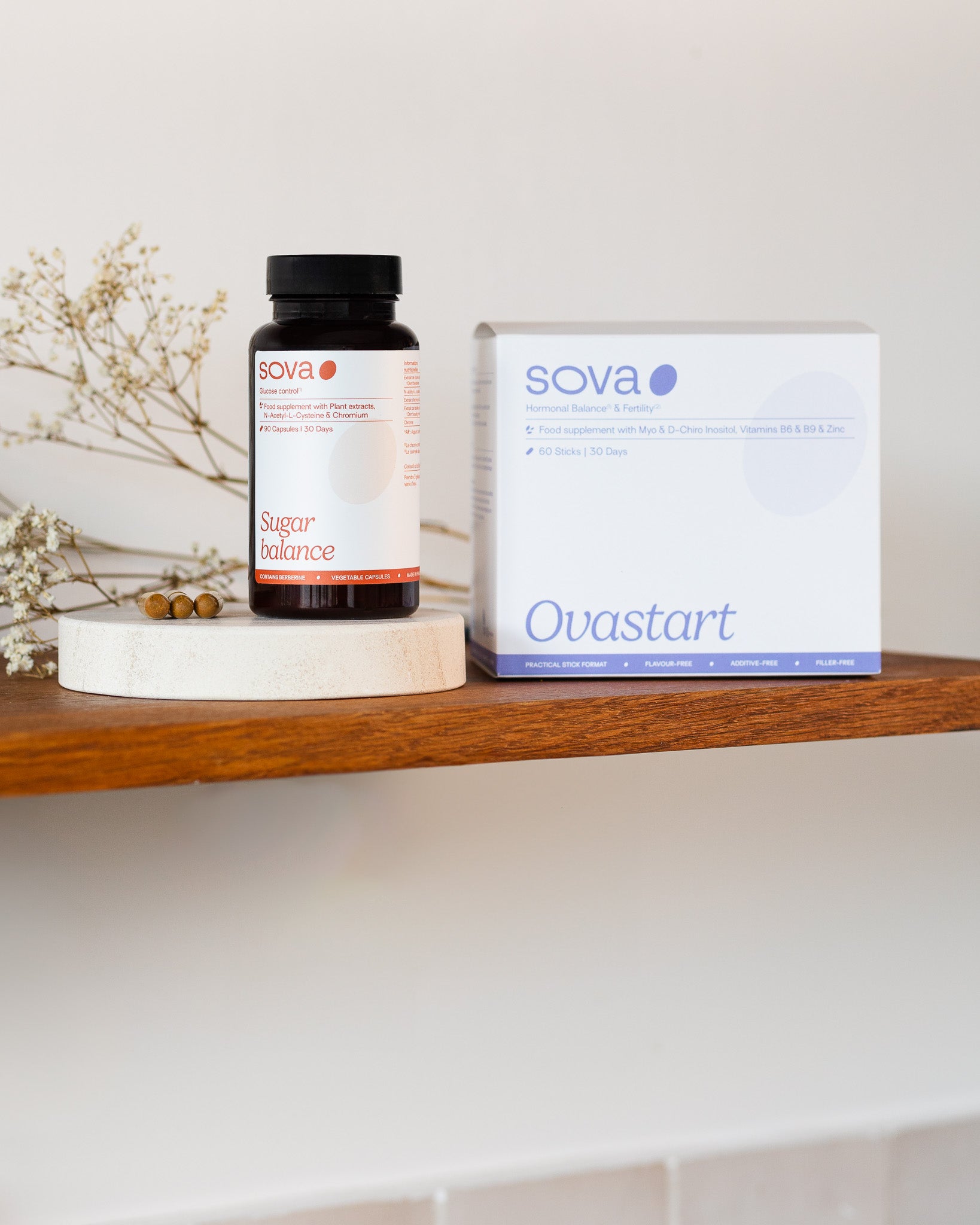
The Hormone Balance Supplements Built for PCOS - Two Products, One Complete System
From £53
Table of contents
- 01. Can you have PMOS (PCOS) with a regular cycle?
- 02. How you can have PMOS (PCOS) with regular bleeding: the medical reason
- 03. The Rotterdam criteria: how PMOS (PCOS) is actually diagnosed
- 04. What are the symptoms of PMOS (PCOS) with regular periods?
- 05. What are the general warning signs of PMOS (PCOS)?
- 06. Classic PMOS (PCOS) versus mild or ovulatory PMOS (PCOS): key differences
- 07. At what age does PMOS (PCOS) show up?
- 08. What else could it be? Non-PMOS (PCOS) causes of similar symptoms
- 09. How do you confirm if you have PMOS (PCOS)?
- 10. Supporting your hormonal health: practical next steps
- 11. Frequently asked questions
If you are wondering if you can have PMOS even if your period arrives on schedule, the answer is yes. A regular bleed does not rule it out, and for a sizeable group of women it is exactly how the condition shows up.
Can you have PMOS (PCOS) with a regular cycle?
Yes, you can have PMOS with a regular, predictable cycle. The form doctors call ovulatory PMOS, or phenotype C, describes women who bleed on time yet still meet the diagnostic threshold through other features. In many populations, close to one in five women diagnosed with PMOS fall into this group (1).
A regular bleed tells you your uterus is responding to hormones, not that your hormones are balanced. The diagnosis rests on a pattern, not on your period alone.
- Ovulatory PMOS (phenotype C) is a recognised form of the condition with regular cycles.
- The diagnostic rule needs two features out of three (2), so your cycle can be entirely normal and you can still qualify on the other two.
- Regular bleeding does not measure your androgens or what your ovaries look like on a scan, which is where the imbalance often hides.
How you can have PMOS (PCOS) with regular bleeding: the medical reason
To understand this, it helps to separate three things that a monthly bleed tends to blur together. Your cycle can look textbook while the machinery underneath tells a different story. This is why steadier hormonal support, the aim of cycle-focused supplementation, can still matter when your bleeding looks perfectly regular.
A regular bleed is not proof of ovulation
Bleeding and ovulating are not the same event. You can have a cycle that arrives on time without releasing an egg that month, something clinicians call an anovulatory cycle. When an egg is released, the emptied follicle produces progesterone, the hormone that stabilises your lining and gives the second half of your cycle its shape. When ovulation does not happen, oestrogen can still build the lining, which then sheds on a roughly regular rhythm, so from the outside nothing looks wrong. It is also why a short or symptom-heavy second half of the cycle can be an early clue. Your calendar can be regular while your ovulation is not, and a period on its own can never confirm that an egg was released.

Mild androgen excess
Slightly raised androgens, the group of hormones that includes testosterone, are enough to trigger acne, chin hair or scalp thinning without ever switching your periods off. What matters here is not only how much testosterone you make, but how much of it is free to act. A protein called SHBG binds androgens and holds them inactive, so when your SHBG is low, even a testosterone level that looks normal on paper can leave more free hormone reaching your skin and hair follicles. That signal is simply not the same one that governs whether you bleed. Your skin can register a hormonal shift long before your cycle does.
Insulin resistance
Many women with PMOS have some degree of insulin resistance, where the body has to produce more insulin to keep blood sugar steady. That extra insulin does two things at once: it nudges the ovaries to make more androgens, and it lowers SHBG, so more of those androgens stay active. It also drives symptoms like abdominal weight gain and afternoon energy dips, all while ovulation can carry on well enough to keep you bleeding. Because the loop feeds itself, easing insulin resistance is often the most effective way to calm the androgen side too. Understanding how insulin resistance shapes PMOS is often the key that makes the rest of the picture click. This is also why inositol, is so widely used: it works directly on insulin signalling.
The Rotterdam criteria: how PMOS (PCOS) is actually diagnosed
Diagnosis follows a framework called the Rotterdam criteria, and once you see how it works, ovulatory PMOS stops being a puzzle. A doctor looks for at least two of the following three features, having first ruled out other causes (2):
- Irregular or absent ovulation, seen as unpredictable, long or missing periods.
- High androgens, either visible as acne or excess hair, or measured on a blood test.
- Polycystic ovaries on ultrasound, meaning a high count of small follicles.
Because you only need two of the three, you can meet the criteria on high androgens and polycystic ovaries while your cycle stays completely regular. Feature number one, the irregular periods most people associate with PMOS, is the one you skip. That combination is precisely what phenotype C is.
A worked example makes it concrete. Say your periods arrive every 29 days like clockwork, so you do not meet feature one. But you have clear chin and jawline hair, and a scan shows a high follicle count. That is two features out of three, and it is enough for a diagnosis. The maths simply does not require your cycle to misbehave. One important caveat: in the first years after your very first period, cycles and scans are naturally variable, so doctors are more cautious about diagnosing PMOS in adolescents and often prefer to reassess over time (4).
One recent update is worth knowing. The 2023 international guideline recognised that in adults, a blood test measuring AMH can now stand in as an alternative to the ultrasound for the polycystic-ovary criterion (4). It does not replace the scan in every situation, but it gives your doctor another accurate route to the same answer, one that can be quicker and less invasive.

What are the symptoms of PMOS (PCOS) with regular periods?
When your cycle is regular, the signs tend to come from androgens and insulin rather than from your calendar, which is exactly why they are so easy to dismiss one at a time. A single spot, one stray hair or one tired afternoon means little on its own. It is when they gather that they start to describe a pattern. Use this as a scan of what to watch for, grouped by where it tends to show up.
Androgen-related signs
- Persistent acne, often along the jaw and chin (you can read more on hormonal acne and why it happens)
- Coarse hair growth on the face, chest or stomach (hirsutism)
- Thinning hair at the crown or temples
Metabolic and skin signs
- Weight that settles around the middle
- Dark, velvety skin patches at the neck or underarms (acanthosis nigricans)
- Small skin tags
- Strong, recurring sugar and carbohydrate cravings
Cycle and mood signs
- Regular bleeding that may still be happening without ovulation
- A short second half of the cycle or intense premenstrual symptoms
- Difficulty conceiving despite regular periods
- Brain fog, low mood or anxiety that seems to track your cycle
If several of these sit together, your regular period is not a reason to dismiss PMOS, it is simply not the clue.
What are the general warning signs of PMOS (PCOS)?
Stepping back from the regular-cycle case, the broader early signals of PMOS cluster into a few groups. Any one of them alone is common and unremarkable. It is the combination that tends to be meaningful.
The most recognisable are androgen-driven changes to skin and hair: stubborn acne, new facial or body hair, or a thinning hairline. Alongside these often sit signs of insulin resistance, such as sugar cravings, weight gain around the abdomen and energy that dips hard in the afternoon. When skin, hair and metabolism all shift in the same window, that pattern is worth a conversation with your doctor. Cycle changes may or may not be part of the picture. Keeping a simple note of when each sign appears and how it moves across the month gives you something concrete to show, and it often reveals a rhythm you had not spotted.
Classic PMOS (PCOS) versus mild or ovulatory PMOS (PCOS): key differences
Thinking in phenotypes helps you place yourself on the spectrum rather than asking whether you do or do not have PMOS. Classic PMOS (phenotypes A and B) usually includes irregular cycles. Ovulatory PMOS (phenotype C) does not, which is exactly why it is so often missed.
| Feature | Classic PMOS (A and B) | Ovulatory PMOS (C) |
|---|---|---|
| Cycle regularity | Often irregular or absent | Regular and predictable |
| Ovulation | Frequently disrupted | Usually present |
| Androgen levels | Typically high | Raised, sometimes milder |
| Insulin resistance | Often more pronounced | Present but frequently milder |
| Ultrasound | Polycystic ovaries common | Polycystic ovaries common |
👉 Phenotype C is a milder metabolic picture on average, not a lesser version of PMOS. It still deserves the same attention (1).
Phenotypes are also not fixed for life. Because weight and insulin sensitivity shape how strongly PMOS expresses itself, some women move between phenotypes over time, for example shifting towards the ovulatory picture as their metabolic health improves. Where you sit today is a snapshot, not a life sentence.
At what age does PMOS (PCOS) show up?
PMOS is a lifelong condition that changes shape as you do. In adolescence, between roughly 12 and 18, the first hints often appear around your first periods but get filed under normal teenage change, so they slip by unnoticed.
Most diagnoses land between 20 and 30, often when acne or hair changes become harder to ignore or when someone starts trying to conceive and looks more closely at their cycle. Into your thirties, forties and beyond, the emphasis shifts towards the metabolic side, and PMOS becomes something you manage as an evolving part of your health rather than a one-off event. The androgen symptoms that dominate your twenties may quieten, while insulin and metabolic factors ask for more of your attention later on. The condition does not arrive on a fixed date; it reveals itself over years.
What else could it be? Non-PMOS (PCOS) causes of similar symptoms
A responsible diagnosis rules other things out first, which is a strength of the process rather than a delay. Several conditions can produce PMOS-like symptoms and are checked with straightforward tests (4).
- Non-classic congenital adrenal hyperplasia, an inherited enzyme difference that raises androgens and can mimic PMOS closely. A blood test for 17-hydroxyprogesterone helps tell the two apart.
- Thyroid problems, particularly an underactive thyroid, which can disturb cycles, weight and energy. A simple TSH test flags it.
- High prolactin (hyperprolactinaemia), a hormone that when raised can interfere with ovulation and periods, and which is checked with a single blood test.
This is why a proper work-up includes a few extra blood tests: they confirm PMOS by excluding its lookalikes.
How do you confirm if you have PMOS (PCOS)?
If the picture fits, you can walk into your appointment prepared, which makes the whole process faster and calmer. Here is what to ask your GP to consider.
- A blood panel: total and free testosterone, SHBG, DHEAS, fasting insulin, AMH and TSH to check androgens, insulin and thyroid together.
- A pelvic ultrasound: to look at the follicle count on your ovaries.
- Ovulation tracking: basal body temperature or LH strips rather than bleeding dates, so you know whether you are actually ovulating. It helps to learn how to track your cycle properly before your appointment.
- A symptom log: bring the checklist above, dated, so your doctor sees the pattern at a glance.
Coming in prepared, with your notes and results ready, turns a vague appointment into a focused one. You are handing your GP the evidence to act on.
Supporting your hormonal health: practical next steps
Whatever your phenotype, the levers that help PMOS are consistent, because they work on the drivers underneath: androgens and insulin. None of this replaces your GP, and it all works better as a routine than as a quick fix.
A lower-glycaemic way of eating, built around protein, fibre and slow-release carbohydrates, steadies the insulin swings that feed the cycle. Pairing carbohydrates with protein or a healthy fat, and leaning towards whole foods over refined ones, tends to soften the post-meal spikes that keep insulin high. Movement helps through the same door, since regular activity, and gentle strength work in particular, makes your muscles more responsive to insulin. Managing stress matters too, because chronically high cortisol nudges your adrenal androgens upward, which is why sleep and genuine rest belong in the plan rather than sitting at the edge of it. And targeted supplementation has a real evidence base here. Inositol in the 40:1 ratio was the most effective of seven ratios tested at restoring ovulation in one clinical trial (5), and reviews consistently link it to better insulin sensitivity, steadier cycles and a calmer androgen profile (6). If you want the mechanism in plain terms, this guide to how inositol supports PMOS walks through it. The aim is not to force a period you already have, but to support the balance underneath it.
A regular period is a reassuring thing, and it can also sit comfortably alongside PMOS. If your cycle is steady but your skin, hair or energy keep telling another story, you now have the language to name what is happening and the checklist to take to your GP. We cannot promise a diagnosis from here, but we can promise this: understanding your own pattern is where every good next step begins. 💜
Frequently asked questions
Can you have PMOS (PCOS) even if your period is regular?
Yes, you can have PMOS with completely regular monthly periods. A recognised form called ovulatory PMOS (phenotype C) affects a meaningful share of women with the condition. Under the Rotterdam criteria you can be diagnosed on high androgens (such as acne or excess hair) and polycystic ovaries on a scan, even with a textbook 28-day cycle.
What are the main symptoms of PMOS (PCOS) with regular periods?
With regular periods, the symptoms come mainly from excess androgens and insulin resistance rather than from missed cycles. The usual signs are stubborn jawline acne, coarse facial or body hair, thinning scalp hair, weight that settles around the middle, dark skin patches and persistent fatigue.
How do I confirm if I have PMOS (PCOS)?
A healthcare professional assesses you against the Rotterdam criteria, looking for at least two of three markers: irregular ovulation, high androgens and polycystic ovaries on ultrasound. They will also run blood tests to rule out thyroid, prolactin or adrenal causes before confirming the diagnosis.
What are the earliest warning signs of PMOS (PCOS)?
The earliest signs are usually persistent jawline acne, excess facial or body hair, thinning scalp hair and sudden weight gain around the middle. Other early clues include strong carbohydrate cravings, ongoing fatigue and dark patches of skin around the neck or underarms.
At what age does PMOS (PCOS) usually show up?
PMOS often begins around puberty, between 12 and 18, but it is most commonly diagnosed between 20 and 30. Early signs in teenagers are frequently mistaken for normal pubertal change, so many women only recognise the condition later, when adult acne, weight changes or trouble conceiving prompt a closer look.
- Anovulatory cycle : it's a cycle where you bleed but do not release an egg, which is why your calendar can look regular while your ovulation is not.
- Phenotype : it's the particular combination of PMOS features you have, which is why two women with the same diagnosis can experience it very differently.
- Androgens : it's the group of hormones that includes testosterone, present in every woman in small amounts, which is why a mild excess can cause acne or extra hair without touching your periods.
- Insulin resistance : it's when your body needs more insulin than usual to manage blood sugar, which is why it drives cravings, abdominal weight gain and higher androgens in PMOS.
- AMH : it's a hormone released by small follicles in the ovary, which is why a high level often mirrors the polycystic ovary picture on a scan.
Scientific References
Over 50,000 women have already adopted our routines, rating us an excellent 4.7/5 average (from 3,300+ reviews). Our supplements are formulated in French laboratories using clean, carefully sourced ingredients, with a maximum of patented active ingredients proven for their effectiveness.
- Founded by women with PCOS, we understand the reality of hormonal disorders.
- Clinically studied: High-quality ingredients, including patented forms like Quatrefolic® and an optimal Myo-/D-Chiro Inositol ratio.
- Holistic support: Formulated for hormonal balance, metabolic health, inflammation, mood, and cycle regulation.
- Science-led formulas: Transparent ingredients with absolutely no unnecessary additives.
The Hormone Balance Supplements Built for PCOS - Two Products, One Complete System