


The Balance Bundle
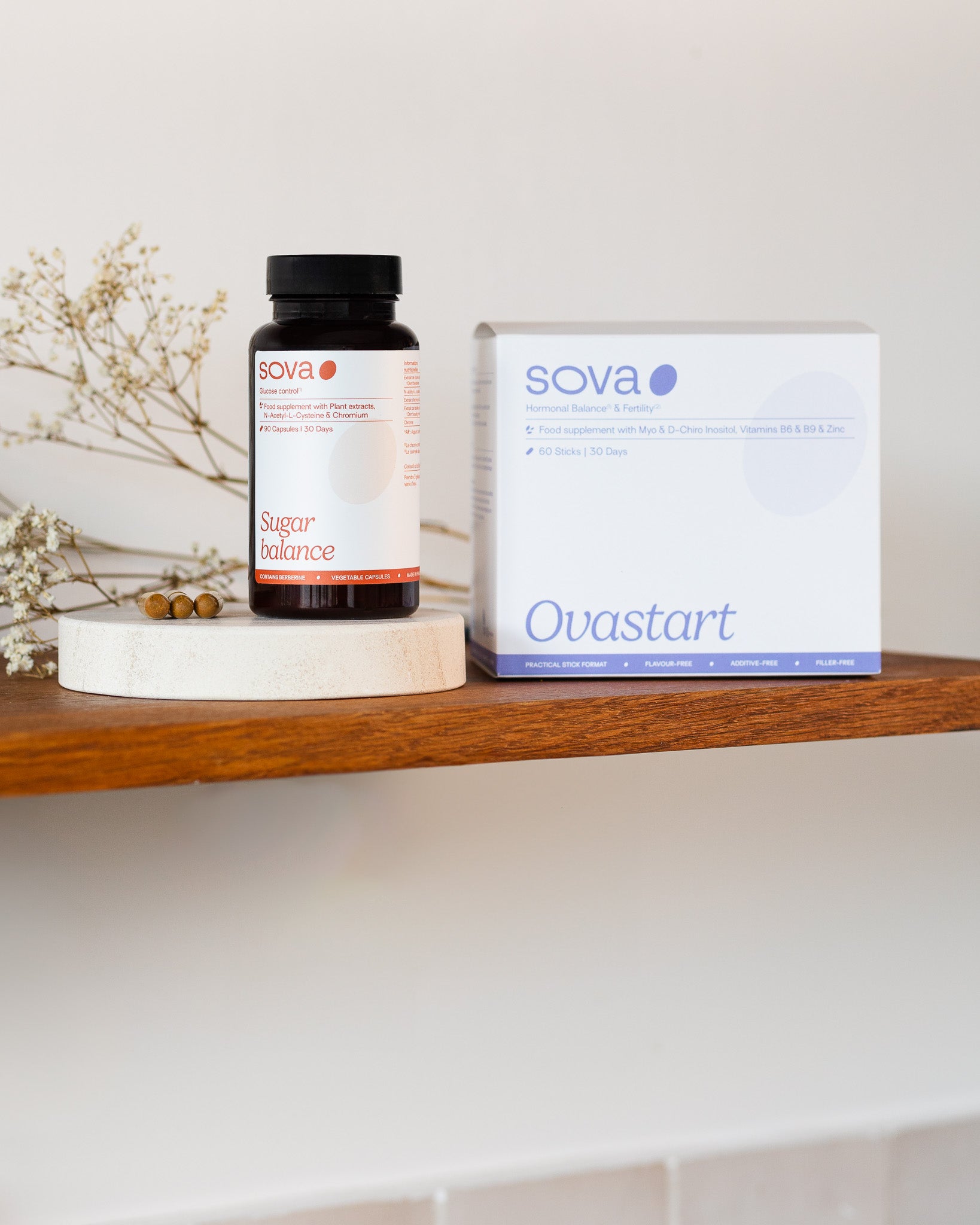
The Hormone Balance Supplements Built for PCOS - Two Products, One Complete System
From £53
Table of contents
- 01. What are the hormonal consequences?
- 02. How does menopause affect PCOS?
- 03. Does PCOS improve with age?
- 04. Why does menopause worsen insulin resistance in PCOS?
- 05. Increased risk of endometrial cancer
- 06. Increased risk of endometrial cancer
- 07. Living better through menopause with PCOS
- 08. PCOS, menopause, and excessive hair growth: how to manage it
- 09. Excessive sweating and hot flushes during menopause with PCOS
- 10. PCOS, menopause, and sleep disturbances: what can help?
- 11. Final thoughts
A woman is considered menopausal after 12 consecutive months without a menstrual period². This does not happen overnight. Menopause is preceded by a transitional phase known as perimenopause, which can last between 4 and 10 years. During this time, levels of sex hormones such as oestrogen and progesterone gradually decline.
What are the hormonal consequences?
This hormonal shift can lead to changes in cycle length, variations in menstrual flow, vaginal dryness, mood changes, poorer sleep quality, hot flushes, and night sweats. The menopausal transition may also affect weight gain, insulin resistance, cravings, and chronic fatigue (symptoms you may already be familiar with if you live with PCOS¹).

How does menopause affect PCOS?
So what happens when menopause occurs in someone who already has a hormonal condition such as PCOS?
PCOS often affects the body in several ways, including:
- Long menstrual cycles
- Amenorrhoea
- Weight gain
- Insulin resistance
- Hyperandrogenism (excess “male” hormones)
- Excessive sweating
- Chronic fatigue
Some PCOS symptoms overlap with those of menopause, which can sometimes delay the diagnosis of menopause.
Does PCOS improve with age?
It is legitimate to wonder whether the progressive decline in female sex hormones during menopause also affects PCOS symptoms: particularly those linked to excess androgens.
During menopause, oestrogen levels drop sharply. This is less true for androgens such as testosterone and androstenedione, which continue to be produced (in smaller amounts) by the ovaries and adrenal glands after menopause. The adrenal glands remain a significant source of androgens through the production of DHEA and DHEAS.
A systematic review examining the effects of PCOS after the age of 45 found that hyperandrogenism tends to persist for some time after menopause⁵. Unlike oestrogen, ovarian testosterone production declines more gradually. At the same time, adrenal androgen production also decreases, which eventually leads to a reduction in symptoms such as hirsutism, acne, and hair loss.
However, this decline is not linear. A longitudinal study showed a temporary increase in DHEAS levels between late perimenopause and early menopause⁴.
Even though hormonal activity slows down during menopause, it is important to emphasise that PCOS does not disappear at menopause³. There is no “cure” for PCOS, although menopausal hormonal changes may influence the intensity of certain symptoms.
Why does menopause worsen insulin resistance in PCOS?
Metabolic issues commonly associated with PCOS, such as insulin resistance and excess weight, may worsen during menopause due to the decline in oestrogen.
A review of multiple studies on PCOS and menopause highlights the role of oestrogen in insulin sensitivity⁶. Oestrogen:
- Promotes fat distribution to peripheral areas rather than the abdomen (which is associated with better insulin sensitivity)
- Modulates insulin signalling in target tissues, facilitating normal glucose uptake
When hormonal activity declines, the risk of worsening metabolic disturbances increases: weight gain, cravings, chronic fatigue. These changes can also affect cardiovascular health, increasing the risk of heart attack, stroke, and hypertension in menopausal women with PCOS⁸.
Increased risk of endometrial cancer
Because PCOS often disrupts ovulation and hormone exposure, it may also be associated with a higher risk of endometrial cancer. Although there is no clear consensus on the exact magnitude of this risk, several mechanisms are suggested:
- Prolonged exposure to oestrogen without the protective effect of progesterone due to irregular ovulation
- Hyperinsulinaemia⁷
Menopause may reveal an underlying issue, particularly if abnormal bleeding occurs after periods have stopped. Any postmenopausal bleeding should be investigated.
Increased risk of endometrial cancer
Because PCOS often disrupts ovulation and hormone exposure, it may also be associated with a higher risk of endometrial cancer. Although there is no clear consensus on the exact magnitude of this risk, several mechanisms are suggested:
- Prolonged exposure to oestrogen without the protective effect of progesterone due to irregular ovulation
- Hyperinsulinaemia⁷
Menopause may reveal an underlying issue, particularly if abnormal bleeding occurs after periods have stopped. Any postmenopausal bleeding should be investigated.
Living better through menopause with PCOS
Adopting a healthy lifestyle and maintaining regular medical follow-up are key to managing both PCOS and menopausal symptoms⁹.
Weight gain, insulin resistance, and diabetes risk
Women with PCOS are more likely to experience metabolic disorders. Common recommendations include:
- Following a balanced diet rich in healthy fats, fibre, and protein
- Engaging in regular physical activity combining cardio and strength training to improve insulin sensitivity and support cardiovascular health
- Limiting ultra-processed and high-sugar foods that worsen insulin resistance
PCOS, menopause, and excessive hair growth: how to manage it
Excess hair growth is usually multifactorial. It is often linked to elevated androgen levels, worsened by insulin resistance and high blood sugar.
Supporting stable blood sugar levels by including fibre, healthy fats, and complex carbohydrates, along with a balanced exercise routine (avoiding both inactivity and overtraining), can be helpful.
👉 To go further, read our article on the most effective solutions for managing excessive hair growth in PCOS.
Excessive sweating and hot flushes during menopause with PCOS
Certain factors, such as spicy foods, alcohol, caffeine, and stress, can worsen hot flushes and night sweats.
In addition to stress-management techniques (meditation, yoga, mindfulness), some supplements such as magnesium may help promote relaxation and reduce fatigue.
PCOS, menopause, and sleep disturbances: what can help?
During menopause, melatonin levels tend to decline, contributing to sleep disturbances (already common in PCOS).
Recommendations often include:
- Establishing a consistent sleep routine
- Reducing screen exposure before bed
- Ventilating the bedroom
- Maintaining regular physical activity
👉 For more practical tips, explore our dedicated article on improving sleep quality.
Final thoughts
Menopause is a major hormonal transition, whether or not you live with PCOS. In women with PCOS, certain symptoms may intensify but this does not mean there are no solutions.
By taking care of your lifestyle, adapting your routines, and surrounding yourself with supportive healthcare professionals, menopause can become a new beginning rather than a setback 💜
- Menopause: a life stage marked by the absence of menstrual periods for 12 consecutive months. It results from a decline in oestrogen and progesterone levels and may cause symptoms such as hot flushes, night sweats, and fatigue. = Menopause: a life stage marked by the absence of menstrual periods for 12 consecutive months. It results from a decline in oestrogen and progesterone levels and may cause symptoms such as hot flushes, night sweats, and fatigue.
- PCOS (Polycystic Ovary Syndrome) : a hormonal condition characterised by long or absent menstrual cycles, hyperandrogenism, and often insulin resistance. PCOS does not disappear at menopause, but its manifestations may change with age.
- Hyperandrogenism : an excess of androgen hormones (such as testosterone) in women, which may lead to acne, hair thinning, or excessive hair growth. In PCOS, hyperandrogenism tends to gradually decrease after menopause.
- Insulin resistance : a reduced ability of the body to use insulin effectively. It promotes weight gain and increases the risk of metabolic disorders, particularly when oestrogen levels decline during menopause.
- Oestrogens : female sex hormones primarily produced by the ovaries. Their decline during menopause leads to hormonal and metabolic changes, including reduced insulin sensitivity and changes in fat distribution.
Scientific References
Over 50,000 women have already adopted our routines, rating us an excellent 4.7/5 average (from 3,300+ reviews). Our supplements are formulated in French laboratories using clean, carefully sourced ingredients, with a maximum of patented active ingredients proven for their effectiveness.
- Founded by women with PCOS, we understand the reality of hormonal disorders.
- Clinically studied: High-quality ingredients, including patented forms like Quatrefolic® and an optimal Myo-/D-Chiro Inositol ratio.
- Holistic support: Formulated for hormonal balance, metabolic health, inflammation, mood, and cycle regulation.
- Science-led formulas: Transparent ingredients with absolutely no unnecessary additives.
The Hormone Balance Supplements Built for PCOS - Two Products, One Complete System