


Table of contents
📌 In summary: PCOS bloating is driven by hormones - not just what you eat. High androgens slow digestion and can cause constipation; progesterone deficiency removes your body's natural diuretic protection; and insulin resistance triggers fluid retention via the kidney's antinatriuretic pathway. Managing all three drivers - not just diet - is the key to lasting relief.
You eat a healthy meal - and an hour later, your stomach looks like you swallowed a balloon. Your clothes feel tight. You wonder if it will ever stop.
If you have PCOS, this is not in your head. It is one of the most common - and most under-explained - symptoms women describe. And yet it is frequently dismissed by healthcare professionals.
Polycystic ovary syndrome affects an estimated 8 to 13% of women of reproductive age worldwide, with up to 70% remaining undiagnosed (1). Bloating is part of the picture for a significant number of these women - but the biology behind it is rarely explained properly.
In this article, we break down exactly why PCOS causes bloating, what the "PCOS belly" really is, and 7 proven ways to find real relief. No vague advice. Just science, made simple. 💜
👉 Want to understand your PCOS profile first? Read: The different types of PCOS and how to identify yours.
✨ Key Takeaways
- PCOS bloating is driven by insulin resistance, high androgens, and low progesterone - not just diet.
- The "PCOS belly" feels firm and sits below the belly button - distinct from ordinary gas bloating.
- High androgens slow gut transit, leading to constipation and fermentation-driven gas.
- Low progesterone removes your body's natural fluid-balancing mechanism, worsening the puffy, water-retention feeling.
- Blood sugar stability is the single most impactful lifestyle intervention.
- Inositol, Lactobacillus reuteri probiotics, and magnesium have meaningful research support.
Managing fluid retention and gut-driven bloating starts with stabilizing blood sugar and supporting healthy glucose metabolism.

The Biological Connection: Why PCOS Triggers Bloating
First, something important to acknowledge: PCOS bloating has a real, biological origin. It is not a sign of overeating, poor willpower, or a lack of discipline. Understanding the three-part mechanism helps target the right solutions.
High Androgens, Slower Digestion, and the Constipation Cycle
PCOS is characterised by elevated androgens (male-type hormones such as testosterone). Research shows that these androgens directly influence the nerves and smooth muscle that control how food moves through your digestive system (3). When androgen levels are elevated, gastric transit time slows down - meaning food takes longer to pass through your intestines.
This slowed transit has a compounding effect. Food that remains in the large intestine for longer is fermented by gut bacteria for an extended period, producing excess gas, distension, and discomfort. Many women with PCOS also experience chronic constipation for exactly this reason - and constipation further amplifies the sensation of bloating. It becomes a cycle: slow motility → more fermentation → more gas → more bloating.
This is what researchers call the gut-hormone axis: a two-way communication line between your hormones and your digestive system. In PCOS, this axis is chronically disrupted.
The Progesterone Factor: Your Missing Natural Diuretic
This driver of PCOS bloating is rarely discussed - but it is significant.
Because many women with PCOS do not ovulate regularly, progesterone levels remain chronically low. Progesterone acts as a natural diuretic - it signals the body to release excess sodium and fluid. When progesterone is consistently low (which is the case when ovulation does not occur), this protective fluid-balancing mechanism is absent.
The result is a persistent background of water retention and puffiness that is entirely separate from what you eat. Women with PCOS who have infrequent cycles may notice that their bloating never fully resolves between periods - and low progesterone is a key reason why.

What Does PCOS Bloating Feel Like? (The "PCOS Belly")
PCOS bloating typically presents as a firm, distended midsection concentrated below the belly button. Unlike the soft, gassy feeling after a large meal, it often feels hard to the touch and can appear even on days when very little has been eaten.
Many women describe the sensation as looking "pregnant". The swelling tends to be worse in the afternoon and evening. It does not always resolve overnight. It is frequently accompanied by fatigue, pelvic heaviness, and general discomfort - not just a visible change.
| Feature | Regular Bloating | PCOS Bloating |
|---|---|---|
| Location | Upper abdomen | Lower abdomen, below belly button |
| Texture | Soft, gassy | Firm, distended — often hard to the touch |
| Primary trigger | Specific foods, overeating | Hormonal fluctuations, stress, high-sugar meals |
| Duration | Short-lived (hours after eating) | Persistent — often lasting all day or multiple days |
| Associated symptoms | Wind, burping | Fatigue, pelvic heaviness, skin breakouts, irregular cycles |
| Relieved by antacids? | Often yes | Rarely — requires a hormonal and metabolic approach |
Recognising which type of bloating you experience matters - because treating a hormonal symptom with antacids alone will not produce lasting results.
The "Hidden Why": Insulin, Inflammation, and Gut Health
Insulin Resistance and "Sugar Bloat"
Around 50 to 70% of women with PCOS have some degree of insulin resistance - meaning their cells do not respond efficiently to insulin (2). When insulin levels remain chronically elevated, the kidneys receive a signal to reabsorb more sodium (the antinatriuretic effect). This sodium retention pulls water with it, leading to oedema and that persistent, diffuse puffiness that cannot be explained by what was eaten the day before.
This is not fat accumulation. It is fluid retention driven by a metabolic imbalance. Many women notice that bloating is significantly worse after high-sugar or high-carbohydrate meals - because those meals trigger the sharpest insulin spikes.
👉 More on insulin resistance and PCOS: PCOS Dietary Supplements: Which Ones and Why.
Gut Dysbiosis: When PCOS and SIBO Overlap
Women with PCOS are significantly more likely to experience digestive disorders, including irritable bowel syndrome (IBS) and small intestinal bacterial overgrowth (SIBO) (4). This is not coincidence.
Research has found that PCOS is associated with a distinct pattern of gut dysbiosis - an imbalance in the gut microbiome (2). In women with PCOS and insulin resistance, harmful bacterial populations are increased while beneficial species are depleted. This imbalance can:
- Increase intestinal permeability (commonly called "leaky gut")
- Allow bacterial endotoxins to enter the bloodstream
- Trigger low-grade chronic inflammation that further disrupts insulin signalling
- Amplify androgen production — worsening the original hormonal problem
The gut and the ovaries are in constant dialogue. When the microbiome is disrupted, hormonal symptoms — including bloating — are amplified.
Recognising a PCOS Flare-Up
A PCOS flare-up is a sudden worsening of symptoms - including bloating, fatigue, skin breakouts, and pelvic discomfort - often linked to high cortisol (stress), disrupted sleep, or a period of elevated sugar intake.
Cortisol and insulin work in tandem. When cortisol rises - following a poor night's sleep, an anxious week, or irregular meals - insulin levels tend to follow. This creates conditions in which all three bloating mechanisms (androgen-driven motility changes, progesterone absence, insulin-driven fluid retention) intensify at the same time.
Common flare-up triggers include:
- Sustained psychological stress or an unusually demanding period
- Fewer than six hours of sleep on consecutive nights
- Meals with a high glycaemic load or high refined sugar content
- Alcohol consumption
- Hormonal fluctuations around ovulation or the premenstrual phase
Identifying personal triggers is one of the most practical steps towards managing PCOS bloating - because prevention is far more effective than recovery.
How to Manage PCOS Bloating: 7 Proven Strategies
Because PCOS bloating has multiple causes, the most effective approach addresses all three drivers together: insulin, hormonal balance, and gut health. Here is what the evidence supports.
1. Support Blood Sugar Balance First
Because insulin resistance is the primary driver of both water retention and gut dysbiosis in PCOS, supporting blood sugar stability offers the broadest benefit of any single intervention.
Approaches that make a meaningful difference:
- Eating in sequence - fibre first, then protein and fats, then carbohydrates - has been shown to significantly reduce the peak glucose response to a meal.
- Pairing carbohydrates with protein at every meal moderates the insulin response (e.g. rice alongside chicken, bread with eggs or nut butter).
- Consistent meal timing helps avoid the glucose and insulin swings that accompany prolonged fasting followed by large meals.
- A 10-minute walk after meals supports glucose uptake by working muscles, reducing the insulin burden on other tissues.
👉 Practical meal ideas: Easy PCOS-friendly recipes: a simple guide to hormone balance.
2. Follow an Anti-Inflammatory Approach to Eating
Chronic low-grade inflammation is both a cause and a consequence of PCOS. Reducing it through diet relieves pressure on the gut and supports hormonal regulation.
- Dairy consideration: Some studies suggest that A1 beta-casein - a protein found in conventional cow's milk - may trigger an inflammatory response in sensitive individuals, which could exacerbate digestive discomfort in PCOS. Exploring A2 dairy or plant-based alternatives for a few weeks can help identify whether this is a personal factor.
- Prioritise magnesium-rich foods: dark leafy greens, pumpkin seeds, dark chocolate, almonds. Magnesium supports smooth muscle function in the gut and has a beneficial relationship with cortisol regulation.
- Include polyphenol-rich foods daily: berries, extra virgin olive oil, green tea. Polyphenols nourish beneficial gut bacteria and help reduce intestinal permeability.
- Reducing ultra-processed foods, alcohol, and refined sugars lowers the overall inflammatory load on the gut.
3. Support Your Gut with Targeted Supplementation
Three supplements have meaningful evidence in the context of PCOS-related bloating and gut health.
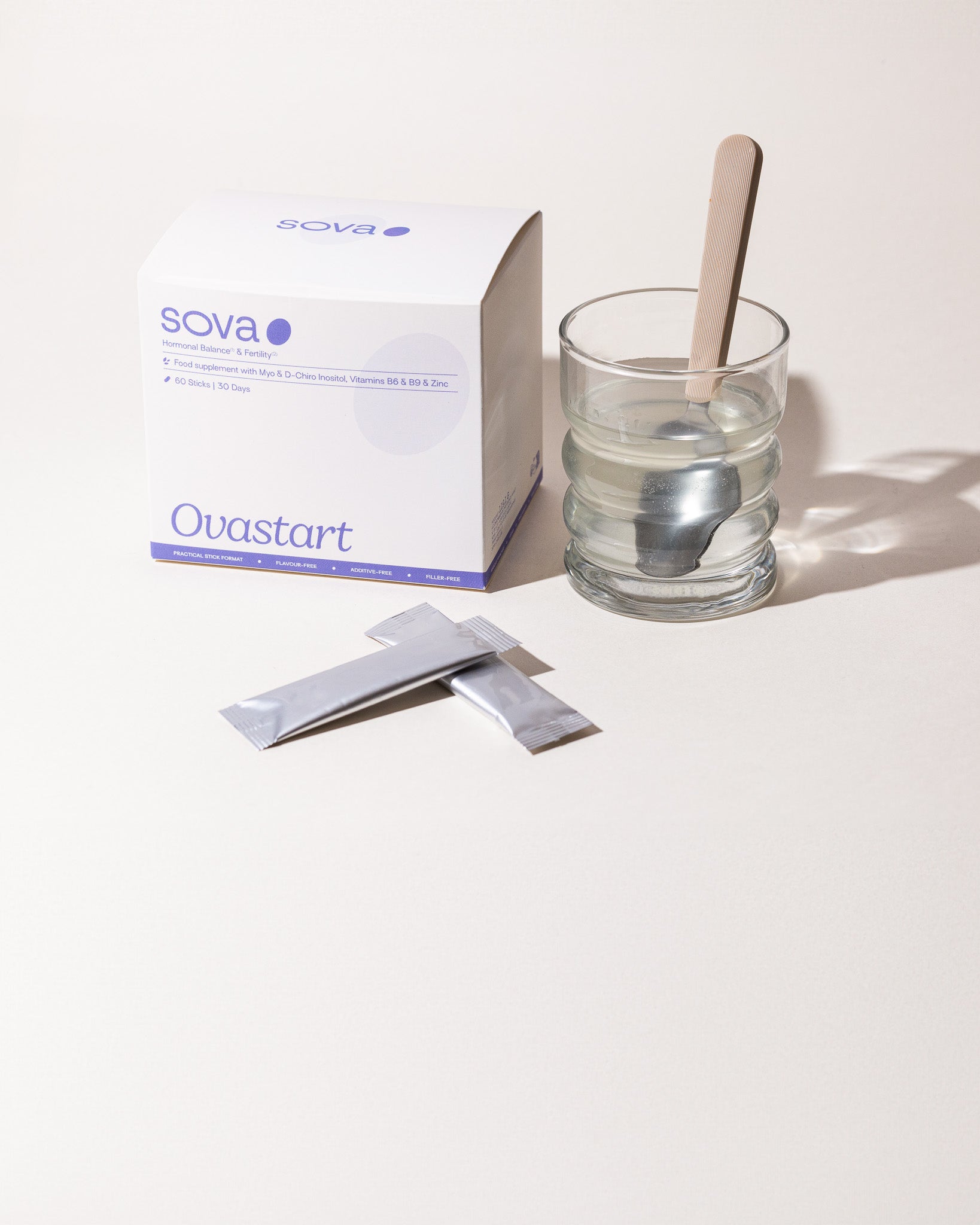
Inositol - the Ovastart powder stick: A meta-analysis of randomised controlled trials found that inositol supplementation improves insulin resistance and hormonal balance in women with PCOS (5). By supporting insulin sensitivity at the cellular level, it helps reduce the water retention and metabolic bloating that insulin resistance drives.
Probiotics with Lactobacillus reuteri: Given the gut dysbiosis associated with PCOS, targeted probiotic supplementation can help rebalance the microbiome and reduce intestinal permeability (2). Lactobacillus reuteri in particular has been studied for its role in modulating the gut-hormone axis - it has shown an ability to influence sex hormone metabolism and reduce androgen levels indirectly, making it especially relevant in PCOS (4). Our SOVA Probiotics formula includes L. reuteri alongside other clinically relevant strains for comprehensive gut support. Discover our PCOS Probiotics.
Magnesium bisglycinate: Beyond its role in blood sugar regulation, magnesium supports gut motility and helps relax the smooth muscle of the intestinal wall - directly easing the distension characteristic of PCOS bloating. The bisglycinate form is particularly well-tolerated and easily absorbed.
👉 For a full overview, check our comprehensive PCOS dietary supplements guide.
4. Activate the Vagus Nerve
The vagus nerve is the primary communication pathway between the brain and the gut. When this nerve is underactivated - which is common in chronic stress states - digestion slows, gut motility drops, and bloating worsens. Supporting vagal tone improves the body's "rest and digest" response.
Two accessible approaches:
- Diaphragmatic breathing (belly breathing): breathing in for 4 counts and out for 6 to 8 counts activates the parasympathetic nervous system and directly stimulates the vagus nerve. Practising this for 5 minutes before or after meals can make a noticeable difference over time.
- Gentle somatic movement: restorative yoga, tai chi, or a slow walk following a meal supports gut motility without placing stress on the body's hormonal systems.
5. Allow Your Body a Full Rest Window Each Night
Sleep deprivation is one of the fastest routes to a PCOS flare-up. Even a single night of poor-quality sleep raises cortisol and insulin levels - both of which amplify bloating. Allowing your body a 7-to-8-hour rest window helps the system naturally regulate insulin overnight, and supports the cortisol rhythm that governs inflammation the following day.
Consistent wake times - even at weekends - are one of the most effective anchors for the circadian rhythm, which in turn influences hormonal regulation.
👉 Cortisol and stress levels play a major role in hormonal balance and fluid retention.
6. Embrace Gentle, Consistent Movement
High-intensity exercise can temporarily raise cortisol in women with PCOS, which may worsen symptoms during a flare. Low-to-moderate intensity movement is considerably more beneficial for managing PCOS bloating:
- 10 to 20 minute walks after meals
- Yoga or Pilates — forward folds and seated twists in particular help decompress the digestive tract
- Swimming or cycling at a conversational pace
7. Track Your Cycle and Symptoms
PCOS bloating tends to be more pronounced at specific points in the hormonal cycle - particularly around ovulation (when oestrogen peaks) and in the premenstrual phase. Tracking these patterns makes it possible to anticipate heavier days and take gentle action before symptoms take hold.
A simple notebook or app noting bloating severity, food, sleep quality, stress level, and cycle day will reveal patterns within 4 to 8 weeks.
✅ Your Daily De-Bloat Checklist
- 🥗 Eat fibre before carbohydrates at every meal
- 🚶 Take a 10-minute walk after lunch and/or dinner
- 🧘 5 minutes of diaphragmatic breathing in the evening
- 💧 1.5 to 2 litres of water throughout the day (not concentrated around meals)
- 🌙 A consistent 7-to-8-hour sleep window, same wake time daily
- 🚫 No refined sugar before midday (helps anchor morning insulin levels)
- 🌿 One serving of fermented food (e.g. kefir, kimchi, sauerkraut)
- 💊 Ovastart powder stick with breakfast for inositol and B-vitamin support
When to See a Doctor
PCOS bloating is uncomfortable but manageable. There are, however, situations where symptoms may warrant clinical investigation. Seeing your GP or gynaecologist is advisable if:
- Bloating is severe, constant, or has progressively worsened over weeks
- There is sharp or stabbing pelvic pain alongside the bloating
- Bloating is accompanied by unexplained weight gain, particularly around the abdomen
- You feel full very quickly when eating, or notice a visible abdominal mass
- There are changes in bowel habits alongside the bloating
Conditions to consider ruling out:
- Ovarian cysts: fluid-filled sacs that can cause acute bloating and pelvic pressure, distinct from PCOS follicles
- Endometriosis ("endo belly"): causes severe cyclical bloating, often closely linked to menstruation, and affects an estimated 10% of women
- SIBO: persistent bloating, belching, and irregular stools that may need separate diagnosis and treatment
A pelvic ultrasound can help rule out structural causes. If you would like to understand what a PCOS diagnosis process typically involves, our guide walks through the key assessments: Understanding PCOS: symptoms, diagnosis, and next steps.
We hope this article has given you a clearer picture of why PCOS causes bloating - and, more importantly, what you can do to support your body. At SOVA, we believe every woman deserves answers that actually make a difference. You are not alone in this. 💜
Scientific References
Over 50,000 women have already adopted our routines, rating us an excellent 4.7/5 average (from 3,300+ reviews). Our supplements are formulated in French laboratories using clean, carefully sourced ingredients, with a maximum of patented active ingredients proven for their effectiveness.
- Founded by women with PCOS, we understand the reality of hormonal disorders.
- Clinically studied: High-quality ingredients, including patented forms like Quatrefolic® and an optimal Myo-/D-Chiro Inositol ratio.
- Holistic support: Formulated for hormonal balance, metabolic health, inflammation, mood, and cycle regulation.
- Science-led formulas: Transparent ingredients with absolutely no unnecessary additives.