


The Balance Bundle
The Hormone Balance Supplements Designed for PCOS - Two Products, One Complete System
From £53
Table of contents
Removing facial hair with PMOS (PCOS) can feel like a job that is never finished, because the hairs keep coming back coarser than before.
Here is the honest version of how to get rid of chin hair when you have PMOS. It takes two things happening at the same time: removing the hair you already have, and quietly turning down the hormonal signal that keeps making more. One without the other is half a strategy. We will walk through both.
This content is for information and does not replace NHS medical advice. If your symptoms are new, severe, or worrying, speak to your GP.
Why does PMOS (PCOS) cause chin hair?
Chin hair in PMOS is driven by androgens, the hormones often labelled as "male" even though every woman makes them. When androgen levels run high, or when your follicles are simply more sensitive to them, the fine, pale, barely-there vellus hair on your chin is converted into terminal hair: dark, thick and wiry. This coarsening across the jaw, chin and upper lip is called hirsutism, and it affects around one in ten women, with PMOS the single most common cause (1).
Insulin is the piece most people miss. In PMOS, cells often respond poorly to insulin, so the body produces more of it to compensate. That excess insulin does two things at once. It pushes the ovaries to make more testosterone, and it lowers your liver's production of SHBG (sex hormone-binding globulin), the protein that normally keeps testosterone bound and inactive (6). Less SHBG means more free testosterone, and free testosterone is the fraction that actually reaches the hair follicle. So high insulin raises your androgens and unlocks them at the same time, which is why chin hair is rarely just a skin problem. It is also why an inositol and omega-3 formula that supports insulin balance works on the cause rather than the symptom, steadying the very mechanism that keeps feeding your follicles.
Understanding this changes what you expect from treatment. Removal clears what is already there. Lowering androgens is what slows the next wave.
Does having hair on your chin mean you have PMOS?
No. A few stray or dark chin hairs are completely normal and very common, especially with age or genetics. What points towards PMOS is sudden, rapid or coarse growth spreading across the jawline and neck, particularly alongside irregular periods, acne or weight changes. If that describes you, it is worth asking your GP about testing.
How to safely remove PMOS (PCOS) chin hair
PMOS-prone skin tends to be reactive: quicker to redden, more likely to scar or darken after irritation. So the method matters as much as the result. Pairing gentle removal with skincare made for hormone-sensitive skin protects the barrier while you manage the hair.
Shaving and dermaplaning
Let us bust the biggest myth first: shaving does not make hair grow back thicker or faster. It cuts the hair at the surface, giving a blunt tip that can feel stubbly, but it does nothing to the follicle underneath. A single-blade facial razor or a dermaplaning tool, used on clean skin, is one of the gentlest and cheapest options available. Prep the skin, glide at a shallow angle, and moisturise afterwards to keep irritation and ingrown hairs down.
Waxing, plucking and threading
These pull hair from the root, so results last longer, but on sensitive PMOS skin they carry real downsides. Repeated pulling can trigger post-inflammatory hyperpigmentation (dark marks) and folliculitis. Plucking a single stubborn hair now and then is fine. Relying on it daily is not the goal, because constant trauma to the follicle keeps the area inflamed.
Laser and electrolysis: the UK funding reality
Laser targets the pigment in the hair to damage the follicle, while electrolysis destroys each follicle individually with a fine current. Both can give lasting reduction. The catch in the UK is financial: laser and electrolysis for hirsutism are generally not routinely funded on the NHS, so most women self-fund privately. That is exactly why the hormonal side matters. If your androgens stay high, new follicles keep activating, and a course of laser you paid for can be undermined by fresh growth. Treating the root protects the investment.
NHS treatments for hirsutism: what your GP can prescribe
If home methods are not enough, your GP has options. Knowing them in advance makes the appointment far less daunting.
What to expect at your GP appointment
Your GP may assess your hair growth using the Ferriman-Gallwey score, which rates several body areas from 0 to 4. A total at or above 8 typically indicates hirsutism in White women, with lower thresholds for East Asian women and higher ones for Mediterranean and Middle Eastern backgrounds. They may also check your bloods for testosterone and other hormones.
Vaniqa (eflornithine cream)
Vaniqa is the only topical prescription licensed in the UK specifically for facial hirsutism. It slows an enzyme (ODC) that hair growth depends on, thinning and slowing regrowth rather than removing hair. Two honest caveats: growth typically returns within about eight weeks of stopping, and many local Integrated Care Boards do not routinely fund it, so access varies by postcode. UK supply has also been intermittent. It works best combined with another removal method, not alone.

The pill and co-cyprindiol (Dianette)
A combined oral contraceptive is often the first-line medical route, helping to lower circulating androgens over several months. When symptoms are stubborn, co-cyprindiol (Dianette) may be prescribed. It is effective, but the MHRA has issued safety notes on blood clot (VTE) risk and, with long-term cyproterone use, a rare meningioma risk, so it is usually a considered choice rather than a first step.
Spironolactone
Unlike in the US, spironolactone is prescribed off-label for hirsutism in the UK. It blocks androgens at the follicle and can genuinely help, but BNF guidance requires reliable contraception (because of risks to a developing pregnancy) plus monitoring of kidney function and potassium. It is a conversation to have properly with your GP.
Finasteride and flutamide (specialist options)
When first-line treatments are not enough, a specialist may consider two further off-label anti-androgens. Finasteride blocks the enzyme that converts testosterone into its more potent form at the follicle, while flutamide blocks androgen receptors directly. Both are used rarely and only under specialist supervision: both require strict contraception because of the risk to a developing baby, and flutamide in particular needs liver monitoring. They are expert-level tools, not everyday prescriptions, but worth knowing exist if your consultant raises them.
How to slow PMOS (PCOS) chin hair naturally
This is the part with the most leverage over time, because it works on the androgens themselves. Progress is measured in months, not days, so give your body the grace and space to adapt naturally.
Does chin hair mean low oestrogen or high testosterone?
In menopause, falling oestrogen allows relative androgen dominance. In PMOS the driver is different: actively elevated testosterone and insulin. That distinction matters, because it tells you where to aim. In PMOS, calming insulin and lowering androgens is the target, which is closely tied to your underlying insulin resistance.
Does your type of PMOS change your hair?
Facial hair shows up differently depending on what is driving your PMOS, whether that is mainly insulin resistance, adrenal androgens, inflammation, or a post-pill rebound. Working out which type of PMOS you have helps you target the right root cause instead of guessing.
Spearmint tea
Spearmint is the most researched food-based anti-androgen for PMOS. Drinking spearmint tea twice a day has been shown to lower free testosterone in women with hirsutism over a few months (2, 3). It will not clear coarse hairs overnight, but as a daily habit it gently nudges your hormones in the right direction. Building it into a simple tea ritual makes it easy to keep up.
Inositol and omega-3
Inositol improves how your cells respond to insulin, and because insulin drives ovarian testosterone, better insulin sensitivity means less androgen production at the source. Meta-analysis supports inositol for improving insulin and hormonal markers in PMOS (4), and omega-3 has been shown to help lower testosterone too (5). Together they address the exact chain that turns fine chin hair into coarse hair.
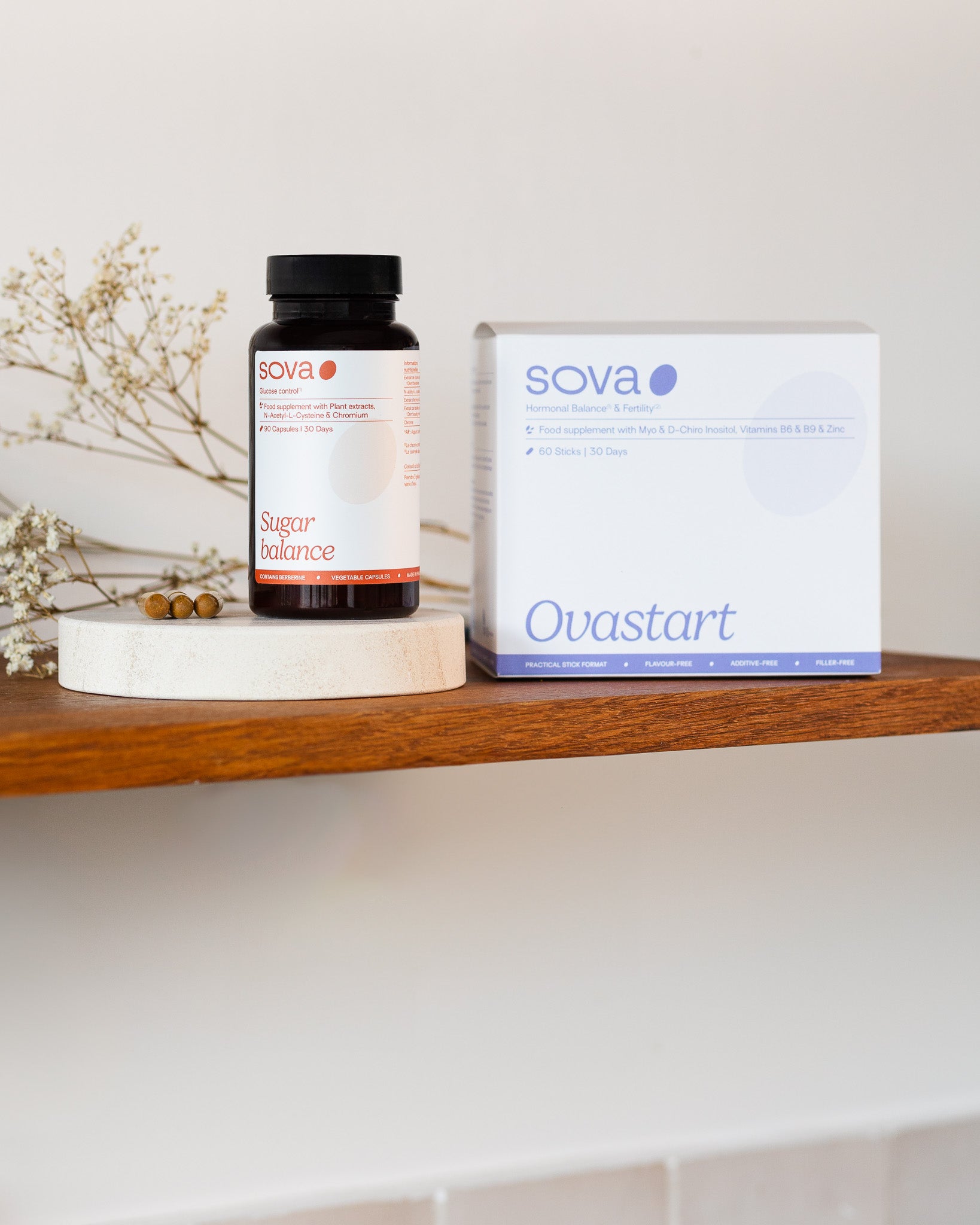
If you would rather not assemble this piece by piece, the two actives that matter most here come together in the Ovastart and Sugar Balance pack. Ovastart brings the inositol and omega-3 that improve how your cells handle insulin, while Sugar Balance targets the glucose spikes that set off the insulin surges feeding androgen production. Working on insulin from both angles is what steadily lowers the free testosterone reaching your follicles.

Zinc, saw palmetto and reishi
Spearmint is not the only plant-based lever. Zinc at a therapeutic dose has been shown to improve androgen-related markers and reduce hirsutism scores in PMOS (7), and it doubles as support for skin and hair quality. Saw palmetto and reishi work through a different route: they slow 5-alpha-reductase, the enzyme that converts testosterone into its more potent form right at the follicle (8). Traditionally used for hormonal balance, they target the same activation step that finasteride blocks, gently and from the inside.
Blood sugar and meals
Every sharp glucose spike triggers an insulin surge, and insulin feeds androgen production. You can soften that curve without a rigid diet: eat protein and fibre before carbohydrates, favour lower-GI choices, and try not to eat carbs on their own. Small, repeatable habits beat perfection here.
The emotional weight of facial hair
Chin hair is rarely just about hair. The mirror-checking, the stubble you feel before anyone can see it, the anxiety before a date or a close-up photo: these are real, and they are exhausting. The daily maintenance is genuine emotional labour, and it deserves to be taken seriously, not brushed off. Managing the hormones behind the hair often does more for how you feel than any single removal session, because it slowly gives you back the hours and the headspace that plucking quietly takes.
Conclusion
You cannot out-tweeze PMOS chin hair, and you were never meant to. The approach that works is layered: clear the coarse hair with a method that respects your skin, use your GP's options where they fit, and steadily lower the androgens underneath so fewer new hairs ever turn coarse. Give it a few months of consistency, and the mirror stops running your day. 🌿
F.A.Q about chair hair & PMOS
How do I stop chin hair from PMOS?
You stop PMOS chin hair by combining internal hormone regulation with external removal. Easing insulin resistance and lowering androgens slows new follicles from activating, while dermaplaning, laser or electrolysis clears the coarse hair you already have, safely and without over-irritating the skin.
Does having hair on your chin mean you have PMOS?
No. A few fine or dark chin hairs are completely normal. But sudden, rapid or coarse growth across the jawline and neck often points to elevated androgens, a key feature of PMOS, especially alongside irregular cycles or acne.
Is PMOS facial hair reversible?
It is manageable rather than fully reversible on its own. Coarse hairs that have already formed will not vanish naturally. Lowering androgens stops new fine hairs turning coarse, while laser or electrolysis is needed to remove existing terminal hair.
What are the four main types of PMOS?
They are insulin-resistant, adrenal, inflammatory and post-pill PMOS. Identifying yours helps explain why your body is overproducing androgens, so you can tailor your diet, lifestyle and supplements to slow facial hair at the root.
Does chin hair mean low oestrogen?
Not usually. Low oestrogen allows relative androgen dominance in menopause, but PMOS chin hair is typically driven by actively raised testosterone and insulin rather than low oestrogen alone.
- Androgens : it's a group of hormones, including testosterone, that every woman makes in small amounts, which is why an excess in PMOS can trigger chin hair and acne.
- Terminal hair : it's thick, dark hair (as opposed to fine vellus hair), which is why the "coarsening" you notice is really vellus hair being converted under hormonal pressure.
- Hirsutism : it's the growth of coarse, dark hair in typically male-pattern areas like the chin and jaw, which is why it is one of the most visible signs of high androgens.
- Insulin resistance : it's when your cells respond poorly to insulin so your body makes more of it, which is why it quietly drives up the testosterone behind facial hair.
- Ferriman-Gallwey score : it's the scale GPs use to rate hair growth across the body, which is why it often comes up at your appointment as a way to confirm hirsutism.
Scientific References
Over 50,000 women have already adopted our routines, rating us an excellent 4.7/5 average (from 3,300+ reviews). Our supplements are formulated in French laboratories using clean, carefully sourced ingredients, with a maximum of patented active ingredients proven for their effectiveness.
- Founded by women with PCOS, we understand the reality of hormonal disorders.
- Clinically studied: High-quality ingredients, including patented forms like Quatrefolic® and an optimal Myo-/D-Chiro Inositol ratio.
- Holistic support: Formulated for hormonal balance, metabolic health, inflammation, mood, and cycle regulation.
- Science-led formulas: Transparent ingredients with absolutely no unnecessary additives.
The Hormone Balance Supplements Designed for PCOS - Two Products, One Complete System