



The Balance Bundle
The Hormone Balance Supplements Built for PCOS - Two Products, One Complete System
From £53
Table of contents
The benefits of saffron on the menstrual cycle, PMS, and periods
The menstrual cycle can feel like a rollercoaster, marked by physical discomfort and, more notably, intense emotional fluctuations. Among the most common challenges is premenstrual syndrome (PMS). According to NAPS, PMS can be characterised by over 150 symptoms, the most notable being mood swings, irritability, and fatigue, affecting around 30% of women of reproductive age (1).
If you're reading this article, chances are you're part of this statistic. If you're seeking natural solutions to better manage your menstrual cycle, you're in the right place. In this article, we'll explore the benefits of saffron on the menstrual cycle, particularly for PMS.

What is premenstrual syndrome (PMS)?
Premenstrual syndrome (PMS) is a set of physical and psychological symptoms that a woman may experience one to two weeks before her period. It occurs during the second phase of the cycle, known as the luteal phase, following ovulation.
Women affected by PMS may feel irritable, overly sensitive, sad, anxious, or mildly depressed. Physically, they might experience pain, digestive issues, breast tenderness, water retention, headaches, or sleep disturbances.
It's worth noting that PMS can be more pronounced in women with deeper hormonal imbalances such as polycystic ovary syndrome (PCOS), thyroid disorders, endometriosis, or adenomyosis.
Premenstrual dysphoric disorder (PMDD) is a more severe form of PMS. It can significantly disrupt daily life, as its symptoms resemble those of depression.
Although the causes of PMS and PMDD remain unclear, they are likely linked to hormonal changes, such as a drop in progesterone levels after ovulation. These menstrual disorders may also result from deficiencies in serotonin, magnesium, or calcium.
Serotonin and the menstrual cycle: what’s the connection?
Serotonin, often called the "happiness hormone," plays a key role in regulating mood, sleep, appetite, and emotions. Adequate serotonin levels promote a sense of calm and well-being.
Serotonin production is closely tied to oestrogen levels, as the latter stimulates serotonin production and regulates its receptors. The natural oestrogen drop during the second half of the cycle may explain the mood disturbances experienced before menstruation. These include irritability, anxiety, emotional fatigue, depression, sugar cravings, and sleep problems.
Thus, women who produce less oestrogen might also produce less serotonin, making them more susceptible to PMS and mood disturbances. This could apply to women with PCOS (linked to hyperandrogenism) or oestrogen deficiencies (hypoestrogenism).
Saffron: an ancient plant with numerous benefits
You likely know saffron for cooking. This spice, the most expensive in the world, gives dishes an intense yellow colour. Saffron, scientifically known as Crocus sativus, is native to Iran and has been used for millennia for its health benefits.
In ancient times, it was valued for its effects on mood, libido, urinary health, and digestion. During the Middle Ages, it was used to treat respiratory and heart conditions, as well as insomnia.
Today, saffron is widely studied for its effects on the nervous system, particularly its influence on moods. A 2017 study examined the effects of a saffron-based supplement on mood improvement and stress management compared to a placebo. The study concluded that saffron may improve mood and help manage stress. It also appears to have a positive effect on anxiety (2).
Additionally, a 2013 review of randomised studies explored saffron's effects on psychological and behavioural issues. The review suggested that saffron acts similarly to antidepressants, improving mood by modulating levels of certain neurotransmitters like serotonin (3).
The effects of saffron on PMS and PMDD
Several studies agree on the fact that saffron has effects comparable to antidepressants (4, 5). Saffron’s active compounds, safranal and crocin, are known to inhibit serotonin reuptake.
What does this mean? Essentially, saffron's active compounds delay the body's reabsorption of serotonin, leaving more serotonin available to your system. Taking saffron could therefore boost serotonin levels, counteracting its natural decline during the luteal phase. This mechanism may alleviate PMS and PMDD symptoms.
Saffron has shown particular effectiveness in alleviating psychological symptoms, including low mood, anxiety, and stress-induced snacking (3).
Other studies have shown that saffron’s effects on serotonin also provide anti-inflammatory and calming properties, which may reduce PMS and PMDD-related pain. Additionally, saffron may positively influence cortisol secretion, promoting a sense of well-being and calm before menstruation (6).
If PMS affects your sleep quality, taking saffron could potentially help. A 2022 placebo study involving 379 participants suggests that saffron may improve both sleep duration and quality (7). You can read more about how sleep impacts hormonal balance in our dedicated article.

How to take saffron?
For women experiencing discomfort from PMS or PMDD, several studies suggest taking saffron-based capsules. Saffron could help achieve a more balanced cycle with fewer mood swings, less anxiety, reduced pain, and improved sleep quality.
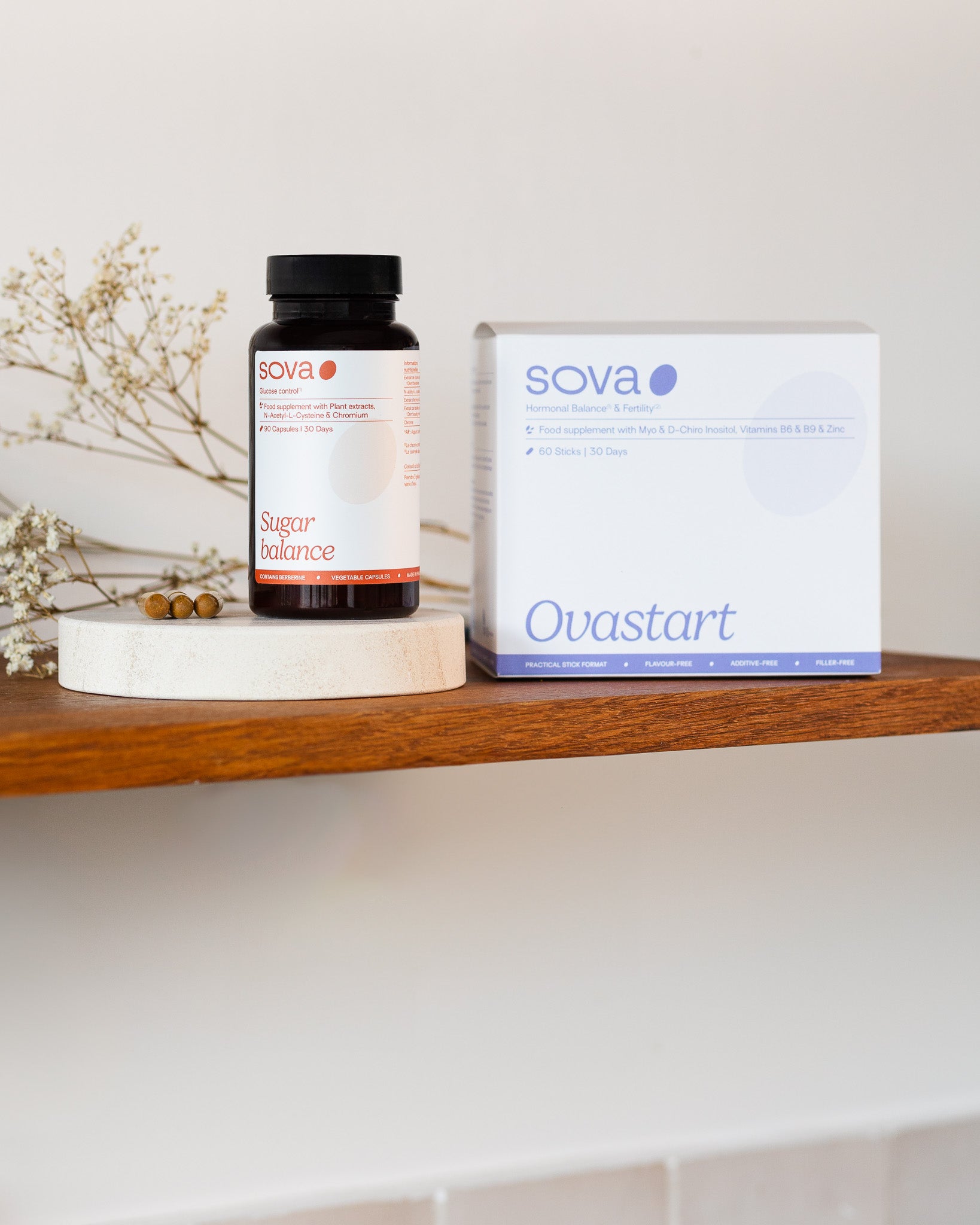
If you want to support your hormonal balance naturally, you can take our Balance Bundle— combining Ovastart (inositol-based supplement) with Sugar Balance (berberine-based formula). These act on both hormonal balance and emotional well-being, supporting your body through the entire cycle.
However, saffron may cause side effects in some cases, such as anxiety, increased appetite, nausea, or headaches. We recommend consulting a healthcare professional to determine the appropriate dosage and identify any contraindications.
We hope this article inspires you to discover the benefits of saffron and helps you find solutions for managing PMS or PMDD.
- PMS (Premenstrual Syndrome) : A group of physical and emotional symptoms that occur in the days before menstruation, including mood changes, cramps, breast tenderness and fatigue.
- Neurotransmitters : Chemical messengers in the brain, such as serotonin and dopamine, that regulate mood, emotions and pain perception. Saffron is known to influence some of these pathways.
- Serotonin : A neurotransmitter often referred to as the “feel-good” hormone, involved in mood regulation, emotional balance and sleep. Low serotonin levels are commonly linked to PMS-related mood symptoms.
- Inflammation : A natural immune response that, when chronic, can worsen menstrual pain, bloating and fatigue. Certain compounds in saffron have anti-inflammatory properties.
- Oxidative stress : An imbalance between free radicals and antioxidants in the body, which can contribute to fatigue, pain and hormonal discomfort. Saffron contains antioxidant compounds that help counteract this process.
Scientific references
SOVA was created by two sisters with PCOS who wanted products that truly worked. Our formulas are developed in-house with women’s health and micronutrition experts, using ingredients backed by clinical studies and compliant with European regulations.
- Built by women with PCOS, we know the reality of the symptoms.
- Clinically studied, high-quality ingredients, including patented forms like Quatrefolic® and an optimal Myo-/D-Chiro Inositol ratio.
- Holistic support for hormonal balance, metabolic health, inflammation, mood and cycle regulation.
- Transparent, science-led formulas with no unnecessary additives.
The Hormone Balance Supplements Built for PCOS - Two Products, One Complete System