



The Balance Bundle
The Hormone Balance Supplements Designed for PCOS - Two Products, One Complete System
From £53
Table of contents
- 01. How do I manage PCOS naturally?
- 02. Understanding the PCOS "root causes": why supplements work
- 03. The "Big Three": Essential Foundations for PCOS Support
- 04. Targeted Solutions: Supplements for Your Specific Symptoms
- 05. What supplements should I take if I have PCOS?
- 06. The "PCOS Stack": How to Safely Combine Supplements
- 07. Safe Shopping Checklist
- 08. Taking Your Time and Getting Support
If you're searching for the best PCOS supplements, you're not alone - and the options can feel overwhelming. From inositol to magnesium, spearmint to zinc, there's a lot of conflicting advice out there. While supplements aren't a cure for PCOS, the right ones can play a meaningful role in managing insulin resistance, reducing inflammation and supporting a regular cycle. This guide breaks down the science in plain terms, so you can make informed choices based on your specific symptoms.
How do I manage PCOS naturally?
Let's address this directly: PCOS cannot be "cured" in the traditional sense, but many of its underlying mechanisms can be managed and, in some cases, reversed. Natural management focuses on addressing the root causes (insulin resistance, chronic inflammation, and hormonal imbalance) through a combination of lifestyle changes and targeted nutrition. If you're struggling with absent cycles, read our guide to getting your period back with PCOS.
The foundation includes eating whole foods with a low glycaemic index, managing stress, getting adequate sleep, and moving your body regularly. Supplements come in as "gap-fillers". They provide concentrated doses of nutrients that support your body's ability to regulate blood sugar, reduce inflammation, and balance hormones. When combined with these lifestyle adjustments, natural management can lead to more regular cycles, improved energy, clearer skin, and better overall wellbeing.
Understanding the PCOS "root causes": why supplements work
PCOS is driven by three interconnected factors: insulin resistance, chronic low-grade inflammation, and elevated androgen hormones. These create a cycle that disrupts ovulation and leads to many of the symptoms you experience.
Learn more in our complete guide on insulin resistance and PCOS. Insulin resistance means your cells don't respond well to insulin, causing your body to produce more of it. High insulin levels then stimulate your ovaries and adrenal glands to produce excess androgens. Chronic inflammation worsens insulin resistance and further increases androgen production, while also contributing to symptoms like fatigue and mood changes. High androgens disrupt the delicate balance of hormones needed for ovulation, leading to irregular or absent periods, acne, and excess hair growth.
Supplements work by targeting these specific mechanisms. They don't replace healthy habits, but they provide concentrated nutrients that help break the cycle, whether by improving insulin sensitivity, reducing inflammation, or supporting hormone metabolism.
The "Big Three": Essential Foundations for PCOS Support
If you're new to PCOS supplements, these three form the core foundation. Research consistently shows they address the most common underlying issues.
Inositol (Myo-inositol combined with D-chiro-inositol): This nutrient plays a crucial role in insulin signalling and helps your cells respond better to insulin (learn more in our evidence-based guide on inositol for PCOS). Studies show that inositol supplementation lowers insulin levels, reduces androgens, and improves ovulation rates in women with PCOS. Research initially focused on a 40:1 ratio of myo-inositol to D-chiro-inositol, as this mirrors what's naturally found in the body.
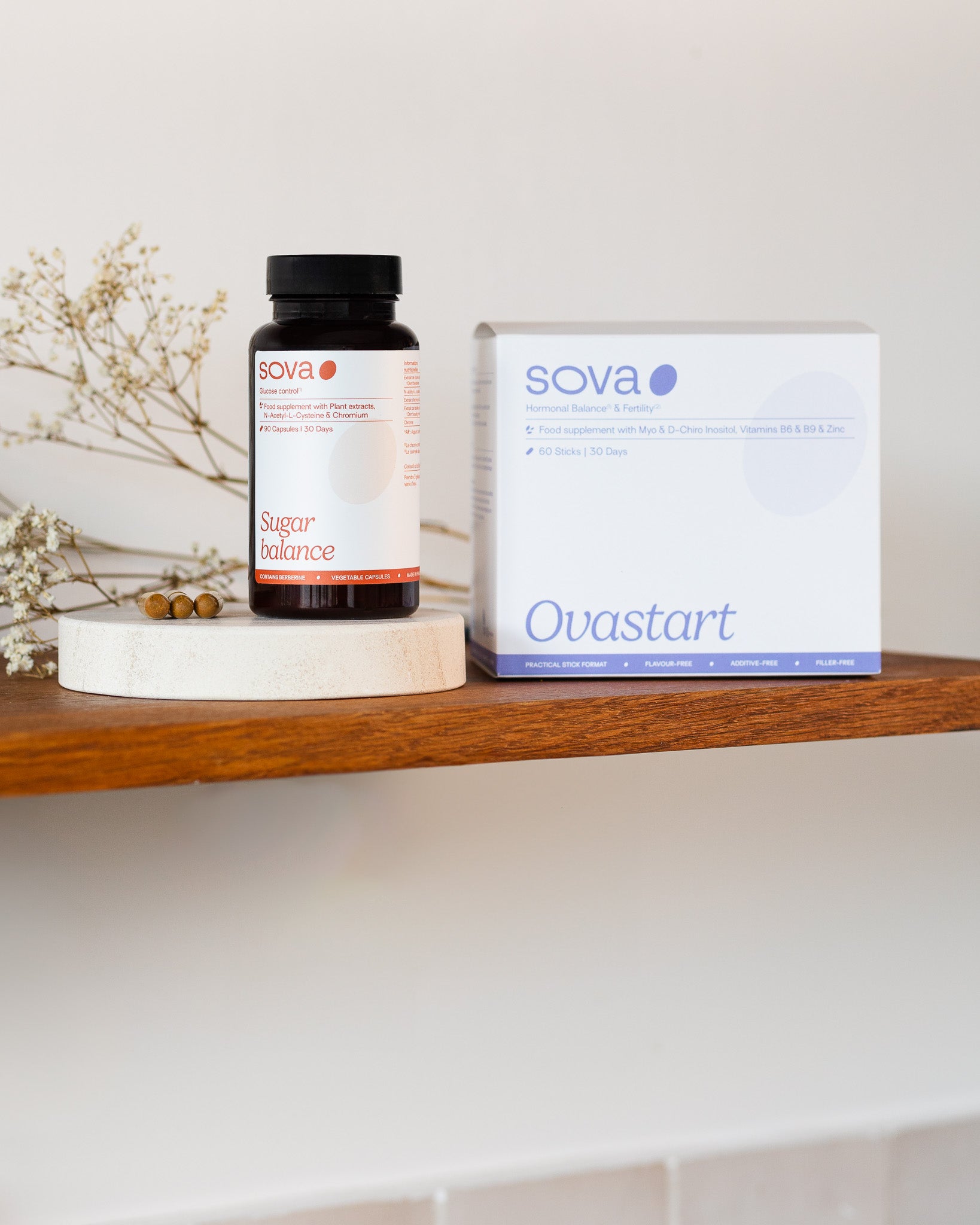
👉 Looking for therapeutic inositol support? Our Ovastart Myo-Inositol & D-Chiro Inositol Powder combines 4000mg of clinical inositols with zinc, folate, and B6 to support hormonal balance and egg quality.
Vitamin D3 with K2: Around 70% of women with PCOS are deficient in vitamin D. Supplementation has been shown to improve insulin resistance, lower testosterone and LH levels, and support ovulation. Taking it with vitamin K2 enhances absorption and ensures calcium is properly directed to bones rather than soft tissues.
Omega-3 fatty acids (high-EPA fish oil): These essential fats combat the chronic, low-grade inflammation that drives PCOS symptoms. Research shows that omega-3 supplementation reduces insulin resistance, lowers cholesterol and triglycerides, and may help regulate menstrual cycles by reducing testosterone levels. Aim for a supplement with a higher EPA content, as this form has the strongest anti-inflammatory effects.
Targeted Solutions: Supplements for Your Specific Symptoms
Beyond the foundational three, you can tailor your supplement routine to address your particular symptoms.
Best for Insulin Resistance & Weight Loss (Berberine & Chromium)
Berberine is often called "nature's Metformin" because it works in remarkably similar ways. It improves insulin sensitivity and helps regulate blood sugar. Research suggests it may be as effective as prescription medication for managing insulin resistance in PCOS. However, because of its potency, you should not combine berberine with Metformin or other blood sugar medications without medical supervision.
👉 Targeting insulin resistance and cravings? Discover Sugar Balance, our clinical formula combining Berberine with NAC, Chromium, Ceylon Cinnamon, and Gymnema Sylvestre for comprehensive metabolic support.
Chromium is a trace mineral that enhances insulin function. Some studies suggest it can improve glucose metabolism and may help with weight management when combined with dietary changes.
NAC (N-Acetyl Cysteine) also supports insulin sensitivity and has antioxidant properties that help reduce oxidative stress, which is often elevated in women with PCOS.
Best for Acne & Excess Hair (Zinc & Spearmint)
Zinc is a powerful tool for managing androgenic symptoms. It works by blocking the enzyme 5-alpha reductase, which converts testosterone into its more potent form, DHT. This is the hormone largely responsible for acne and excess facial hair. Zinc also reduces insulin resistance and supports immune function.
Spearmint tea has been shown in small studies to have anti-androgenic effects, potentially reducing hirsutism when consumed regularly (typically two cups daily).
Best for Fertility & Egg Quality (CoQ10 & NAC)
CoQ10 is an antioxidant that supports mitochondrial function, helping your cells produce energy more efficiently. This is particularly important for egg quality, as eggs require enormous amounts of energy to mature properly.
N-Acetyl Cysteine (NAC) helps reduce oxidative stress and improve insulin sensitivity. Some studies have found it improves ovulation rates and may enhance the effectiveness of fertility treatments.
The Breakthrough: Shatavari as a "Hormonal Adaptogen"
Shatavari, an herb used extensively in Ayurvedic medicine, has gained attention in research for its potential to support hormonal balance. In one study, 62% of women with PCOS who took an Ayurvedic treatment containing Shatavari conceived within three months, suggesting it may help restore ovulation.

Supporting Gut Health: An Anti-Inflammatory Strategy
Your gut health plays a surprisingly important role in PCOS management. Research has shown that dysbiosis (an imbalance in your gut microbiome) can worsen insulin resistance, increase blood sugar levels, and intensify inflammation. Supporting your digestive system through targeted nutrients helps maintain gut barrier integrity and reduce systemic inflammation.
Symptom-Supplement Quick Reference:
| Irregular or absent periods → | Inositol (Ovastart), Vitamin D |
Insulin resistance or difficulty losing weight → |
Berberine, Chromium, NAC (Sugar Balance), Omega-3 |
Combined hormonal and metabolic support → |
Ovastart + Sugar Balance |
Acne or excess facial hair → |
Zinc, Spearmint |
Trying to conceive → |
CoQ10, NAC, Inositol |
Stress and anxiety → |
Magnesium, Shatavari |
Gut health and inflammation → |
Gut barrier support nutrients |
What supplements should I take if I have PCOS?
Clinical research points to three high-impact supplements that address core PCOS mechanisms: Inositol for improving insulin sensitivity and restoring ovulation, Berberine for managing insulin resistance when lifestyle changes alone aren't enough, and Omega-3 fatty acids for reducing inflammation. These work together to target root causes rather than just masking symptoms.
The "PCOS Stack": How to Safely Combine Supplements
Taking multiple supplements requires some planning to ensure they work together effectively and don't cause digestive upset.
Morning routine (with breakfast):
Vitamin D3 + K2 (fat-soluble, so take with food containing healthy fats), Omega-3 fish oil, Inositol (half your daily dose, such as one Ovastart stick)
Evening routine (with dinner):
Inositol (remaining half dose, such as your second Ovastart stick), Magnesium glycinate (supports sleep and stress), Zinc (if taking separately, best absorbed with food)
Before meals:
Berberine-based supplements like Sugar Balance should be taken 30 minutes before meals for optimal blood sugar management.
Safe Shopping Checklist
When choosing supplements, quality matters as much as the nutrients themselves. Look for clean formulations without artificial colours or excessive fillers, therapeutic dosages proven in research, and bioavailable mineral forms (such as magnesium glycinate).
Taking Your Time and Getting Support
Getting your symptoms under control takes time, and that's completely normal. Give yourself at least three to six months to see meaningful changes, and remember that progress isn't always linear. If you're feeling overwhelmed, seek guidance from a registered dietitian, endocrinologist, or GP familiar with PCOS.
- Androgens : Often called "male" hormones (like testosterone), these are naturally present in women but are found at elevated levels in those with PCOS, leading to symptoms like acne and excess hair growth.
- Bioavailability : A measure of how well and how quickly a nutrient is absorbed and used by your body. For example, magnesium glycinate has higher bioavailability than magnesium oxide.
- Dysbiosis : An imbalance in the gut microbiome (the community of bacteria in your digestive system) that can worsen inflammation and insulin resistance.
- Inositol : A nutrient crucial for insulin signaling; it helps cells respond better to insulin, which in turn can lower androgen levels and restore regular ovulation.
- Insulin Resistance : A condition where the body’s cells do not respond properly to insulin, leading to high insulin levels that trigger the ovaries to produce excess androgens.
- Low Glycaemic Index (GI) : A rating system for foods containing carbohydrates. Low-GI foods are digested slowly, causing a slower, lower rise in blood sugar levels, which is ideal for managing PCOS.
Scientific References
Over 50,000 women have already adopted our routines, rating us an excellent 4.7/5 average (from 3,300+ reviews). Our supplements are formulated in French laboratories using clean, carefully sourced ingredients, with a maximum of patented active ingredients proven for their effectiveness.
- Founded by women with PCOS, we understand the reality of hormonal disorders.
- Clinically studied: High-quality ingredients, including patented forms like Quatrefolic® and an optimal Myo-/D-Chiro Inositol ratio.
- Holistic support: Formulated for hormonal balance, metabolic health, inflammation, mood, and cycle regulation.
- Science-led formulas: Transparent ingredients with absolutely no unnecessary additives.
The Hormone Balance Supplements Designed for PCOS - Two Products, One Complete System