


Table of contents
PMOS is the new name for polycystic ovary syndrome, renamed from PCOS in May 2026. And yes, it can absolutely make your periods more painful, even though pain has never sat among its headline symptoms. Understanding why is what turns the pain from a mystery into something you can act on. Let's walk through what is happening inside your body, how to tell PMOS cramps apart from something like endometriosis, and what genuinely brings relief.
Does PMOS (PCOS) Cause Painful Periods?
Yes, PMOS can cause painful periods, but not in the way most people assume. Chronic pelvic pain is not a core feature of the syndrome. What PMOS does is disrupt the rhythm of your cycle, and it is that disruption that sets the stage for intense cramping when a period finally comes.
The pain rarely comes from PMOS directly. It comes from what happens to your womb lining during the long gaps between periods.
Why PMOS (PCOS) Can Lead to Severe Cramps After Missed Periods
In a typical cycle, you ovulate, and roughly two weeks later your womb lining sheds. With PMOS, ovulation is often delayed or skipped entirely, so that tidy two-week countdown never starts. Weeks or even months can pass without a bleed.
All that time, oestrogen keeps signalling the lining to thicken, with no ovulation to balance it out. By the time a period finally arrives, there is far more tissue to shed, which means heavier bleeding and a womb that has to contract much harder to clear it. Those stronger contractions are what you feel as more intense cramps. If your periods have been absent for a few months before returning, this natural tissue build-up is usually why the cramps feel more intense.
The Role of Hormonal Imbalances and Prostaglandins
The other piece is chemical. As the lining breaks down, your body releases prostaglandins, the hormone-like compounds that tell the uterine muscle to contract. The more lining there is to shed, the more prostaglandins are produced, and higher prostaglandin levels mean stronger, more painful contractions.
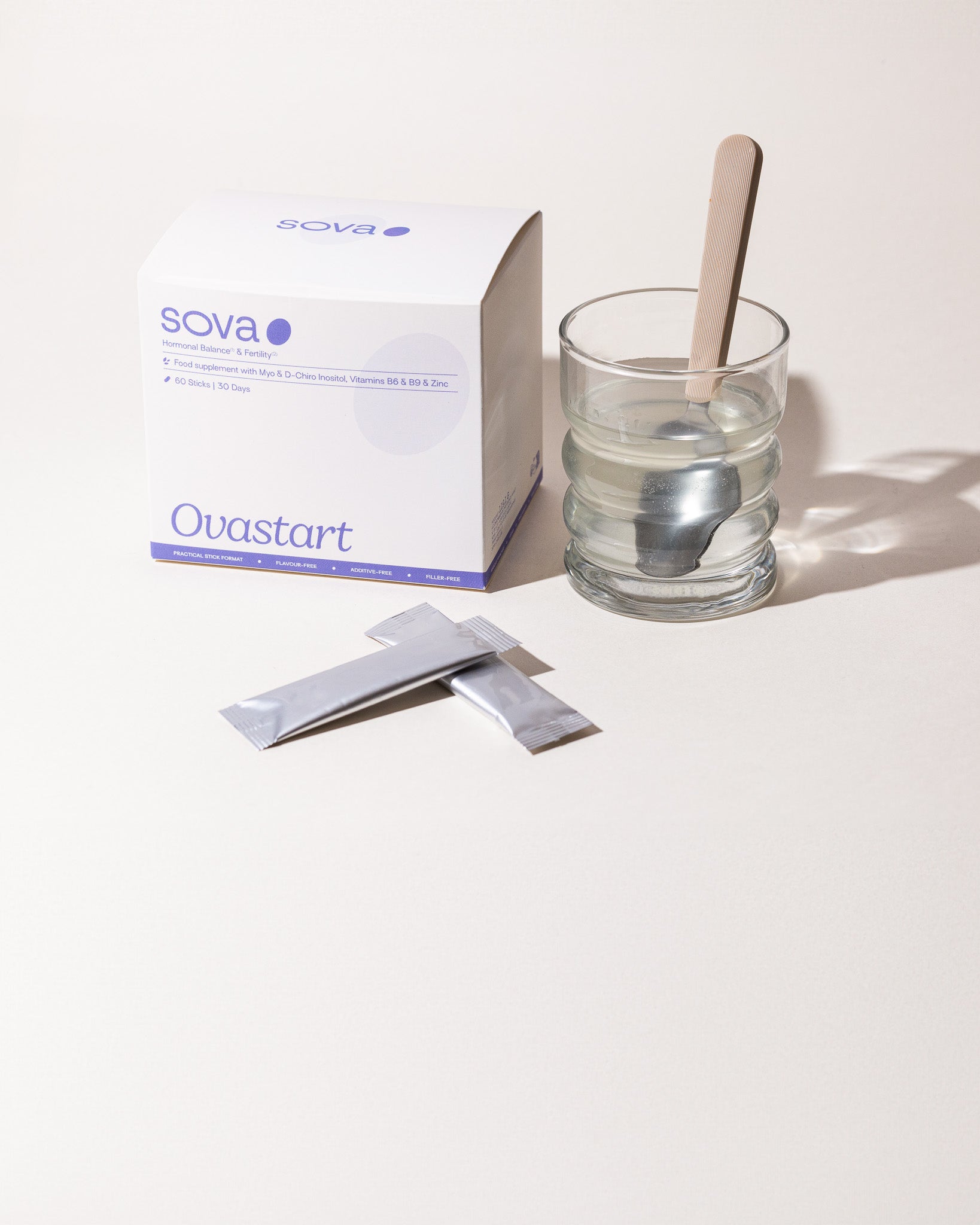
This is why easing PMOS cramps is less about gritting your teeth and more about calming that contraction-and-inflammation cascade. Approaches that lower prostaglandin activity, from anti-inflammatory nutrients to heat, tend to bring the most relief, which is the thinking behind a formula designed to ease painful periods.
Before we get to relief, though, there is an important fork in the road. Not every painful period in a woman with PMOS is caused by PMOS, and telling the two apart matters. Alongside targeted support for painful periods, it is worth ruling out a condition that mimics these cramps closely: endometriosis.

PMOS (PCOS) Pain vs. Endometriosis: How to Tell the Difference
Here is the distinction that changes everything: PMOS pain tends to arrive with a period, while endometriosis pain tends to be there all month. If your discomfort is tied to your bleed, PMOS is the likely culprit. If it is daily, dragging, and shows up between periods too, endometriosis deserves a proper look.
Key Differences in Symptoms and Pain Patterns
| Feature | PMOS (PCOS) | Endometriosis |
|---|---|---|
| Main symptoms | Irregular or missing periods, excess hair, acne, insulin resistance | Chronic pelvic pain, painful sex, painful bowel movements, fatigue |
| Type of pain | Cramping that comes with a delayed, heavy period | Constant or near-constant pain, often severe and disabling |
| Cycle pattern | Long, unpredictable cycles or absent periods | Cycles may be regular, but pain persists throughout |
| How it's diagnosed | Blood tests, ultrasound, symptom review (Rotterdam criteria) | Usually confirmed by laparoscopy (keyhole surgery) |
The table makes the contrast clear, but the single biggest clue is timing and severity. Pain that leaves you unable to function, that painkillers barely touch, or that comes with pain during sex or bowel movements points far more towards endometriosis than PMOS.
Can You Have Both PMOS (PCOS) and Endometriosis?
Yes, the two can genuinely coexist. Estimates vary a lot depending on who is studied: in the wider population it is only a few percent, but among women already being seen for endometriosis, one clinical study found close to a quarter also met the criteria for PMOS (1). Researchers still debate exactly how the two conditions relate, and some even view them as near-opposite ends of a hormonal spectrum. But what matters for you is simple: having both is possible, and it is worth raising with your doctor if your pain doesn't fit the pattern.
There is helpful guidance on navigating a dual diagnosis if this sounds like your situation.
Other Causes of Pelvic Pain Worth Ruling Out
Not all pelvic pain in PMOS comes from your period or from endometriosis. A couple of other causes are worth keeping on your radar:
- Functional (follicular) cysts are common with PMOS. Most are harmless and clear on their own, but occasionally one ruptures or twists. A twist, known as ovarian torsion, causes sudden, sharp, usually one-sided pain and needs urgent medical care.
- Adenomyosis, where tissue similar to the womb lining grows into the muscular wall of the womb, causes heavy, painful periods and often sits alongside endometriosis.
If your pain comes on suddenly and severely, or your periods are becoming heavier and more painful over time, these are worth flagging to your doctor rather than managing alone.

How to Manage and Relieve PMOS (PCOS) Period Pain at Home
Now the part you came for: what actually helps. Because PMOS cramps trace back to hormonal imbalance and prostaglandins, the most effective relief works on both fronts at once.
Targeted Supplements: Inositol, Magnesium & Omega-3s
Myo-inositol works upstream, on the root cause. By improving how your body responds to insulin, it helps restore more regular ovulation, which over time means fewer long gaps, a thinner lining, and lighter, less painful bleeds. Its insulin-sensitising effect in PMOS is well documented (2). You can dig into how inositol supports hormonal balance if you want the detail.
Magnesium works on the cramp itself. It helps the uterine muscle relax rather than clench, and in trials it meaningfully reduced menstrual pain and related symptoms (3). Think of magnesium as easing the contraction, while inositol addresses why the lining was so thick in the first place.
Omega-3s tackle the inflammation. These fatty acids help dial down prostaglandin production, and across multiple studies they reduced menstrual pain and the need for painkillers (4).
Anti-Inflammatory Nutrition & Lifestyle Adjustments
Food shapes inflammation more than we tend to give it credit for. An anti-inflammatory plate (plenty of vegetables, oily fish, olive oil, nuts and whole grains, with less ultra-processed food and refined sugar) supports steadier blood sugar and calmer prostaglandin activity. For women with PMOS, this does double duty: steadier insulin means steadier hormones, which means calmer cycles.
Gentle, regular movement helps too. You don't need intense physical exertion to feel better. Gentle activities like walking, yoga and stretching improve circulation and ease pelvic tension without spiking your stress hormones.
How Stress and the HPA Axis Amplify the Pain
Stress is physical, not only mental. When you are under sustained pressure, your HPA axis (the system that governs your stress response) stays switched on, keeping cortisol elevated. In PMOS this matters twice over: raised cortisol feeds the low-grade inflammation already present, and it turns up how intensely your nervous system registers pain. In practice, a stressful month can make the very same cramps feel sharper.
This is why winding down is part of the plan, not a luxury. Steady sleep, slow breathing, time outdoors and gentle movement all help settle the HPA axis, which in turn calms both inflammation and pain sensitivity.
Immediate Heat & Gentle Physical Relief Techniques
When cramps hit right now, reach for heat. A hot water bottle or heat patch on your lower abdomen relaxes the uterine muscle and eases the spasm, and studies put it on a par with painkillers for period pain. Heat is the simplest, fastest relief you have, and it costs almost nothing.
Pair it with gentle pelvic stretches (child's pose, knees hugged to your chest, or slow hip circles) to release the tension that cramping builds up. A warm bath does much the same job.

When to See a Doctor About Your Period Pain
Home relief covers a lot of ground, but some pain is a signal, not just a symptom. Period pain that stops your life is never something you simply have to endure.
Red Flag Symptoms You Shouldn't Ignore
Book an appointment if you notice any of these:
- Pain that painkillers barely touch, or that keeps you off work or out of your normal routine
- Very heavy bleeding: soaking through a pad or tampon every hour, or passing large clots
- Pain that is there between periods, during sex, or when going to the toilet
- Sudden, severe pain on one side, especially with nausea or vomiting: this can point to a cyst rupture or ovarian torsion and needs urgent care
- Feeling faint, dizzy or being sick with the pain
None of these automatically mean something is seriously wrong, but they do mean your pain deserves proper investigation rather than guesswork.
How to Prepare for Your Appointment and Get Taken Seriously
Women's pain is too often brushed aside, so walking in with evidence changes the conversation. Track your symptoms across two to three cycles before you go. Note down:
- Pain intensity, scored from 1 to 10, day by day
- When the pain starts and stops relative to your bleed
- How it affects daily life: missed work, cancelled plans, disturbed sleep
- What you have already tried, and whether it helped
This turns a vague "my periods are bad" into a clear pattern a clinician can act on. If you're unsure where to start, this guide on knowing which specialist to see points you in the right direction.
F.A.Q about PMOS (PCOS) & Period Pain
What are the main symptoms of PMOS (PCOS)?
PMOS mainly causes irregular or missing periods, difficulty conceiving, excess facial or body hair, adult acne, oily skin, and thinning scalp hair. Symptoms vary widely from one woman to the next and stem from hormonal imbalances, especially raised androgen levels and often insulin resistance.
What causes a PMOS (PCOS) flare-up and what are the symptoms?
A PMOS flare-up is a temporary worsening of symptoms: think intense fatigue, sharp mood swings, irregular bleeding and heightened pelvic discomfort. Flare-ups are usually triggered by hormonal shifts brought on by acute stress, poor sleep, dietary changes, or a drop in physical activity.
Is PMOS (PCOS) more painful than endometriosis?
No, endometriosis is generally far more painful than PMOS. Chronic, severe pelvic pain is the defining feature of endometriosis, whereas pain is not a core PMOS symptom. That said, PMOS can still cause intense cramps when a long-delayed period finally arrives.
At what age is PMOS (PCOS) most commonly diagnosed?
PMOS is most often diagnosed in women aged 20 to 30, though early signs can appear during adolescence. Overall, it affects an estimated 5% to 10% of women of reproductive age, roughly 18 to 44 years old, making it one of the most common hormonal conditions.
Can PMOS (PCOS) go away on its own or be cured?
No, PMOS cannot disappear on its own or be permanently cured, but its symptoms can be managed very effectively. Lifestyle changes, targeted supplements and medical treatment can keep symptoms under control long term, though they may return if you stop your management routine.
- Anovulation: it's a cycle where your ovary doesn't release an egg, which is why periods with PMOS can be delayed or skipped for weeks at a time. = Anovulation: it's a cycle where your ovary doesn't release an egg, which is why periods with PMOS can be delayed or skipped for weeks at a time.
- Prostaglandins: these are hormone-like compounds released as the lining sheds, which is why higher levels mean stronger, more painful cramps. = Prostaglandins: these are hormone-like compounds released as the lining sheds, which is why higher levels mean stronger, more painful cramps.
- Insulin resistance: it's when your cells respond poorly to insulin, which is why blood sugar and androgen levels climb and PMOS symptoms worsen. = Insulin resistance: it's when your cells respond poorly to insulin, which is why blood sugar and androgen levels climb and PMOS symptoms worsen.
- Endometriosis: it's a condition where tissue like the womb lining grows outside the womb, which is why it causes pain that isn't limited to your period. = Endometriosis: it's a condition where tissue like the womb lining grows outside the womb, which is why it causes pain that isn't limited to your period.
Scientific References
Over 50,000 women have already adopted our routines, rating us an excellent 4.7/5 average (from 3,300+ reviews). Our supplements are formulated in French laboratories using clean, carefully sourced ingredients, with a maximum of patented active ingredients proven for their effectiveness.
- Founded by women with PCOS, we understand the reality of hormonal disorders.
- Clinically studied: High-quality ingredients, including patented forms like Quatrefolic® and an optimal Myo-/D-Chiro Inositol ratio.
- Holistic support: Formulated for hormonal balance, metabolic health, inflammation, mood, and cycle regulation.
- Science-led formulas: Transparent ingredients with absolutely no unnecessary additives.