


The Balance Bundle
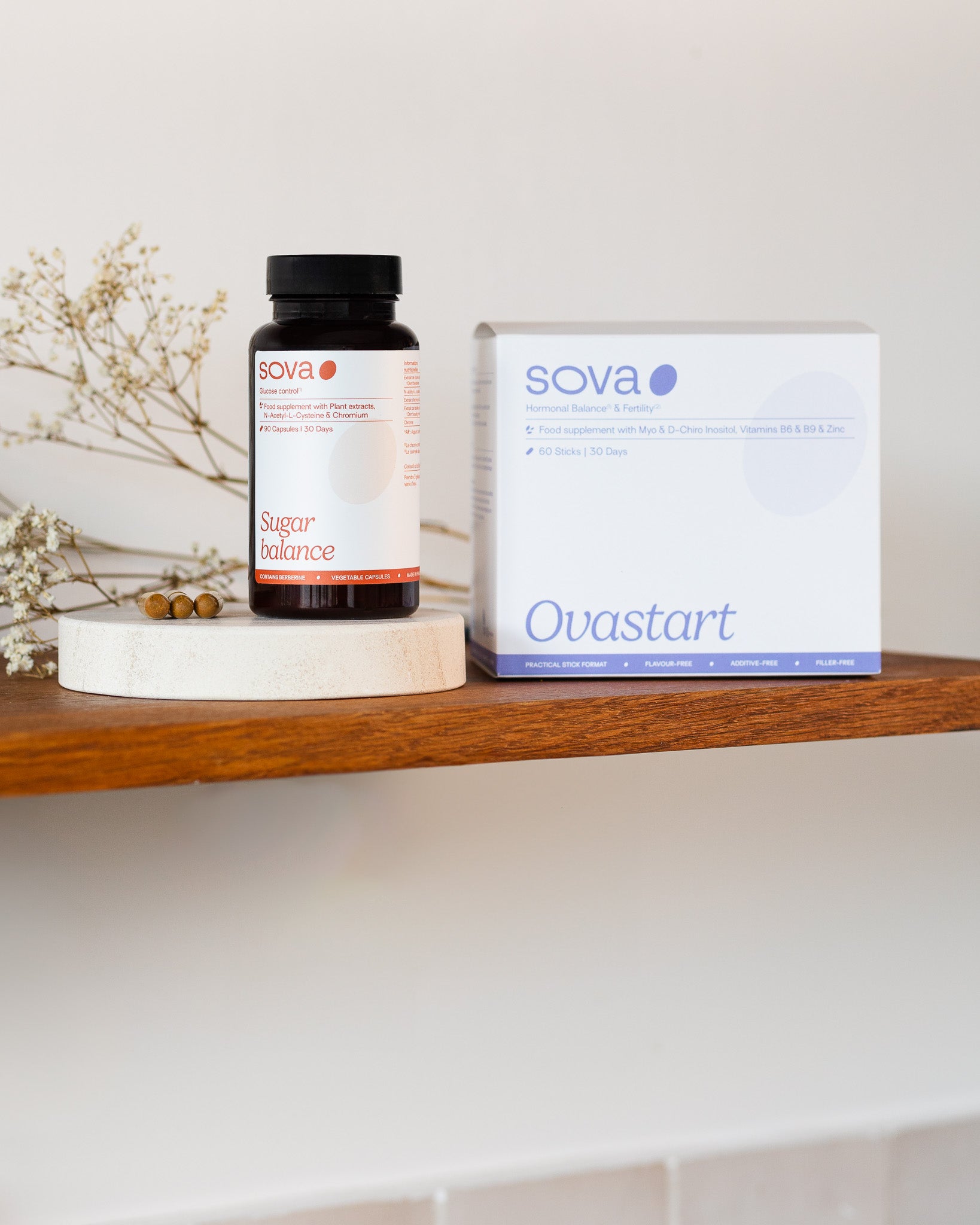
The Hormone Balance Supplements Built for PCOS - Two Products, One Complete System
From £53
Table of contents
If you have moved past your twenties with no sign of PMOS (PCOS) until now, you are probably wondering whether it can really appear this late. Your cycles may have kept good time for years. Then, somewhere past 30, they began arriving late or not at all. A few stubborn hairs appeared along your chin, or your skin broke out around the jaw. PMOS (PCOS), the condition many still know as polycystic ovary syndrome, is widely assumed to be something you either had as a teenager or never had at all.
Can you get PMOS (PCOS) after 30?
PMOS is not a condition that appears overnight. It is a hormonal and metabolic profile that evolves over time. The predisposition is largely written into your biology from the start. Identical twins share the condition far more often than non-identical twins, which points to a strong genetic and familial component (1). What shifts with time is not whether you have the tendency, but whether it becomes visible.
PMOS is best understood as a tendency you have always carried, not an illness that appears out of nowhere at 34. For years, that tendency can sit quietly under the surface, kept in check by a steady metabolism, a contraceptive pill, or simply a body that has not yet tipped past a certain threshold. When one of those things changes, the symptoms you never had before can step into the light.
So the honest answer is this: you can absolutely notice PMOS for the first time after 30, even after years of textbook cycles. What you are noticing is simply a pre-existing tendency expressing itself more clearly, in step with natural hormonal shifts.

What makes PMOS (PCOS) symptoms surface later in life?
Three shifts tend to bring latent symptoms forward. They often overlap, and understanding them takes a lot of the fear out of the experience.
Insulin resistance and the metabolic shift of your thirties
Insulin resistance sits at the heart of PMOS for a large share of women. When your cells respond less well to insulin, your body makes more of it, and higher insulin nudges the ovaries to produce more androgens, the hormones behind acne, unwanted hair and disrupted ovulation. Insulin sensitivity also tends to dip naturally with age, which is why a tendency that stayed subclinical at 25 can cross the visible threshold at 33. If this is your picture, it is worth understanding how insulin resistance and PMOS are linked in more depth.
This is also where support can be genuinely effective, because insulin is a lever you can act on. Inositol is the most studied nutrient here: it has been shown to help restore regular menstrual cycles, lower testosterone and raise SHBG in women with PMOS, with an effect comparable to standard metabolic treatment and fewer side effects (4). A daily inositol-based support for cycle and hormone balance is one of the simplest starting points.
Blood sugar steadiness matters just as much across the day. Berberine, a plant compound, has been shown to improve insulin sensitivity and metabolic markers in women with PMOS, working along similar lines to metformin (5). For women whose cravings and energy dips are the loudest signal, a berberine-based blood sugar support can sit alongside the inositol rather than replace it.
The role of low-grade inflammation
Many women with PMOS carry a low level of ongoing inflammation, and it tends to build over the years through diet, stress and everyday life. This matters for a concrete reason: inflammatory signals can prompt the ovaries to make more androgens directly, independently of insulin (7). It is one more thread in why symptoms can grow more noticeable with age, and it is a reassuring one, because an anti-inflammatory way of eating, regular movement and omega-3 rich foods all work in your favour here.
Coming off the pill after years of steady cycles
If you started the combined pill as a teenager, you may have spent a decade with what felt like clockwork periods. The pill can mask PMOS entirely, because it suppresses ovarian androgen production and replaces your own cycle with a scheduled monthly bleed. When you stop, your underlying pattern returns, sometimes for the first time in your adult life. What looks like the pill causing PMOS is usually the pill uncovering it. If your symptoms flared after stopping, our guide to post-pill PMOS and how to recover walks you through what to expect.
Stress, cortisol and adrenal androgens
A subgroup of women with PMOS produce excess androgens not from the ovaries but from the adrenal glands (3), the small glands that also handle your stress response. Demanding years of work and life can keep this system running hot. There is a useful detail here: adrenal androgens such as DHEA-S decline gradually with age, a slow process sometimes called adrenopause (8), so a rising tide of symptoms in this decade usually reflects insulin, inflammation and lifestyle shifts more than adrenal output alone. Still, if stress is your dominant driver, it is worth reading how stress can shape adrenal PMOS.

Environmental exposures that build up over time
We meet a steady stream of endocrine disruptors in daily life: compounds such as BPA, phthalates and certain pesticides found in plastics, packaging and cosmetics. These can interfere with hormone signalling and insulin over the long term, and research has linked higher exposure, particularly to BPA, with PMOS (6). You cannot control everything here, and you do not need to. Small, sustainable swaps, such as favouring glass over plastic for hot food and choosing simpler cosmetics, are enough to lighten the load without adding stress to your day.
The first signs of PMOS (PCOS) to notice
Adult onset symptoms tend to fall into three groups. You may recognise one cluster strongly and barely notice the others, which is entirely normal.
- Menstrual changes: cycles stretching beyond 35 days, becoming unpredictable, or disappearing for months.
- Skin and hair changes: adult acne along the jaw and chin, coarse hair on the face or body (hirsutism), and thinning at the crown or temples.
- Metabolic shifts: changes in weight that are harder to manage even when your routine has not changed, alongside stronger sugar cravings and energy dips.
None of these on its own confirms PMOS, and none of them is your fault. They are simply signals worth taking seriously enough to investigate, rather than reasons to worry in silence.
Is it PMOS (PCOS) or something else?
Several conditions share this symptom picture in women over 30, which is exactly why a proper assessment matters. The point is not to self-diagnose, but to walk into your appointment knowing what to ask about.
PMOS (PCOS) or early perimenopause?
Both can bring irregular cycles in your thirties and forties, but the hormonal signatures differ. PMOS typically comes with raised androgens and a particular LH to FSH pattern, while perimenopause is marked by rising FSH and falling oestrogen, often with hot flushes and sleep changes rather than acne and unwanted hair. The two can also overlap, since PMOS does not disappear at perimenopause, it evolves. Your own picture can shift over the years too: androgen levels tend to ease with age, so a profile that was mainly about cycles and skin in your twenties can lean more metabolic later on (8). Our piece on PMOS and the menopause transition unpacks how the picture changes with age.
Thyroid, prolactin and late-onset CAH: the conditions to rule out
An underactive thyroid can cause missed periods, fatigue and weight gain, and raised prolactin can stop ovulation altogether. Both mimic PMOS and both are simple to check with a blood test. Late-onset congenital adrenal hyperplasia, a milder genetic difference in how the adrenal glands make hormones, can also look almost exactly like PMOS in adulthood, and it shows up on a 17-hydroxyprogesterone blood test. Current international guidance recommends ruling out all three before a PMOS diagnosis is confirmed (2).
How PMOS (PCOS) is diagnosed after 30
Diagnosis in adults follows the Rotterdam criteria, which require at least two of the following three features once other causes are excluded (2):
- irregular or absent ovulation, usually seen as irregular cycles,
- signs of high androgens, either clinical (acne, hirsutism) or on a blood test,
- polycystic ovaries on ultrasound, or a raised anti-Müllerian hormone level.
Where irregular cycles and clear signs of high androgens are both present, a scan is not always needed to diagnose PMOS. It helps to arrive prepared, so consider asking your GP about testosterone and free androgen index, LH and FSH, a thyroid panel, prolactin, and markers of blood sugar and insulin. PMOS affects an estimated 10 to 13 percent of women, yet diagnosis is often delayed for years (2), so a clear, specific conversation with your clinician genuinely speeds things up.
When to speak to a doctor
Most of what we have covered is best explored calmly and over time. Some situations, though, deserve prompter attention: periods that stop for three months or more, bleeding that is unusually heavy, or hair loss that feels sudden or severe. These do not mean something is seriously wrong, but they are worth a timely appointment so the right cause is found.
What to hold on to
Noticing PMOS after 30 does not mean your body has broken, or that you did something to bring it on. It means a tendency you have always carried has become visible, often for a reason you can name and act on. With the right understanding and steady support, this is a condition you can work with, not simply endure. We are here to help you make sense of it, one clear step at a time. 💜
F.A.Q
Can you get PMOS (PCOS) all of a sudden?
Not quite. PMOS is a lifelong genetic and metabolic tendency, so it does not appear from nothing. What can happen suddenly is the arrival of symptoms, usually triggered by stopping the pill, a period of heavy stress, or a metabolic shift that brings a previously quiet predisposition to the surface.
Is it possible to develop PMOS (PCOS) later in life?
You do not develop the underlying condition from scratch in adulthood, but you can absolutely be diagnosed for the first time in your thirties or forties. Age-related changes in insulin sensitivity, life stress, or coming off hormonal contraception often bring dormant symptoms into view.
What causes PMOS (PCOS) to show itself?
It comes from a blend of genetic predisposition, high androgens, insulin resistance and low grade inflammation. Excess insulin pushes the ovaries to make more androgens, which disrupts ovulation and produces the familiar signs: acne, changes in hair, and irregular cycles.
What age does PMOS (PCOS) usually start?
The predisposition is present from puberty, and early signs often appear around the first periods. Because those signs are easily mistaken for normal teenage hormones or hidden by the pill, a formal diagnosis most often comes in the mid twenties to late thirties.
What are the first signs of PMOS (PCOS) in adult women?
The most common early signs are irregular or skipped periods, persistent acne along the jaw, new facial or body hair, thinning scalp hair, and weight that becomes harder to manage despite your usual routine.
- PMOS : it's the condition long known as polycystic ovary syndrome, a common hormonal pattern affecting cycles, androgens and metabolism, which is why its symptoms show up across so many parts of the body.
- Androgens : they're hormones such as testosterone that everyone makes in small amounts, and when they run high they drive acne and unwanted hair, which is why they sit at the centre of PMOS.
- Insulin resistance : it's when your cells respond poorly to insulin so your body makes more of it, which matters because that surplus insulin pushes the ovaries to make extra androgens.
- SHBG : it's a protein that binds testosterone and keeps it inactive, which is why raising it tends to calm androgen symptoms.
- Hirsutism : it's coarse, dark hair growing in typically male areas such as the chin, chest or stomach, which is one of the more visible signs of high androgens.
Scientific References
Over 50,000 women have already adopted our routines, rating us an excellent 4.7/5 average (from 3,300+ reviews). Our supplements are formulated in French laboratories using clean, carefully sourced ingredients, with a maximum of patented active ingredients proven for their effectiveness.
- Founded by women with PCOS, we understand the reality of hormonal disorders.
- Clinically studied: High-quality ingredients, including patented forms like Quatrefolic® and an optimal Myo-/D-Chiro Inositol ratio.
- Holistic support: Formulated for hormonal balance, metabolic health, inflammation, mood, and cycle regulation.
- Science-led formulas: Transparent ingredients with absolutely no unnecessary additives.
The Hormone Balance Supplements Built for PCOS - Two Products, One Complete System