


The Balance Bundle
The Hormone Balance Supplements Built for PCOS - Two Products, One Complete System
From £53

Sugar Balance
Berberine Supplement UK - Blood Sugar, Insulin & Metabolic Support for Women with PCOS
From £26
Table of contents
|
You stopped the pill - and instead of feeling free, your skin is breaking out, your period has gone quiet, and your body feels like it is sending you completely mixed signals. You are not imagining it, and you are not alone. This guide explains what is actually happening inside your body, and offers a science-backed framework to support your recovery, step by step. |
Is it Permanent PCOS or Just "Post-Pill Syndrome"?
|
Does coming off the pill cause PCOS? No - birth control does not cause PCOS. However, you may experience what is sometimes described as "post-pill PCOS" - a temporary state where symptoms like acne and irregular periods re-emerge as your body's natural hormone production restarts. The pill often masks an underlying PCOS that was already present, or creates a temporary "rebound" of androgens after stopping. This distinction matters clinically, because it shapes the recovery approach. |
It is worth noting first that "Post-Pill Syndrome" is not a formally recognised medical diagnosis. It is a clinical observation - a pattern widely reported by women and acknowledged by endocrinologists - rather than a condition listed in diagnostic guidelines such as the 2023 International Evidence-Based Guideline for PCOS [5]. Naming it can be helpful, but the more important question is what is actually happening biologically.
The combined oral contraceptive pill works by suppressing the body's own hormone production. It lowers androgen levels (male-type hormones such as testosterone), significantly raises sex hormone-binding globulin (SHBG - a protein that binds and inactivates free testosterone), and keeps oestrogen artificially steady while inhibiting the brain-to-ovary communication pathway (the HPO axis) [1]. When you stop, your system needs to re-learn how to regulate itself - and that process is rarely immediate or linear.
If hormonal symptoms such as acne, hair thinning or cycle irregularity existed before you ever started the pill, stopping it may simply be revealing what was already there. If they are entirely new, they are more likely part of a temporary post-pill adjustment. In both cases, a medical evaluation - ideally no sooner than three months after stopping - is the most reliable way to understand your individual picture.
Not sure how PCOS is diagnosed? Read our guide on PCOS diagnosis.
The "Rebound" Effect: Why Symptoms Often Peak 3-6 Months Later
One of the most confusing aspects of stopping the pill is that the most intense symptoms often do not appear straight away. You may feel relatively fine for a few weeks - and then, between months one and six, things can become harder before they improve. Understanding why can make that period significantly less frightening.
The Androgen Surge - The "Pimple Peak"
While you were on the pill, two things were happening simultaneously: your ovaries' own androgen production was being suppressed, and SHBG levels in your blood were elevated - binding and inactivating what little testosterone remained. When you stop, both of these effects reverse. SHBG can fall sharply, releasing previously bound testosterone into circulation. A 2014 systematic review and meta-analysis published in Human Reproduction confirmed that combined oral contraceptives significantly decrease both total and free testosterone, and substantially increase SHBG - and that free testosterone therefore falls twice as much as total testosterone during pill use [1]. When the pill stops, the drop in SHBG means free testosterone can temporarily overshoot above pre-pill levels.
This temporary surge of biologically active androgens directly stimulates the sebaceous glands in your skin to produce more oil (sebum). More oil means more clogged pores, more inflammation, and - yes - more breakouts. The chin, jawline and lower face are the most common sites, because these areas have the highest density of androgen-sensitive sebaceous glands.
Deeper dive on skin and hormones: Hormonal Acne & PCOS: Causes, Supplements & Solutions.
The Insulin Sensitivity Gap
Combined oral contraceptives have metabolic effects that extend beyond reproduction. Evidence suggests they can affect insulin sensitivity - the body's ability to respond to insulin and manage blood sugar effectively [5]. After stopping, this metabolic balance may take several months to restabilise.
In women who have underlying PCOS, this matters particularly. Insulin resistance is now recognised as one of the central drivers of PCOS: when circulating insulin is elevated, it stimulates the ovaries and adrenal glands to produce excess androgens, which disrupts ovulation, worsens acne and perpetuates a cycle that can feel very difficult to interrupt. This is why what you eat during the post-pill recovery period can have a genuinely significant impact on how quickly your hormones rebalance.

Related reading: Insulin Resistance & PCOS: What's the Link?
Why Your Period is "Ghosting" You
Missing periods after stopping the pill - known as post-pill amenorrhea - is very common and usually temporary. The pill places the HPO axis (the hormonal communication loop between the hypothalamus, pituitary gland and ovaries) into a state of suppression. When you stop, this pathway must restart - and for some women, particularly those with underlying PCOS, this restart is not immediate.
Post-pill amenorrhea lasting beyond six months warrants investigation to rule out other causes such as hypothalamic amenorrhea, hyperprolactinaemia, or thyroid dysfunction [5]. The practical focus in the meantime is supporting ovulation rather than menstruation itself: without ovulation, there is no progesterone, and without adequate progesterone, there is no period and no hormonal balance.
The 4-Pillar Recovery Strategy
There is no single intervention that resolves post-pill hormonal disruption. The evidence - and clinical experience with PCOS - points instead to a multi-pronged approach that addresses the root mechanisms: metabolic dysregulation, androgen excess, nutritional depletion and stress-driven hormonal suppression. The pillars below work best together.
|
PILLAR 1 Metabolic Repair & Insulin Resensitisation The most impactful dietary change you can make for post-pill PCOS is supporting stable blood sugar. When blood glucose swings upward, insulin follows - and elevated insulin directly stimulates androgen overproduction in the ovaries. A protein-first approach is one of the most practical starting points. Beginning each meal with a source of protein - eggs, fish, chicken, legumes, Greek yoghurt, tofu - slows carbohydrate absorption and blunts the post-meal insulin response. Pairing this with fibre-rich vegetables and healthy fats (olive oil, avocado, oily fish, nuts) creates a meal structure that supports hormonal stability rather than disruption. Dietary strategies worth exploring: • Start each meal with protein and vegetables before moving to carbohydrates • Choose whole-grain or low-GI carbohydrates: oats, lentils, sweet potato, brown rice, quinoa • Keeping to consistent mealtimes can support cortisol rhythm and insulin stability • Reducing ultra-processed foods and added sugars - the fastest drivers of insulin spikes On the supplement side, myo-inositol combined with D-chiro-inositol has the most robust evidence base for insulin resensitisation in PCOS. A 2023 meta-analysis of 26 randomised controlled trials (1,691 participants) found that women with PCOS treated with inositol were 1.79 times more likely to achieve a regular menstrual cycle compared to placebo (95% CI: 1.13-2.85). Inositol also showed non-inferiority to metformin in restoring ovulation, with a substantially better tolerability profile [3]. A separate randomised study found that 84.85% of young women with PCOS treated with the myo-inositol/D-chiro-inositol combination (3.6:1 ratio) resumed spontaneous menstrual cycles within 6 months [4]. Read more: The ultimate guide to Myo-Inositol supplements for PCOS & hormonal balance |

|
PILLAR 2 Supporting Androgen Clearance - Liver & Anti-Inflammatory Eating Your liver plays a central role in metabolising and clearing excess hormones - including the androgens that surge after stopping the pill. Supporting liver function through food is one of the most practical dietary contributions to post-pill hormonal recovery. Cruciferous vegetables - broccoli, cauliflower, cabbage, kale, Brussels sprouts, rocket - contain compounds including indole-3-carbinol (I3C), which converts in the gut to diindolylmethane (DIM). Preliminary research suggests DIM may support oestrogen metabolism pathways in the liver. It is worth noting that most existing studies are small and in vitro - clinical evidence in PCOS specifically remains limited - so this is a promising, not definitive, area. Eating one to two portions of cruciferous vegetables daily remains a sensible and nutritionally valuable habit regardless. Anti-inflammatory eating is equally important. Chronic low-grade inflammation is a recognised driver of both androgen excess and insulin resistance in PCOS [5]. Omega-3 fatty acids (from oily fish - salmon, mackerel, sardines - as well as walnuts and flaxseeds) actively reduce inflammatory signalling. Colourful fruits and vegetables provide antioxidants that counter oxidative stress, which is typically elevated in women with PCOS. Practical steps: • Including cruciferous vegetables daily - broccoli, cabbage, kale, rocket • Eating oily fish 2-3 times per week, or considering an omega-3 supplement • Using olive oil as your primary cooking fat - it is rich in anti-inflammatory oleocanthal • Good hydration supports liver detoxification pathways throughout the day • Reducing alcohol intake eases the workload on the liver's hormone metabolism pathways |
|
PILLAR 3 Replenishing the "Pill-Gap" Nutrients This is the most frequently overlooked aspect of post-pill recovery. Research has consistently documented that the combined oral contraceptive pill depletes several key micronutrients over time - including folate, vitamins B2, B6, B12, vitamin C and E, and the minerals magnesium, selenium and zinc [2]. These depletions accumulate the longer you have been on the pill, and they directly affect your capacity to restore hormonal balance after stopping. A foundational food-first approach - plenty of leafy greens, seeds, legumes, eggs and oily fish - covers much of this ground. The table below highlights the nutrients most relevant to post-pill PCOS recovery, alongside their key roles and best dietary sources. |
|
Nutrient |
Why it matters post-pill |
Good food sources |
|
Zinc |
Helps regulate androgen activity and sebum production - key for post-pill acne. Supports ovulation and immune function [2]. |
Pumpkin seeds, oysters, beef, chickpeas, cashews |
|
Folate (B9) |
Critical for cell division, hormonal methylation and - if pregnancy is a future goal - neural tube development. The pill significantly reduces folate stores [2]. |
Dark leafy greens, lentils, asparagus, avocado |
|
Vitamin B12 |
Essential for energy, nervous system function and red blood cell production. Frequently lower in long-term pill users [2]. |
Eggs, salmon, dairy, fortified plant milks |
|
Magnesium |
Helps regulate cortisol, supports blood sugar balance and may reduce PMS symptoms and cycle irregularity [2]. |
Dark chocolate, almonds, spinach, black beans, banana |
|
Vitamin B6 |
Supports progesterone production, mood regulation and liver metabolism of excess hormones [2]. |
Salmon, turkey, sunflower seeds, pistachios, banana |
|
Selenium |
Antioxidant mineral that supports thyroid function (which can be disrupted in PCOS) and hormone metabolism [2]. |
Brazil nuts (1-2 per day), tuna, eggs, sunflower seeds |
Source: Palmery M et al., Eur Rev Med Pharmacol Sci. 2013;17(13):1804-13. PMID: 23852908 [2]
Not sure which supplements are right for you? Discover our PCOS and Dietary Supplements guide
|
PILLAR 4 Nervous System Regulation - Movement That Supports Rather Than Stresses This pillar surprises many women. The instinct after stopping the pill is often to push harder with exercise in an effort to "fix" things. But the type of exercise matters enormously during the post-pill recovery phase - and for women with PCOS specifically, the evidence is nuanced. High-intensity exercise places a significant stress on the body and activates the hypothalamic-pituitary-adrenal (HPA) axis, raising cortisol. When cortisol remains chronically elevated, it can suppress ovulation, lower progesterone and stimulate additional androgen production - the opposite of what recovery requires. A 2020 systematic review published in Sports Medicine on exercise interventions in PCOS found that resistance training and moderate aerobic exercise showed meaningful improvements in metabolic and reproductive outcomes - while the data on high-intensity interval training (HIIT) were more mixed and context-dependent [7]. This does not mean stopping movement. It means shifting the focus, at least temporarily, towards approaches that support hormonal recovery without adding further HPA stress: • Slow resistance training (moderate loads, full recovery between sets) improves insulin sensitivity without taxing the adrenal system • Daily walking - even 20-30 minutes significantly improves insulin sensitivity and reduces inflammation • Yoga, Pilates and breathwork actively downregulate the stress response and support HPO axis recovery • Prioritising sleep quality - cortisol is highest when sleep is disrupted, and this directly delays cycle return |
The Recovery Timeline: What to Expect

|
How long do post-pill PCOS symptoms last? Post-pill symptoms - including acne, hair changes and irregular cycles - typically improve within 3 to 6 months as the HPO axis resets. For women with underlying PCOS, the timeline may extend to 12 months or longer, and some symptoms (such as cycle irregularity and insulin resistance) may require ongoing management rather than resolving completely. Most women see meaningful improvement within 90 days of consistent nutritional and lifestyle support. |
Understanding the recovery timeline can reduce a great deal of anxiety. Your body is not failing - it is in the process of relearning how to regulate itself after months or years of suppression. The stages below reflect what many women experience, though individual timelines vary considerably.
Months 1-2 | The Adjustment Phase
Your body registers that the external hormone supply has stopped and begins attempting to restart its own production. Periods may be absent or very irregular. Acne may begin to appear or worsen. Energy levels can fluctuate significantly. This is a normal hormonal recalibration - not a sign that something has gone permanently wrong.
Months 3-4 | The "Pimple Peak" & Rebound Intensity
For many women, this is the most challenging phase. Free androgen activity may be at its highest, driving the most intense breakouts and the most frustrating cycle irregularity. If you are following the recovery strategy consistently, you are already laying the biochemical groundwork - even if visible results are not yet apparent.
Months 4-6 | Signs of Stabilisation
Periods begin to return with greater regularity. Skin often starts to calm. Energy typically improves. Research on inositol in PCOS shows that around 68-85% of women experience a return to regular menstrual cycles within 3-6 months of consistent supplementation [3, 4]. This is usually when the difference between temporary post-pill adjustment and true underlying PCOS becomes clearer.
Months 6-12 | Approaching a New Baseline
For most women without pre-existing PCOS, symptoms have substantially resolved by this stage. For those with true PCOS, this is when targeted long-term management becomes the focus - addressing the metabolic and hormonal patterns that the pill was previously masking.
Diagnostic Checklist: When to See Your Doctor
A medical evaluation is always worthwhile after stopping the pill - particularly if you have a PCOS diagnosis or suspect one. One critical practical point: waiting at least 3 months before running hormone tests gives more meaningful results. Blood work taken sooner is likely to reflect the hormonal disruption of withdrawal rather than your true baseline, making interpretation difficult.
When you do speak to your doctor, the following markers provide the most relevant picture for post-pill hormonal assessment:
○ Fasting insulin + fasting glucose: To assess insulin resistance - often the earliest metabolic marker of PCOS. The HOMA-IR calculation (based on both values) is the most informative.
○ Free and total testosterone: To evaluate androgen levels - note that these are suppressed during pill use, so testing within 8 weeks of stopping may give falsely low results [6].
○ AMH (anti-Mullerian hormone): A marker of ovarian reserve and polycystic ovarian activity. Less affected by pill use than other hormones and therefore useful when testing early.
○ LH and FSH: To assess the brain-to-ovary communication pathway (HPO axis) and its recovery.
○ Full thyroid panel (TSH, free T3, free T4): Thyroid dysfunction - particularly Hashimoto's - can closely mimic PCOS symptoms and is common enough to warrant routine exclusion.
○ Vitamin D: Frequently low in women with PCOS and linked to both insulin resistance and inflammation [5].
○ B12, folate and zinc: Particularly relevant after long-term pill use [2].
If fertility is on your mind: How to get pregnant with PCOS
|
Support your hormones with the right products SOVA is here to support you through your hormonal journey and help you live better with PCOS - with natural, evidence-informed solutions. FIND THE RIGHT SUPPLEMENT FOR YOU |
Frequently Asked Questions
What happens when you stop birth control if you already have PCOS?
When you stop birth control with a confirmed PCOS diagnosis, your natural menstrual cycle may take up to three months to return. Unlike a temporary post-pill adjustment - which typically improves on its own over time - true PCOS is a chronic condition. Symptoms such as chronic cycle irregularity, insulin resistance and elevated androgens are long-lasting and generally require consistent nutritional and lifestyle management to regulate [5]. That said, the post-pill period can be a genuinely useful moment to establish these habits, because the body's hormonal state is in flux and responsive to change.
Can I get pregnant immediately after stopping the pill if I have PCOS?
Conception is possible, but may take longer than in women without PCOS - primarily because ovulation is less predictable. The HPO axis reset after stopping the pill means that even the first ovulation may be delayed by weeks or months. Many women with PCOS do conceive naturally. Supporting ovulation through insulin management, inositol supplementation and a low-glycaemic diet provides the most conducive hormonal environment for fertility to return.
Read our full fertility guide: How to get pregnant with PCOS
What are the best supplements for Post-Pill PCOS?
The supplements with the strongest mechanistic rationale and clinical evidence for post-pill PCOS are:
• Myo-inositol + D-chiro-inositol - to restore insulin sensitivity, reduce androgen levels and support ovulation [3, 4]
• Omega-3 fatty acids - to reduce chronic low-grade inflammation [5]
• Zinc - to help regulate androgen activity and sebum production [2]
• Folate - to replenish post-pill stores and support cell health and hormone methylation [2]
• Magnesium - to reduce cortisol reactivity, support blood sugar balance and ease cycle symptoms [2]
• Vitamin B12 - to restore energy and nervous system function depleted by the pill [2]
Science-backed supplement overview: Best PCOS supplements 2026: a science-backed guide
Are there PCOS-friendly recipes to support post-pill recovery?
The dietary principles in Pillars 1 and 2 do not require complicated cooking - protein first, plenty of vegetables, healthy fats, low-GI carbohydrates. If you are looking for practical meal ideas designed specifically around PCOS and blood sugar balance:
Explore: Easy PCOS-friendly recipes: a simple guide to hormone balance.
|
A final word Stopping the pill and navigating what comes next can be genuinely difficult - physically, emotionally and practically. If you are in the middle of it right now, please know that what you are experiencing is real, it is recognised, and it is manageable. You are not failing your body. Your body is doing its best to find its way back to itself. The goal here is not perfection. It is not zero spots by next month or a textbook cycle immediately. It is building a foundation - in what you eat, how you move, how you support your nervous system and your hormones - that gives your body the conditions it needs to rebalance over time. That is a process that deserves patience, consistency and kindness, not pressure or timelines. |
Key Terms
Post-Pill Amenorrhea - The absence of menstrual periods after stopping the pill. Usually resolves within 1-3 months as the HPO axis restarts; beyond 6 months, medical investigation is warranted.
Androgen Rebound - The temporary rise in biologically active androgens (such as free testosterone) that can occur after stopping the pill, which had been both suppressing androgen production and elevating SHBG.
SHBG (Sex Hormone-Binding Globulin) - A protein produced by the liver that binds to sex hormones, rendering them biologically inactive. The pill significantly raises SHBG; stopping it causes SHBG to fall, releasing bound testosterone.
HPO Axis - The hypothalamic-pituitary-ovarian axis: the hormonal communication pathway between brain and ovaries. The pill suppresses this; it must reset after stopping.
Insulin Resistance - A metabolic condition in which the body's cells respond less effectively to insulin. A central driver of many PCOS symptoms, including androgen excess and ovulatory dysfunction.
Myo-Inositol - A naturally occurring insulin sensitiser. When combined with D-chiro-inositol, it has robust evidence for restoring cycle regularity and reducing androgens in PCOS.
Rotterdam Criteria - The internationally accepted diagnostic standard for PCOS, requiring at least 2 of 3 criteria: oligo- or anovulation, clinical/biochemical hyperandrogenism, polycystic ovarian morphology on ultrasound.
Scientific References
Over 50,000 women have already adopted our routines, rating us an excellent 4.7/5 average (from 3,300+ reviews). Our supplements are formulated in French laboratories using clean, carefully sourced ingredients, with a maximum of patented active ingredients proven for their effectiveness.
- Founded by women with PCOS, we understand the reality of hormonal disorders.
- Clinically studied: High-quality ingredients, including patented forms like Quatrefolic® and an optimal Myo-/D-Chiro Inositol ratio.
- Holistic support: Formulated for hormonal balance, metabolic health, inflammation, mood, and cycle regulation.
- Science-led formulas: Transparent ingredients with absolutely no unnecessary additives.



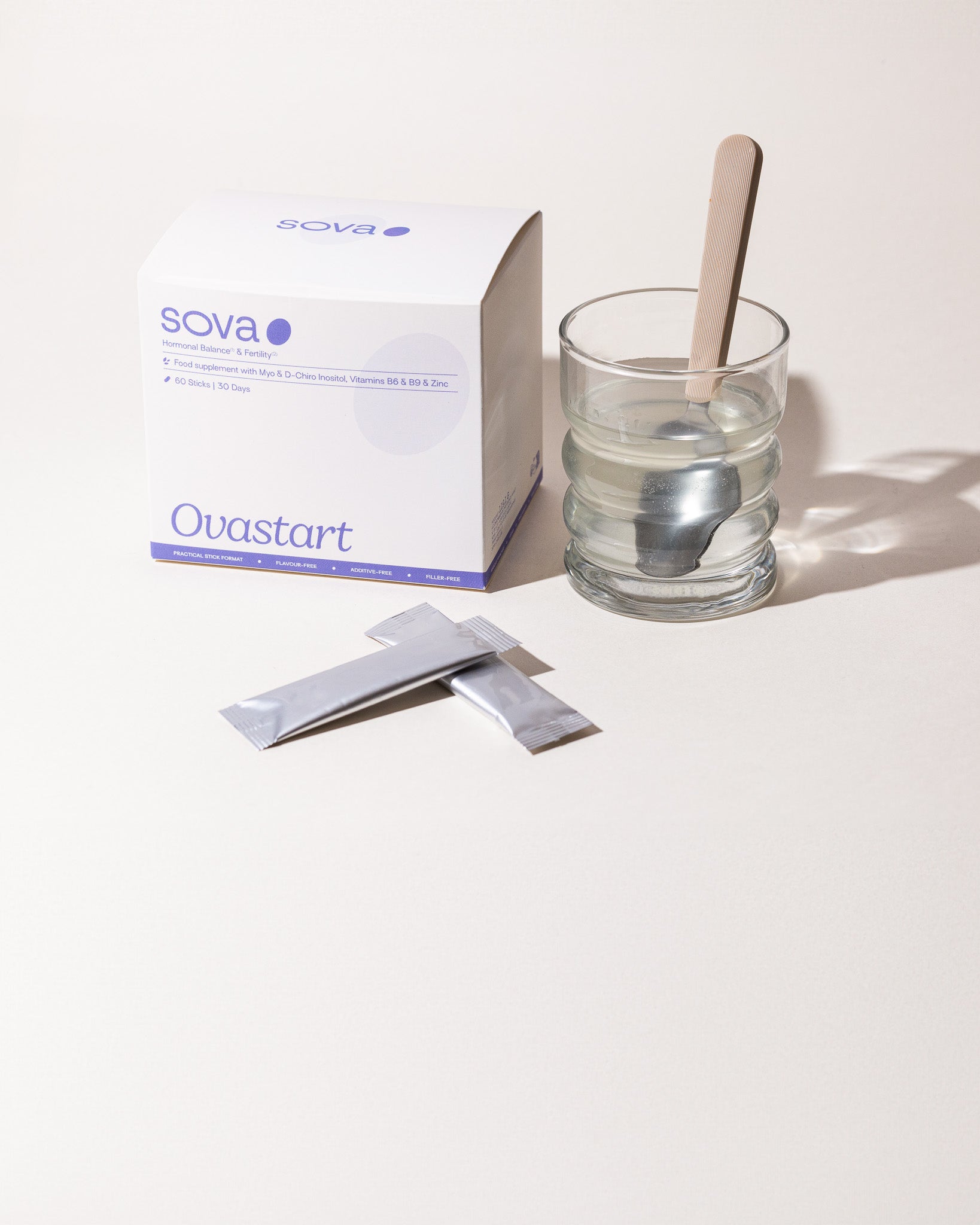
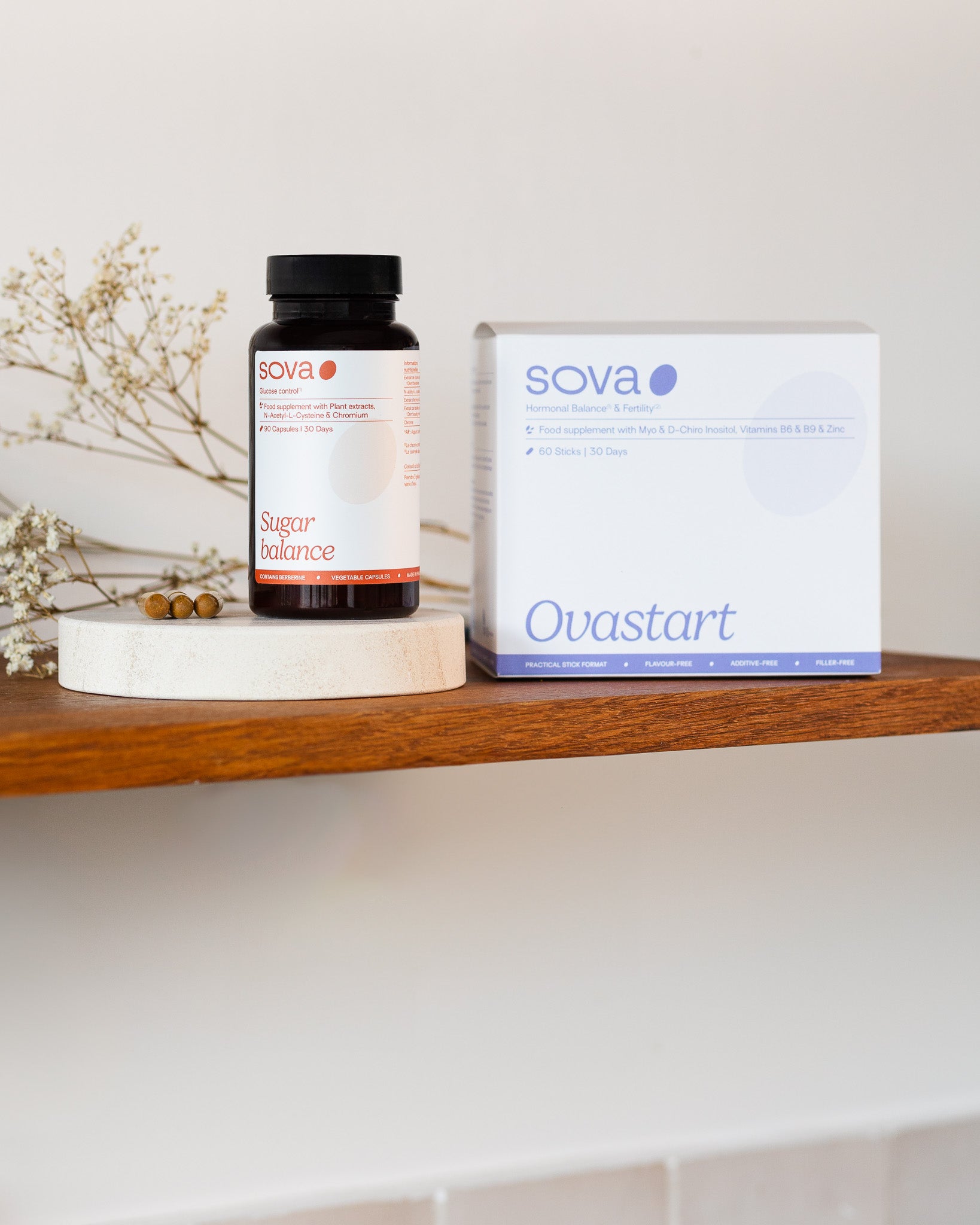
The Hormone Balance Supplements Built for PCOS - Two Products, One Complete System
Berberine Supplement UK - Blood Sugar, Insulin & Metabolic Support for Women with PCOS