



Sugar Balance
Berberine Supplement UK - Blood Sugar, Insulin & Metabolic Support for Women with PCOS
From £26

The Balance Bundle
The Hormone Balance Supplements Built for PCOS - Two Products, One Complete System
From £53
Table of contents
- 01. How Long Does It Take to Get Pregnant? Reality vs. Expectations
- 02. The Conception Timeline: What is 'Normal'?
- 03. The Age Factor: How Timelines Shift by Decade
- 04. Understanding the Variables: What Shapes Your Timeline
- 05. Nourishing Your Hormonal Ecosystem: Nutrition and Supplementation
- 06. Supporting Your Conception Journey: Practical Steps
- 07. If You Have PCOS: Accompanying Your Hormonal Ecosystem Towards Conception
- 08. When It May Be Worth Seeking Support: Understanding the Thresholds
- 09. Early Pregnancy: Signs and What Comes Next
📌 Quick Summary: For most healthy couples - around 80-85% - conception happens within 12 months of regular, unprotected sex. In any single cycle, the chance is roughly 20-25%, even under ideal conditions. Age plays a role, but most perceived delays come down to timing rather than a deeper problem. This article walks you through what is truly normal, what shapes your personal timeline, and when it may be worth speaking to your GP.
If you are reading this, you are probably somewhere on the conception journey - perhaps just beginning and wanting to know what to expect, or a few months in and wondering if the wait is normal. You are not alone - and you are asking exactly the right question.
The short answer is that for most healthy couples, conception takes anywhere from a few weeks to twelve months. Your personal timeline is shaped by a combination of factors - age, cycle regularity, ovulation timing, and overall health. And while not everything is within your control, a great deal of it is understandable, which is already a meaningful place to start.
In this article, we walk you through the real data behind conception timelines, explore what influences how quickly things happen, and share practical ways to support your fertility - wherever you are on this journey.
How Long Does It Take to Get Pregnant? Reality vs. Expectations
One of the most grounding statistics in reproductive medicine is this: around 80-85% of couples with no known fertility issues conceive within 12 months of regular, unprotected intercourse (1). The majority of people who start trying this month will be pregnant within the year.
But that statistic does not mean conception happens quickly. Even with well-timed intercourse, a healthy woman in her late twenties has roughly a 20-25% chance of conceiving in any single menstrual cycle (1) - a figure known in reproductive medicine as the fecundability rate. In other words, there is up to a 75-80% chance it will not happen in a given month, and that is entirely within the range of normal.
The distinction between a standard biological timeline and clinical infertility is an important one to hold onto. Infertility is medically defined as failing to conceive after 12 months of regular, unprotected sex (or 6 months if you are over 35). A few months of negative tests does not place you in that category - it places you firmly in the majority.
📌 Key Takeaways: Conception Timelines at a Glance
- The Baseline: 80-85% of healthy couples conceive within one year of consistent, regular trying.
- The Odds Per Cycle: Even under ideal conditions, the chance of conceiving in any single month sits at around 20-25%.
- Age Dynamics: Fertility remains strong into the early 30s and shifts more gradually past 35 - elongating the timeline, but not closing it.
- Timing Matters Most: Many perceived delays come down to ovulation timing. Accurate cycle tracking can make a real difference.
The Conception Timeline: What is 'Normal'?
Understanding the broader timeline can help you stop comparing your journey to someone else's - and start trusting your own biology.
Months 1 to 3: The Early Stages
The first three cycles are as much about learning as they are about waiting. Even in optimal conditions - regular cycles, no known health issues, well-timed intercourse - the per-cycle fecundability rate sits at around 20-25% (1). After three months of trying, a significant proportion of healthy couples will not yet have conceived. That is not a sign that something is wrong; it is simply how conception biology works.
What tends to matter most in these early months is identifying your fertile window. Ovulation typically occurs 12-16 days before your next period, and the egg survives for just 12-24 hours after release. Sperm, by contrast, can remain viable in the reproductive tract for up to 3-5 days - which is why the six-day window leading up to and including ovulation day is so significant.
Months 6 to 12: The Average Window
This is where the cumulative probability starts to work in your favour. Each cycle adds another 20-25% chance to the total. By six months, around 66% of healthy couples will have seen a positive test. By the end of month twelve, that figure reaches 80-85% (1).
If you are within this window and still trying, the most supportive thing you can do is stay curious rather than anxious - and explore the practical steps we cover below.
How long does it take to get pregnant your first time?
On average, about 80% of healthy couples conceive within the first 12 months of regular, unprotected intercourse. For a first pregnancy, studies suggest an average time to conception of around 3-4 months - though this varies widely between individuals. The factors that most shape your personal timeline include:
- Age - fertility shifts gradually from the mid-30s and more significantly after 40.
- Cycle regularity and ovulation - conditions such as PCOS or endometriosis can affect how often ovulation occurs.
- Ovulation tracking - couples who accurately identify the fertile window tend to conceive more quickly.
- Male fertility - sperm count, motility, and morphology play a meaningful role in a significant proportion of cases.
The Age Factor: How Timelines Shift by Decade
Age is the most significant biological variable in conception timelines - and it is worth approaching with honesty rather than either alarm or false reassurance. Ovarian reserve (the number of eggs remaining) declines steadily from birth, and egg quality also shifts over time, particularly from the mid-30s. This influences how quickly follicles mature and the rate of chromosomal variation in eggs (2).
A note here on AMH (Anti-Müllerian Hormone), a blood test sometimes used to assess ovarian reserve: AMH reflects ovarian quantity - the size of the remaining egg pool - not immediate egg quality or the per-cycle probability of natural conception. A lower AMH does not mean natural conception is impossible if ovulation is occurring regularly. It speaks more to a time-window for planning than to the chance of conception in any given month (2). If you have had this test and found the results worrying, discussing what they actually mean for your individual situation with a specialist will give you far more clarity.
Here is what the evidence shows across age groups (2, 3):
| Age Bracket | Chance Per Cycle | Pregnant Within 1 Year | When to See a Specialist |
|---|---|---|---|
| Ages 20-29 | ~25% each month | 85% to 90% | After 12 months of trying |
| Ages 30-34 | ~20% each month | 80% to 85% | After 12 months of trying |
| Ages 35-39 | ~15% each month | 70% to 75% | After 6 months of targeted trying |
| Ages 40+ | Less than 5% each month | ~40% to 50% | Immediately / After 3 months |
Sources: Maheshwari et al., Human Reproduction Update, 2008; Dunson et al., Human Reproduction, 2002 (2, 3).
Understanding the Variables: What Shapes Your Timeline
Conception requires a precise cascade of events to align: an egg to be released, sperm to reach it within a narrow window, fertilisation to succeed, and the embryo to implant in the uterine wall. Each of these steps has its own biology - and any of them can introduce natural variation into your timeline. Understanding these variables can help shift the experience from one of waiting to one of active, supported navigation.
The Conception Window: Timing and Ovulation
After ovulation, the released egg has just 12-24 hours to be fertilised. Sperm, by contrast, can survive in the reproductive tract for 3-5 days. This creates the fertile window: approximately six days ending on ovulation day (4).
Because ovulation does not follow a textbook day-14 schedule for most people, identifying your actual ovulation day is one of the most meaningful things you can do. Luteinising hormone (LH) strips detect the hormonal surge that precedes ovulation by 24-36 hours - making them one of the most practical tools available. Tracking basal body temperature (BBT) offers complementary confirmation after the event.
👉 For more on cycle tracking and PCOS, read our guide: Fertility and PCOS: improve your chances of conception
Male Fertility: An Equally Important Half of the Picture
Conception is always a shared biology. Research consistently shows that male factors contribute to around 30-40% of cases where a couple experiences difficulty conceiving (5). Yet fertility conversations remain disproportionately focused on women - and this gap can delay important investigations.
The main male factors that can extend a conception timeline include:
- Low sperm count - fewer than 15 million sperm per millilitre is considered below the reference range.
- Sperm motility - how effectively sperm move towards the egg.
- Morphology - the shape of the sperm, which influences its ability to fertilise.
If you have been trying for several months, a semen analysis alongside any female investigations is a natural and straightforward next step. A GP can refer for this.
Lifestyle Factors That Can Influence Your Timeline
Several lifestyle elements have measurable effects on time to conception - not as a judgement, but as biology worth understanding. The goal is not restriction, but rather creating the most supportive internal environment possible:
- Body weight: both very low and very high BMI can disrupt ovulation. Supporting a BMI in the range of 19-27 tends to be associated with more regular hormonal cycles.
- Stress and cortisol: chronically elevated cortisol can interfere with the hormonal signalling needed for regular ovulation. Supporting your nervous system is genuinely part of fertility care.
- Alcohol: even moderate intake has been associated with reduced fecundability in some studies - reducing consumption may be one gentle lever worth exploring.
- Smoking: this accelerates ovarian ageing and is associated with reduced egg quality; it also negatively affects sperm parameters.
- Conditions such as PCOS or endometriosis: these can significantly affect ovulation regularity. See our dedicated PCOS section below.
Nourishing Your Hormonal Ecosystem: Nutrition and Supplementation
The way you eat creates the biochemical environment in which your hormones operate. Rather than thinking about foods to cut out or restrict, it is more useful - and more sustainable - to think about what to add in to support your hormonal ecosystem.
A few nutrients have particularly well-established roles in reproductive function:
- Folic acid / folate: essential for healthy cell division from the very earliest days after fertilisation. The NHS recommends 400 mcg daily from the moment you begin trying, through to at least the end of the first trimester.
- Omega-3 fatty acids: a 2022 study published in Human Reproduction found that omega-3 supplementation was associated with an increased probability of natural conception and a reduced risk of pregnancy loss (6). If oily fish is not a regular part of your diet, supplementation is worth considering.
- Myo-inositol: particularly relevant for women with PCOS or irregular cycles. Research shows it can support the restoration of ovulation in women with anovulatory cycles. A placebo-controlled trial found a significantly shorter time to first ovulation in the myo-inositol group (7). More on this in the PCOS section below.
Supporting Your Liver's Oestrogen Clearance Pathways
One aspect of hormonal health that is sometimes discussed in confusing or pseudoscientific terms is the liver's role in oestrogen metabolism. To be clear: the liver does not need to be 'detoxed'. What is clinically meaningful is supporting the liver's natural Phase I and Phase II conjugation pathways, which are responsible for breaking down and clearing circulating oestrogens from the body.
These pathways depend on specific nutritional cofactors, including:
- B vitamins (B6, B9, B12): essential cofactors for methylation and Phase II sulphation reactions.
- Amino acids such as glycine and taurine: key for the glucuronidation pathway that conjugates oestrogen for excretion.
- Sulphur compounds from cruciferous vegetables (broccoli, cauliflower, Brussels sprouts, rocket): these support Phase II biotransformation and encourage the clearance of oestrogen metabolites via bile.
Ensuring a varied diet with adequate protein, leafy greens, and cruciferous vegetables is a gentle, evidence-informed way to support hepatic oestrogen clearance - without the need for any kind of cleanse or juice protocol.

Supporting Your Conception Journey: Practical Steps
Understanding the biology is grounding. Translating it into daily practice is where things start to shift. Here are the evidence-supported steps most likely to support your timeline - approached not as a rulebook, but as a menu of options to explore.
📝 Ways to Support Your Conception Timeline
- Identify your fertile window: LH tracking strips or BBT monitoring can help you locate ovulation with far greater precision than a calendar alone.
- Explore intercourse frequency: Regular intimacy every 24-48 hours during the 6-day fertile window gives the best biological odds without becoming a chore.
- Review your lubricant: Standard lubricants can impair sperm motility. A sperm-friendly formula is worth considering if you use one regularly.
- Begin prenatal supplementation: 400 mcg of folic acid daily is recommended by the NHS from the moment you start trying - and starting sooner rather than later is advisable.
- Support your partner's sperm health: Reducing heat exposure (saunas, hot baths), limiting alcohol, and stopping smoking are all associated with improved sperm parameters.
- Nourish your hormonal environment: An anti-inflammatory diet rich in omega-3s, fibre, cruciferous vegetables, and antioxidants creates a more supportive backdrop for conception.
Ovulation Tracking in Practice
LH strips are one of the most cost-effective, evidence-supported tools for anyone trying to conceive. By detecting the LH surge that precedes ovulation by 24-36 hours, they allow you to time intercourse with precision. BBT tracking works alongside this: a small temperature rise of 0.2-0.5°C after ovulation confirms that it has occurred.
If your cycles are irregular, tracking becomes even more valuable - and a pattern of absent or very infrequent LH surges may be a useful signal to bring to your GP.
If You Have PCOS: Accompanying Your Hormonal Ecosystem Towards Conception
PCOS is the most common hormonal condition affecting women of reproductive age, estimated to affect around 1 in 10 women in the UK. Because it often disrupts ovulation - making cycles irregular or absent - it can meaningfully extend the time to conception compared to the general population.
It is important to hold onto this: PCOS does not mean infertility. Many women with PCOS conceive naturally. The central issue is usually the frequency of ovulation rather than egg quality itself. When ovulation is supported - through lifestyle, targeted supplementation, or medical treatment - fertility outcomes improve significantly.
Medical Treatment for Ovulation Induction in PCOS: What the Guidelines Now Say
If medical support for ovulation is needed, it is worth knowing that guidelines have evolved significantly in recent years. The international evidence-based PCOS guideline (Teede et al., 2023), co-developed with ACOG and other leading bodies, now recommends Letrozole - an aromatase inhibitor - as the gold-standard, first-line treatment for ovulation induction in PCOS (10).
Letrozole works by temporarily reducing oestrogen levels, which prompts the brain to release more FSH and stimulate follicle development. It has been shown to produce superior live-birth rates and a lower risk of multiple pregnancy compared to Clomid (clomiphene citrate), which was the previous first-line option.
A note on Duphaston (dydrogesterone): this synthetic progestin is sometimes discussed in the context of cycle regulation, but it is important to understand what it does and does not do. Duphaston induces a withdrawal bleed by shedding the endometrium - it does not trigger ovulation, nor does it treat anovulation. If taken during the follicular phase of the cycle, it can actually inhibit ovulation. It plays a specific role in cycle management but is not an ovulation-induction treatment.
If you are navigating PCOS and considering medical support for conception, a conversation with a gynaecologist or reproductive endocrinologist is the most valuable step you can take.
Myo-Inositol: Supporting Ovulation Through Insulin Sensitivity
Myo-inositol is one of the most researched supplements for women with PCOS on the conception journey. Its primary mechanism is improving cellular sensitivity to insulin - a key driver of the hormonal disruption in PCOS, where excess insulin stimulates the theca cells of the ovary to overproduce androgens, suppressing normal follicle development and ovulation.
By supporting insulin signalling, myo-inositol helps create a more favourable hormonal environment for regular ovulation. A placebo-controlled trial found significantly higher ovulation frequency and a shorter time to first ovulation in the myo-inositol group (7). Another study found that 40% of PCOS patients achieved spontaneous pregnancy during 6 months of supplementation (8).
The combination of myo-inositol and D-chiro-inositol reflecting the physiological ratio in healthy ovarian tissue - is considered the most effective formulation.
👉 For a full exploration of the evidence: Myo-Inositol for Fertility: How Long Does It Take to Work?
👉 For a broader overview of evidence-backed supplements for PCOS: PCOS and Dietary Supplements: Which Ones and Why?

Omega-3 Fatty Acids and the Inflammatory Component of PCOS
Chronic low-grade inflammation is a recognised feature of PCOS that can further disrupt ovulation and endometrial health. A double-blind randomised trial published in 2023 found that omega-3 supplementation doubled the clinical pregnancy rate in women with PCOS undergoing ovulation induction compared to placebo - with the effect particularly pronounced in women with a higher BMI (9).
Omega-3s also support endometrial receptivity - the lining's readiness to receive an implanting embryo - which is a secondary but clinically meaningful factor in successful conception.
A Note on Dietary Restrictions and PCOS
It is common to encounter advice suggesting that women with PCOS should eliminate dairy or gluten entirely. It is important to be clear: there is currently no high-level clinical evidence (Cochrane reviews, INSERM) demonstrating that systematic dairy or gluten elimination improves PCOS symptoms, insulin resistance, or fertility outcomes in women without a diagnosed allergy, coeliac disease, or non-coeliac gluten sensitivity.
Blanket food restrictions, when applied without personalised clinical guidance, carry a risk - particularly because women with PCOS are already biologically and psychologically more vulnerable to disordered eating patterns. Rather than restriction, the focus is better placed on nutritional richness: adding variety, colour, fibre, and anti-inflammatory fats in a way that feels genuinely sustainable and nourishing.
If you suspect you may have a food sensitivity, working with a registered dietitian who specialises in hormonal health can help you investigate this safely and individually.
When It May Be Worth Seeking Support: Understanding the Thresholds
Knowing when to move from natural trying to a more supported investigation is one of the most useful pieces of clarity to have. The guidelines exist not to alarm, but to ensure that if something needs attention, it is identified at the right time.
| Your Situation | When to Speak to Your GP or a Specialist | Why It Matters |
|---|---|---|
| Under 35, no known conditions | After 12 months of trying | Within the normal biological window |
| Ages 35-39 | After 6 months of targeted trying | Earlier assessment is prudent given gradually changing ovarian reserve |
| Age 40+ | Immediately, or after 3 months | Time is a meaningful clinical variable; earlier conversation is recommended |
| Known PCOS, endometriosis, or very irregular cycles | As soon as you begin trying | These conditions may benefit from early monitoring and tailored support |
| Previous miscarriage(s) | After 2 or more losses | Recurrent pregnancy loss warrants investigation; you deserve answers |
If you have PCOS, seeking GP support earlier rather than waiting for the 12-month threshold is a sensible approach. Because anovulatory cycles may mean you are not ovulating regularly, the number of genuinely fertile months in a year may be lower than for someone with regular cycles. An early conversation opens the door to monitoring, lifestyle support, and if needed, medical options such as Letrozole.
👉 Read our full guide: Fertility and PCOS: improve your chances of conception
Early Pregnancy: Signs and What Comes Next
If your cycle is late and you are in your trying window, it is entirely natural to start noticing every small sensation. Here is what the biology actually tells us.
What are the symptoms of pregnancy at 1 week?
Clinically, '1 week pregnant' refers to the first week of your menstrual period - before fertilisation has even occurred. What most people mean when they ask this is: what might I notice in the first week after fertilisation? In the 6-12 days following ovulation, as the embryo travels towards the uterus and implants, some women notice:
- Light implantation bleeding - a small amount of spotting, often lighter in colour and flow than a period, occurring 6-12 days after ovulation.
- Mild uterine cramping - gentler than typical period cramps, sometimes described as a pulling sensation.
- Unusual fatigue - driven by rising progesterone levels in the days following successful implantation.
Most women notice nothing at all during this window. The first truly reliable signal is a positive test - ideally taken on or after the first day of your missed period.
How quickly does pregnancy develop?
- First 24 hours: the fertilised egg (zygote) begins rapid cellular division.
- Days 6-12: the blastocyst travels down the fallopian tube and implants into the uterine wall.
- Weeks 3-4: hCG (the hormone detected by pregnancy tests) begins to rise as the embryo establishes its placenta.
- Week 9: the embryo is reclassified as a fetus, with all major organ systems beginning to form.
- Week 40: full-term birth.
However long your journey takes, we hope this article has offered some clarity, some grounding, and the reassurance that your biology is not working against you - it simply works on its own timeline. At SOVA, we believe you deserve information that meets you with both scientific rigour and genuine warmth. You are not alone on this path. 💜
- Fecundability: The probability of achieving a pregnancy in a single menstrual cycle. In healthy couples under 35, this sits at around 20-25%. = Fecundability: The probability of achieving a pregnancy in a single menstrual cycle. In healthy couples under 35, this sits at around 20-25%.
- Fertile window: The six-day period each cycle during which intercourse can lead to conception - the five days before ovulation and ovulation day itself. = Fertile window: The six-day period each cycle during which intercourse can lead to conception - the five days before ovulation and ovulation day itself.
- Ovarian reserve: The remaining pool of eggs in the ovaries. Declines naturally with age. Measured by AMH or antral follicle count (AFC) on ultrasound. = Ovarian reserve: The remaining pool of eggs in the ovaries. Declines naturally with age. Measured by AMH or antral follicle count (AFC) on ultrasound.
- AMH (Anti-Müllerian Hormone): A blood marker of ovarian reserve - reflecting the quantity of remaining eggs, not egg quality or the per-cycle probability of conception. A low AMH does not mean natural conception is impossible if ovulation is occurring. = AMH (Anti-Müllerian Hormone): A blood marker of ovarian reserve - reflecting the quantity of remaining eggs, not egg quality or the per-cycle probability of conception. A low AMH does not mean natural conception is impossible if ovulation is occurring.
- Ovulation: The release of a mature egg from an ovarian follicle. Occurs typically once per cycle and is the essential prerequisite for natural conception. = Ovulation: The release of a mature egg from an ovarian follicle. Occurs typically once per cycle and is the essential prerequisite for natural conception.
- LH (Luteinising hormone): A hormone that surges 24-36 hours before ovulation, triggering egg release. Detected by ovulation predictor kits (OPKs). = LH (Luteinising hormone): A hormone that surges 24-36 hours before ovulation, triggering egg release. Detected by ovulation predictor kits (OPKs).
- Basal body temperature (BBT): Resting temperature, taken each morning before rising. Rises slightly (0.2-0.5°C) after ovulation, confirming that it has occurred. = Basal body temperature (BBT): Resting temperature, taken each morning before rising. Rises slightly (0.2-0.5°C) after ovulation, confirming that it has occurred.
- Implantation: The process by which the fertilised egg embeds into the uterine wall, typically 6-12 days after ovulation. = Implantation: The process by which the fertilised egg embeds into the uterine wall, typically 6-12 days after ovulation.
- FSH (Follicle-stimulating hormone): A hormone that stimulates ovarian follicle growth. Elevated FSH can indicate reduced ovarian reserve. = FSH (Follicle-stimulating hormone): A hormone that stimulates ovarian follicle growth. Elevated FSH can indicate reduced ovarian reserve.
- Sperm motility: How effectively sperm move - a key male fertility parameter. Poor motility means sperm may not reach the egg even with an adequate count. = Sperm motility: How effectively sperm move - a key male fertility parameter. Poor motility means sperm may not reach the egg even with an adequate count.
- Myo-inositol: A naturally occurring molecule involved in insulin signalling and ovarian function. Well-evidenced for supporting ovulation in women with PCOS. = Myo-inositol: A naturally occurring molecule involved in insulin signalling and ovarian function. Well-evidenced for supporting ovulation in women with PCOS.
- Letrozole: An aromatase inhibitor now recommended as the first-line medical treatment for ovulation induction in PCOS (Teede et al., 2023 International PCOS Guidelines). = Letrozole: An aromatase inhibitor now recommended as the first-line medical treatment for ovulation induction in PCOS (Teede et al., 2023 International PCOS Guidelines).
- Anovulation: The absence of ovulation in a cycle. Common in PCOS; cycles can still occur even without ovulation, which can make it easy to miss. = Anovulation: The absence of ovulation in a cycle. Common in PCOS; cycles can still occur even without ovulation, which can make it easy to miss.
- Phase I / Phase II conjugation: The liver's two-stage process for metabolising hormones including oestrogen - converting them into water-soluble forms for excretion. Supported by B vitamins, amino acids, and cruciferous vegetables. = Phase I / Phase II conjugation: The liver's two-stage process for metabolising hormones including oestrogen - converting them into water-soluble forms for excretion. Supported by B vitamins, amino acids, and cruciferous vegetables.
- hCG (Human chorionic gonadotropin): The hormone produced by the embryo after implantation, detected by pregnancy tests. = hCG (Human chorionic gonadotropin): The hormone produced by the embryo after implantation, detected by pregnancy tests.
- Implantation bleeding: Light spotting that can occur when the embryo implants into the uterine wall. Often lighter and shorter than a period. = Implantation bleeding: Light spotting that can occur when the embryo implants into the uterine wall. Often lighter and shorter than a period.
Scientific References
Over 50,000 women have already adopted our routines, rating us an excellent 4.7/5 average (from 3,300+ reviews). Our supplements are formulated in French laboratories using clean, carefully sourced ingredients, with a maximum of patented active ingredients proven for their effectiveness.
- Founded by women with PCOS, we understand the reality of hormonal disorders.
- Clinically studied: High-quality ingredients, including patented forms like Quatrefolic® and an optimal Myo-/D-Chiro Inositol ratio.
- Holistic support: Formulated for hormonal balance, metabolic health, inflammation, mood, and cycle regulation.
- Science-led formulas: Transparent ingredients with absolutely no unnecessary additives.

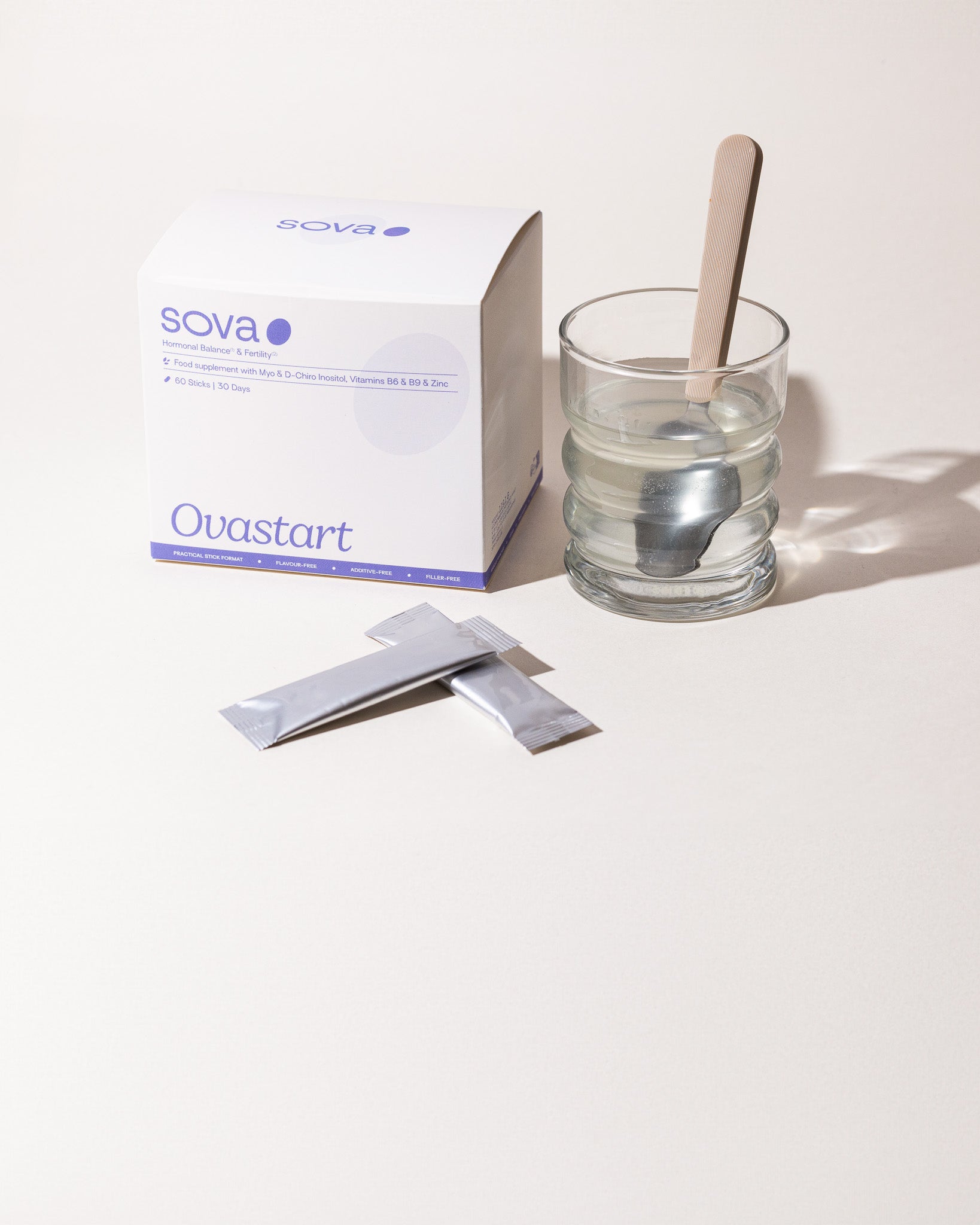
Berberine Supplement UK - Blood Sugar, Insulin & Metabolic Support for Women with PCOS
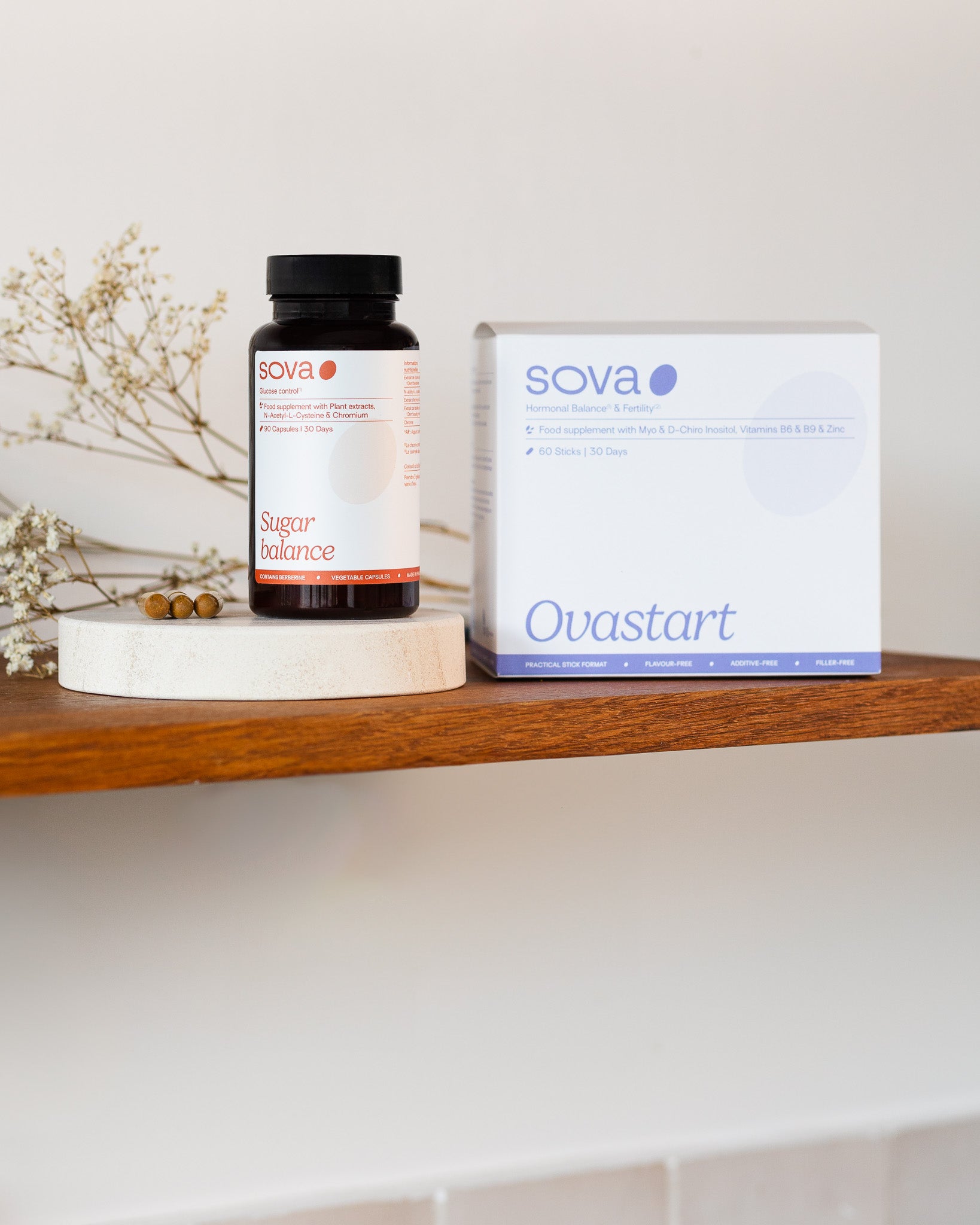
The Hormone Balance Supplements Built for PCOS - Two Products, One Complete System