




The Balance Bundle
The Hormone Balance Supplements Built for PCOS - Two Products, One Complete System
From £53
Table of contents
- 01. What Are Normal Luteal Phase Symptoms? (And Why They Happen)
- 02. What Do I Feel Like During the Luteal Phase?
- 03. PMS vs. Early Pregnancy: How to Tell the Difference
- 04. Noticing Changes in Your Luteal Symptoms? When to Pay Attention
- 05. Luteal Phase Length and Your Fertility
- 06. How to Track Your Luteal Phase at Home
- 07. When to Explore Further: a Gentle Guide
📌 In summary: The physical and emotional changes you feel in the second half of your cycle are not a malfunction - they are your body's natural, programmed response to progesterone rising and falling after ovulation. Their intensity depends not only on your hormone levels, but on how sensitive your individual cells are to those fluctuations - which is why two women can have identical blood results and feel completely different. Mild bloating, breast tenderness, mood shifts, and fatigue are all part of a healthy luteal phase. And while early pregnancy and PMS can feel almost identical, mid-luteal spotting is not a reliable sign of conception - only a test taken 14+ days after ovulation gives you a real answer.
If you've ever spent the second half of your cycle Googling whether what you're feeling is normal, a sign of PMS, or maybe something more - you're in very good company. The luteal phase is one of the most symptom-rich windows of the entire menstrual cycle, and yet it remains one of the least talked about.
In this article, we walk you through what luteal symptoms are, why they happen (including a piece of biology that rarely gets the attention it deserves), how to read the difference between PMS and early pregnancy, and some ways to gently support your body through it all.
What Are Normal Luteal Phase Symptoms? (And Why They Happen)
Your luteal phase is the roughly two-week window between ovulation and the start of your next period - usually days 15 to 28 of a standard 28-day cycle. After ovulation, the follicle that released the egg transforms into a small glandular structure called the corpus luteum, which releases progesterone. This hormone prepares the uterine lining to receive a fertilised egg if conception has occurred.
Think of progesterone as your body's "incubation hormone" - it asks your system to retain a little fluid, slow down, and stay warm. The physical and emotional changes you feel are a direct consequence of that activity. They are not a dysfunction. Research confirms they are a sign that your endocrine system is working as it should (1).
Why do some women feel luteal symptoms so much more intensely?
Here is something that doesn't get explained nearly enough: the severity of your luteal symptoms is not determined solely by how much progesterone or oestrogen is in your blood. It depends heavily on how sensitive your individual cell receptors are to those hormonal fluctuations (2).
Two women can have virtually identical hormone levels on a blood test and have completely different experiences of their cycle. One barely notices the second half; the other feels profoundly affected. This receptor sensitivity is shaped by genetics, chronic stress, nutritional status, sleep quality, and the level of background inflammation in your body. It also helps explain why your own symptoms can vary from cycle to cycle - a "normal" blood result doesn't always reflect how you actually feel.
What are the symptoms of the luteal phase?
💡 Quick answer: Luteal phase symptoms typically include a mix of physical changes - bloating, breast tenderness, acne - and emotional shifts like mood fluctuations, fatigue, and cravings. They occur as progesterone rises then falls in the second half of your cycle, and their intensity is shaped by your individual receptor sensitivity, not just your hormone levels.
Physical symptoms:
- Breast tenderness: breasts feel heavy, swollen, or sensitive - driven by progesterone's effect on breast tissue and a rise in pro-inflammatory prostaglandins (3)
- Abdominal bloating: progesterone relaxes smooth muscle and promotes fluid retention
- Hormonal acne: particularly around the chin and jawline as androgens fluctuate in the late luteal phase
- Mild headaches: often linked to the drop in oestrogen as the phase progresses
- Slight rise in basal body temperature (BBT): typically 0.2-0.5°C above your follicular baseline, triggered by progesterone (1)
Digestive symptoms:
- Constipation or looser stools: progesterone slows gut motility
- Intense cravings for carbohydrates or sugar: linked to falling serotonin levels in the late luteal phase (4)
- Mild nausea in some women
Emotional and systemic symptoms:
- Mood fluctuations, irritability, emotional sensitivity: driven by the oestrogen-serotonin relationship (4)
- Fatigue and an increased need for sleep
- Reduced concentration, "brain fog": measurable neurological changes occur across the cycle (5)
👉 If you have PCOS, your luteal phase symptoms can feel more amplified due to underlying hormonal imbalances. You can read more about how PCOS affects your cycle in our women's wellness blog.
What Do I Feel Like During the Luteal Phase?
💡 Quick answer: The luteal phase unfolds in two distinct stages. The first week after ovulation often brings a sense of calm focus and warmth. The second week is when progesterone and oestrogen begin to fall - and that's when the classic PMS symptoms tend to arrive.
Early luteal phase (days 15-21): a grounded, productive window
In the week immediately after ovulation, progesterone is rising steadily. Many women report feeling surprisingly good during this window - calm, focused, with an urge to organise, nest, or be productive. This is progesterone at its peak: your body is in full "potential pregnancy" mode, optimised for stillness and warmth.
Late luteal phase (days 22-28): the hormonal shift
Then comes the change. If no embryo implants, the corpus luteum begins to break down around days 9-10 after ovulation, and both progesterone and oestrogen start to fall. This hormonal withdrawal triggers the classic PMS symptom cluster (1).
What many women don't realise is that this is not "all in your head." Research from the Max Planck Institute has shown that hormonal fluctuations during the menstrual cycle cause measurable structural and functional changes in the brain, including shifts in hippocampal volume and network connectivity (5). Your brain literally reorganises around your hormones.
PMS vs. Early Pregnancy: How to Tell the Difference
This is the question that brings most people to this article - and the honest answer is that it can be genuinely difficult to tell. The reason? Both PMS and early pregnancy are initially driven by the same hormone: progesterone.
How early can PMS symptoms start?
💡 Quick answer: PMS symptoms typically begin 5 to 11 days before your period, during the mid-to-late luteal phase. They gradually peak in the days just before menstruation and usually fade within 2-3 days of bleeding starting.
A rough PMS timeline:
- 7-10 days before your period: mild bloating begins, slight breast tenderness, energy starts to dip
- 2-5 days before: symptoms peak - mood drops, food cravings intensify, physical discomfort increases
- Days 1-2 of bleeding: a rapid hormonal reset; symptoms typically lift quickly as prostaglandins clear
The hallmark of PMS is that symptoms resolve completely once your period starts - sometimes within hours. If they persist through and beyond your bleed, that's worth paying attention to.
PMS vs. early pregnancy - a symptom-by-symptom comparison
Rather than long descriptions, here is the most practical guide (1, 6):
| Symptom | If it is PMS... | If it is early pregnancy... |
|---|---|---|
| Cramping | Mild to moderate; usually intensifies 1-2 days before your period and eases once bleeding begins. | Dull, low pelvic twinges or a pulling sensation - typically lighter and earlier in the cycle than classic period cramps. |
| Spotting | Absent, or a brief show of blood in the hours just before a full flow begins. | Mid-luteal light spotting (pink or brown) can occur in both conceptive and non-conceptive cycles - it is not a definitive clinical sign of embryo implantation. Only a test can confirm. |
| Breast changes | Heavy, swollen, tender - pain peaks before your period and typically vanishes within hours of bleeding starting. | Intensely sensitive, tingly, noticeably fuller. Areolas may darken or develop small bumps. |
| Fatigue | Feeling tired a few days before your period, usually manageable with rest. | Deep, disproportionate exhaustion driven by a sustained rise in progesterone - and, if pregnant, by hCG production beginning around days 8-10 post-ovulation. |
⚠️ An important note on spotting: you may have read that light spotting 6-12 days after ovulation is a reliable sign of embryo implantation. The scientific reality is more nuanced - mid-to-late luteal spotting occurs frequently in both conceptive and non-conceptive cycles, often due to transient oestrogen dips or endometrial fluctuations. It is not a clinically definitive sign of pregnancy (6). The only reliable confirmation remains a high-sensitivity pregnancy test taken at least 14 days after ovulation.
Noticing Changes in Your Luteal Symptoms? When to Pay Attention
It's completely normal for luteal symptoms to shift from cycle to cycle. Stress, a change in diet, sleep quality, a new exercise routine - all of these influence how your hormones behave and how your body responds. This variability is part of the design, and is not on its own a reason for concern.
When it might be PMDD (Premenstrual Dysphoric Disorder)
PMDD is a recognised condition in which the brain shows a heightened neurochemical sensitivity to normal hormonal fluctuations, rather than a hormone imbalance per se. Research points to an impaired interaction between the progesterone metabolite allopregnanolone and GABA receptors in the brain (4). It affects approximately 1.6-3.6% of women of reproductive age (7).
Unlike standard PMS, PMDD involves psychological symptoms that are disproportionate and significantly disruptive to daily life:
- Persistent feelings of hopelessness or despair
- Intense anxiety or panic attacks
- Rage or severe irritability that strains relationships
- Difficulty functioning at work, at home, or socially
If this resonates, know that PMDD is a recognised, treatable condition - and a conversation with your GP or a hormone-aware practitioner can open up real pathways for support. You don't have to manage this alone.
Signs that your progesterone may be low
Sometimes, luteal symptoms point not to too much hormonal activity but to insufficient progesterone, or a too-rapid decline. Signs that may suggest this include (1, 8):
- Spotting or brown discharge in the days before your period - earlier than expected
- Persistent sleep disruption, particularly waking in the early hours
- A luteal phase consistently shorter than 11 days
- Irregular or absent cycles
- Recurrent early pregnancy loss
Chronic low-grade inflammation is one of the factors that can impair progesterone production and amplify luteal symptoms. Supporting your body's anti-inflammatory pathways throughout the cycle can make a real difference.

EPA and DHA - the active forms of omega-3 fatty acids - compete with arachidonic acid in your cell membranes to produce anti-inflammatory series-3 prostaglandins rather than the pro-inflammatory series-2 variants. During the luteal phase, a rise in pro-inflammatory prostaglandins is linked to breast tenderness, bloating, cramping, and mood volatility. A randomised controlled trial published in the Archives of Gynecology and Obstetrics found that omega-3 supplementation significantly reduced breast tenderness, bloating, anxiety, and headache in women with PMS compared to placebo (3).
Luteal Phase Length and Your Fertility
Is a 14-day luteal phase always the norm?
The "14-day luteal phase" is a simplification that doesn't reflect the full picture. Research published in Human Reproduction (2024) confirms that in healthy, regularly cycling women, luteal phase length ranges from 8 to 17 days, with a mean of around 13-14 days (8). Anything from around 11 to 17 days is medically considered within a healthy range. Variability between your own cycles is also entirely common.
Short luteal phase and getting pregnant
A luteal phase consistently shorter than 10 days is classified as a luteal phase defect (LPD) - a condition in which insufficient time, or insufficient progesterone, prevents the uterine lining from adequately preparing for implantation (9).
The reassuring note: the American Society for Reproductive Medicine confirms that LPD has not been proven to be an independent cause of infertility, and treatment pathways do exist. If this is something you're exploring, a progesterone blood test drawn 7 days before your expected period is a helpful first conversation to have with your GP.
👉 If you have PCOS - which can affect ovulation regularity and therefore progesterone production - your luteal phase may be more variable. You can read more about PCOS and how it affects your cycle on the SOVA blog.

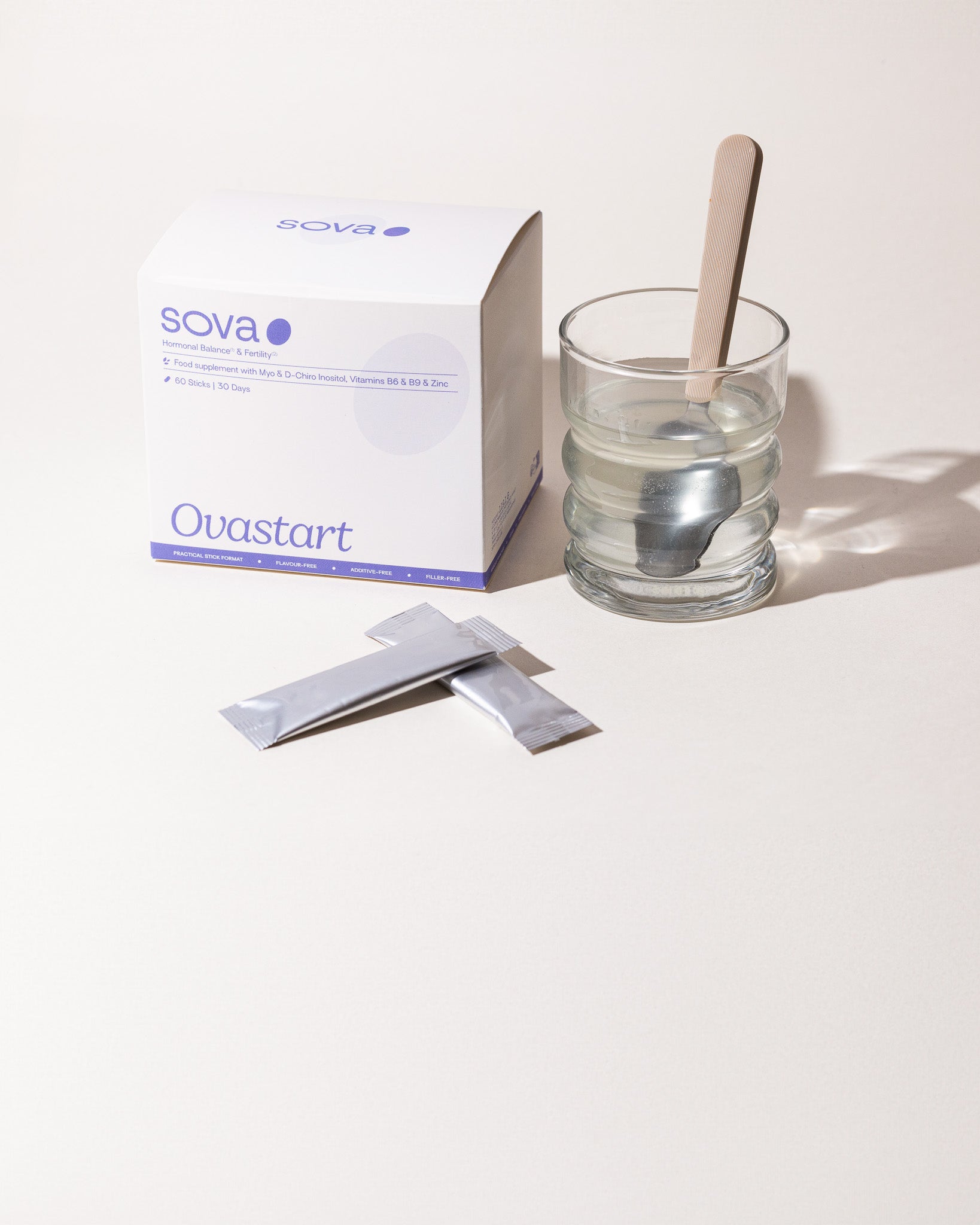
For women with PCOS, myo-inositol and D-chiro-inositol act as insulin sensitisers that help reduce compensatory hyperinsulinaemia - a key driver of androgen excess that can disrupt ovulation. By supporting insulin sensitivity during the luteal phase, inositol helps stabilise the blood sugar fluctuations that worsen cravings, mood drops, and energy crashes in the second half of the cycle. Research also shows it supports oocyte quality and ovulation regularity, which in turn promotes a healthier, more consistent luteal phase (10).
👉 To explore this further, read our article on inositol and its benefits for women with PCOS.
How to Track Your Luteal Phase at Home
Tracking basal body temperature (BBT)
Your basal body temperature - taken first thing in the morning before getting up, talking, or drinking anything - rises by approximately 0.2-0.5°C after ovulation and stays elevated throughout the luteal phase. This is triggered by progesterone.
Take your temperature at the same time each morning using a thermometer accurate to 0.1°C, and log it in a cycle tracking app. After a few cycles, you'll be able to see your ovulation day and the length of your luteal phase clearly. For more guidance on cycle observation, you can read our dedicated article on how to track your cycle with PCOS.
Monitoring cervical mucus changes
After ovulation, the fertile-quality "egg-white" cervical mucus disappears. During the luteal phase, discharge becomes thick, sticky, opaque, or entirely absent - a reliable shift that signals ovulation has occurred. Tracking this alongside BBT gives you a much richer picture of your cycle than either method alone.

Magnesium plays a direct role in moderating the hypothalamic-pituitary-adrenal (HPA) axis - the system that governs your cortisol stress response. When magnesium levels are low, the HPA axis becomes hyperreactive, amplifying anxiety and tension during the luteal phase when cortisol is already naturally elevated.
Magnesium also acts as a cofactor for tryptophan hydroxylase, the enzyme that converts tryptophan into serotonin. As serotonin production naturally dips in the late luteal phase, a magnesium deficit can deepen mood drops, irritability, and sugar cravings. Research confirms that women with PMS have significantly lower intracellular magnesium levels compared to symptom-free women (11). Supporting magnesium status from the mid-luteal phase onwards is one of the most well-supported nutritional strategies for the second half of your cycle.
When to Explore Further: a Gentle Guide
Most luteal symptoms are part of normal cycle physiology, and learning to work with your cycle is often the most empowering approach. That said, some patterns can be an invitation to go a little deeper. Here are a few signposts that may be worth sitting with:
| ◇ Physical symptoms like severe pelvic pain or persistent migraines that don't ease with usual rest or over-the-counter support. |
| ◇ Emotional shifts involving intense hopelessness, severe panic, or distress that feel out of proportion to daily life. |
| ◇ Symptoms that seem to be present throughout the whole month and don't fully clear within 2-3 days of your period starting. |
| ◇ A luteal phase that consistently measures 9 days or shorter when you track your cycle. |
If any of these feel familiar, a conversation with your GP or a hormone-aware practitioner could open up some clarity. Asking for a progesterone blood test drawn 7 days before your expected period, alongside a full hormone panel, is a meaningful and practical starting point.
We hope this article has helped you feel a little more at home in your cycle. Whatever you're experiencing, you are not imagining it - and you are never alone in it. 💜
- Luteal phase: the second half of the menstrual cycle, from ovulation to the start of the next period. = Luteal phase: the second half of the menstrual cycle, from ovulation to the start of the next period.
- Progesterone: a hormone produced by the corpus luteum after ovulation, responsible for preparing the uterine lining and driving most luteal symptoms. = Progesterone: a hormone produced by the corpus luteum after ovulation, responsible for preparing the uterine lining and driving most luteal symptoms.
- Corpus luteum: the temporary glandular structure that forms in the ovary from the follicle after ovulation, secreting progesterone. = Corpus luteum: the temporary glandular structure that forms in the ovary from the follicle after ovulation, secreting progesterone.
- Receptor sensitivity: the degree to which individual cells respond to hormonal signals - determines symptom intensity independently of absolute hormone levels. = Receptor sensitivity: the degree to which individual cells respond to hormonal signals - determines symptom intensity independently of absolute hormone levels.
- Basal body temperature (BBT): resting temperature taken first thing in the morning, which rises slightly after ovulation due to progesterone. = Basal body temperature (BBT): resting temperature taken first thing in the morning, which rises slightly after ovulation due to progesterone.
- PMS (Premenstrual Syndrome): a cluster of physical and emotional symptoms in the luteal phase that resolves with the onset of menstruation. = PMS (Premenstrual Syndrome): a cluster of physical and emotional symptoms in the luteal phase that resolves with the onset of menstruation.
- PMDD (Premenstrual Dysphoric Disorder): a recognised neurobiological condition characterised by severe psychological symptoms linked to abnormal GABA receptor sensitivity to hormonal fluctuations. = PMDD (Premenstrual Dysphoric Disorder): a recognised neurobiological condition characterised by severe psychological symptoms linked to abnormal GABA receptor sensitivity to hormonal fluctuations.
- Allopregnanolone: a progesterone metabolite that modulates GABA receptors; abnormal sensitivity to it is central to PMDD pathophysiology. = Allopregnanolone: a progesterone metabolite that modulates GABA receptors; abnormal sensitivity to it is central to PMDD pathophysiology.
- Luteal phase defect (LPD): a luteal phase of 10 days or fewer, or one characterised by insufficient progesterone production. = Luteal phase defect (LPD): a luteal phase of 10 days or fewer, or one characterised by insufficient progesterone production.
- Prostaglandins: lipid signalling molecules that can be pro-inflammatory (series-2) or anti-inflammatory (series-3); series-2 prostaglandins drive much of the discomfort of the late luteal phase. = Prostaglandins: lipid signalling molecules that can be pro-inflammatory (series-2) or anti-inflammatory (series-3); series-2 prostaglandins drive much of the discomfort of the late luteal phase.
- HPA axis: the hypothalamic-pituitary-adrenal axis - the body's central stress-response system, regulated in part by magnesium. = HPA axis: the hypothalamic-pituitary-adrenal axis - the body's central stress-response system, regulated in part by magnesium.
- Mid-luteal spotting: light bleeding that can occur in the middle of the luteal phase; it appears in both conceptive and non-conceptive cycles and is not a definitive sign of implantation. = Mid-luteal spotting: light bleeding that can occur in the middle of the luteal phase; it appears in both conceptive and non-conceptive cycles and is not a definitive sign of implantation.
- Myo-inositol / D-chiro-inositol: insulin-sensitising compounds particularly relevant in PCOS; they support ovulation regularity and luteal phase quality. = Myo-inositol / D-chiro-inositol: insulin-sensitising compounds particularly relevant in PCOS; they support ovulation regularity and luteal phase quality.
Scientific References
Over 50,000 women have already adopted our routines, rating us an excellent 4.7/5 average (from 3,300+ reviews). Our supplements are formulated in French laboratories using clean, carefully sourced ingredients, with a maximum of patented active ingredients proven for their effectiveness.
- Founded by women with PCOS, we understand the reality of hormonal disorders.
- Clinically studied: High-quality ingredients, including patented forms like Quatrefolic® and an optimal Myo-/D-Chiro Inositol ratio.
- Holistic support: Formulated for hormonal balance, metabolic health, inflammation, mood, and cycle regulation.
- Science-led formulas: Transparent ingredients with absolutely no unnecessary additives.


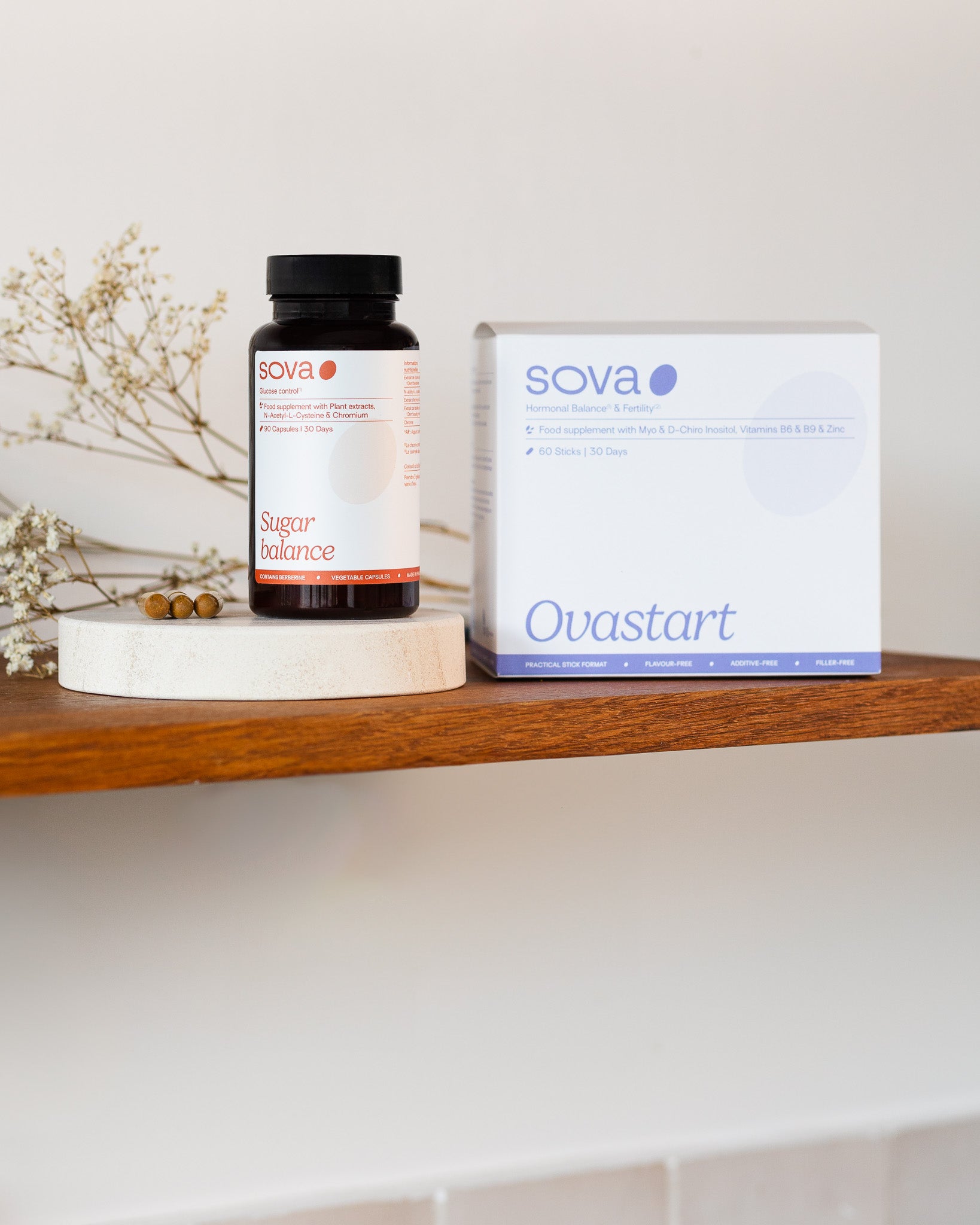
The Hormone Balance Supplements Built for PCOS - Two Products, One Complete System