


Table of contents
- 01. Key Takeaways
- 02. Why PCOS causes facial hair: the science of androgens
- 03. The best medical treatments for PCOS hirsutism
- 04. Permanent vs. temporary hair removal: what actually works?
- 05. Natural & lifestyle approaches to lower androgens
- 06. The emotional toll: coping with the "Hidden" symptom
- 07. Frequently Asked Questions
- 08. Final Thoughts
If you're dealing with facial hair from PCOS, you already know it's about so much more than just hair. It's the daily shaving, the covering up, the moments where you catch your reflection and feel like your body is working against you. Around 70% of women with PCOS experience hirsutism - unwanted hair growth on the chin, upper lip and jawline - and it's one of the most emotionally difficult symptoms to live with.
This isn't about grooming habits. It's a hormonal symptom driven by elevated androgens, and it deserves a real solution. In this article, we walk you through why PCOS causes facial hair, what the most effective treatments are, and what you can do - from targeted supplements to longer-term management strategies - to start feeling more in control.
Key Takeaways
- PCOS facial hair (hirsutism) is driven by excess androgens and insulin resistance. It's a biological symptom, not a cosmetic issue.
- Medical treatments like Spironolactone and Vaniqa target the root hormonal cause and can slow or reduce new hair growth.
- Electrolysis is the only FDA-approved permanent removal method. Laser hair removal offers long-term reduction, but not complete permanence.
- Lifestyle changes (Spearmint tea, Inositol) can significantly slow new growth by lowering androgen levels naturally.
Why PCOS causes facial hair: the science of androgens
Hirsutism isn't a sign that you're doing something wrong. It's a direct result of elevated androgens, male hormones like testosterone and DHEA-S that are naturally present in women, but often higher in those with PCOS (2).
When androgen levels rise, hair follicles on your face, chest, and abdomen can become more sensitive. This causes fine, light hair (vellus hair) to transform into thicker, darker, coarser hair (terminal hair). The change is gradual, but over time it becomes more visible and distressing.
What drives this hormonal imbalance?
Two main factors contribute to excess androgens in PCOS:
-
Ovarian androgen production: In PCOS, the ovaries produce more testosterone than usual. This happens because of disrupted signals between the brain and ovaries, leading to an imbalance in luteinising hormone (LH) and follicle-stimulating hormone (FSH) (3).
-
Insulin resistance: About 75% of women with PCOS have insulin resistance, which means your cells don't respond properly to insulin (4). When insulin levels stay high, the ovaries are stimulated to produce even more androgens. It's a vicious cycle: insulin resistance feeds androgen production, which worsens PCOS symptoms. To understand this connection in more detail, read our article on insulin resistance and PCOS.
Understanding your hair growth pattern
Healthcare providers often use the Ferriman-Gallwey Scale to assess hirsutism. This tool scores hair growth in nine body areas (upper lip, chin, chest, upper back, lower back, upper abdomen, lower abdomen, upper arms, and thighs). A score of 8 or higher typically indicates hirsutism in white women, though this threshold can vary depending on ethnic background. Women of East Asian descent may have lower scores while still experiencing clinically significant hirsutism, whereas women of Mediterranean or South Asian descent may naturally have higher baseline scores (5).
If you notice coarse, dark hair on your chin, neck, or jawline rather than soft "peach fuzz", this is a strong indicator that androgens are at play.
The best medical treatments for PCOS hirsutism
Medical treatments work by addressing the hormonal root of the problem. They won't remove existing hair instantly, but they can slow new growth, reduce thickness, and improve your symptoms over time. Most treatments take 3 to 6 months to show visible results.
Why does it take so long? Hair grows in cycles that last approximately 4 to 6 months. Treatments affect new hair growth, but existing hair needs to complete its natural cycle before you'll see the full benefits. This is why patience and consistency are essential.
Here's a breakdown of the most common options:
Spironolactone (Anti-androgen)
Spironolactone is a medication that blocks androgen receptors, preventing testosterone from binding to hair follicles. It's one of the most effective treatments for hirsutism and is often prescribed alongside other therapies (6).
How it works: By blocking androgens, Spironolactone slows the conversion of fine hair into terminal hair.
Time to results: 6 months or more (remember, hair growth cycles take time).
Considerations: It's a diuretic, so you may need to urinate more frequently. It's not suitable during pregnancy.
Combined oral contraceptives (birth control pills)
Birth control pills regulate your menstrual cycle and lower androgen production by suppressing ovulation. Pills containing anti-androgenic progestins (like drospirenone or cyproterone acetate) are particularly effective (7).
How they work: They reduce testosterone production and increase a protein called SHBG (sex hormone-binding globulin), which binds to free testosterone and makes it less active.
Time to results: 6 to 12 months.
Considerations: Not suitable for everyone, especially if you have certain risk factors like high blood pressure or a history of blood clots.
Metformin (insulin sensitiser)
Metformin is primarily used to manage insulin resistance and type 2 diabetes, but it can also help lower androgen levels indirectly. By improving how your body uses insulin, it reduces the ovaries' overproduction of testosterone (8).
How it works: It lowers insulin levels, which in turn reduces androgen production.
Time to results: 3 to 6 months.
Considerations: Common side effects include digestive discomfort. It works best when combined with lifestyle changes.
Vaniqa (Eflornithine cream)
Vaniqa is a prescription topical cream that slows hair growth on the face. It works by inhibiting an enzyme needed for hair growth (9).
How it works: Applied twice daily, it reduces the rate at which facial hair grows.
Time to results: 6 to 8 weeks.
Considerations: Hair growth resumes if you stop using it. It's often used alongside other treatments or hair removal methods.
Comparison table: medical treatments for PCOS hirsutism
|
Treatment |
How It Works |
Time to Results |
Key Considerations |
|
Spironolactone |
Blocks androgen receptors |
6+ months |
Diuretic; not for pregnancy |
|
Birth Control Pills |
Lowers androgen production |
6–12 months |
Not suitable for all women |
|
Metformin |
Reduces insulin and androgens |
3–6 months |
May cause digestive issues |
|
Vaniqa Cream |
Slows hair growth enzyme |
6–8 weeks |
Requires ongoing use |
Permanent vs. temporary hair removal: what actually works?
While medical treatments address the hormonal cause, many women also seek physical hair removal methods. It's important to understand the difference between permanent reduction and permanent removal.
Laser hair removal vs. electrolysis
Laser Hair Removal uses concentrated light to target the pigment in hair follicles, damaging them to slow regrowth. It's highly effective for long-term hair reduction, especially on darker, coarser hair. However, it's not classified as permanent removal because some hair may eventually grow back, especially if androgen levels remain high (10).
Results: 6 to 8 sessions are typically needed, with maintenance sessions every 6 to 12 months.
Best for: Women with darker hair and lighter skin. Less effective on blonde, red, or grey hair.
Electrolysis, on the other hand, is the only FDA-approved method for permanent hair removal. It uses a tiny probe inserted into each hair follicle to destroy the root with electrical current. It works on all hair colours and skin types (11).
Results: Multiple sessions are required, as each hair follicle must be treated individually. It's time-consuming but offers permanent results.
Best for: Women seeking permanent removal, regardless of hair or skin colour.
Why Plucking and Waxing Feel Different with PCOS
Many women with PCOS notice that plucking or waxing feels less effective over time. This is because repeated trauma to the follicle can cause distortion, making regrown hair appear coarser or grow in at odd angles. While plucking doesn't change your DNA or make hair grow back thicker biologically, the visual effect can be frustrating (12).
Threading is a gentler alternative to waxing and can be a good temporary option while you pursue hormonal treatments or permanent removal.
Natural & lifestyle approaches to lower androgens
Alongside medical treatments, certain natural strategies can help lower androgens and slow new hair growth. These approaches work best when combined with a hormone-balancing lifestyle.
Spearmint tea
Spearmint tea has been shown to have anti-androgenic properties. A study found that drinking two cups of spearmint tea daily for 30 days significantly reduced free testosterone levels in women with hirsutism (13).
How to use it: Brew 1 teaspoon of dried spearmint leaves (or one tea bag) in hot water. Drink twice daily, ideally after meals.
Myo-Inositol and D-Chiro-Inositol
Inositol is a naturally occurring compound that improves insulin sensitivity and helps regulate ovarian function. Research shows that a combination of myo-inositol and d-chiro-inositol can reduce androgen levels and improve symptoms of hirsutism in women with PCOS (14).
How to use it: Supplements typically provide 2 to 4 grams of inositol daily. For a complete formula, consider Ovastart, which combines approximately 4 g of myo-inositol and d-chiro-inositol with active folate, vitamin B6 P5P, and zinc bisglycinate, all nutrients that support hormonal balance. For more information on how inositol works, explore our detailed guide on inositol and PCOS.
Low-Glycaemic eating
A low-glycaemic diet helps stabilise blood sugar and reduce insulin spikes, which in turn lowers androgen production. Focus on whole grains, legumes, vegetables, lean proteins, and healthy fats. Avoid refined sugars and processed carbohydrates (15).
Practical tips:
- Start your day with a protein-rich breakfast (eggs, Greek yogurt, nuts).
- Pair carbohydrates with protein and fibre (e.g., apple with almond butter).
- Include omega-3 rich foods like salmon, flaxseeds, and walnuts.
- Add cinnamon or vinegar to meals to help regulate blood sugar.
For a comprehensive approach to eating with PCOS, check out our article on nutrition and PCOS.
The Daily Anti-Androgen Routine (Checklist)
- ☑ Drink 2 cups of spearmint tea daily
- ☑ Take inositol supplement (e.g., Ovastart)
- ☑ Eat a protein-rich breakfast
- ☑ Choose low-glycaemic carbohydrates
- ☑ Include healthy fats (omega-3s)
- ☑ Take a 10-minute walk after meals
- ☑ Manage stress through yoga, meditation, or journaling
The emotional toll: coping with the "Hidden" symptom
Hirsutism is often called a "hidden" symptom because it's not always discussed openly, even though it affects so many women with PCOS. The emotional impact can be profound: feelings of shame, reduced femininity, anxiety in social situations, and a constant cycle of checking, covering, and removing hair.
You might feel like you're the only one dealing with this, but you're not. Studies show that hirsutism significantly affects quality of life and self-esteem, and many women report feeling isolated by this symptom (16).
What can help?
- Talk to someone you trust: Whether it's a friend, family member, or therapist, sharing your experience can ease the emotional burden.
- Join a support community: Organisations like PCOS Challenge and online forums offer spaces where women share their experiences and coping strategies.
- Focus on what you can control: While you can't eliminate facial hair overnight, taking steps to manage it, whether through medical treatment, lifestyle changes, or hair removal, can restore a sense of agency.
You deserve to feel comfortable and confident in your body. Seeking support isn't weakness; it's an act of self-care. To learn more about managing the psychological impact of PCOS, read our article on PCOS and mental wellbeing.
Frequently Asked Questions
Can PCOS facial hair go away?
Facial hair caused by PCOS can become thinner, lighter, and slower-growing with the right treatment, but it's unlikely to disappear completely without intervention. Lowering androgen levels through medication, lifestyle changes, or supplements can significantly reduce new growth over time. However, because of the hair growth cycle (which lasts 4 to 6 months), it takes patience to see results. Existing hair needs to complete its cycle before you notice the full benefits. Hair follicles that have already been "activated" by androgens may not revert on their own. Permanent removal methods like electrolysis can eliminate existing hair, while hormonal treatments prevent new growth.
How do I know if my facial hair is caused by PCOS?
PCOS-related facial hair typically appears on the chin, jawline, upper lip, and neck, areas where men commonly grow hair. The hair is usually coarse, dark, and thicker than normal "peach fuzz." If you also have other PCOS symptoms like irregular periods, acne, or difficulty losing weight, it's worth getting your hormone levels checked. A healthcare provider can assess your symptoms and may use the Ferriman-Gallwey Scale to determine if you have hirsutism.
Can I stop facial hair growth without birth control?
Yes. While birth control pills are a common treatment for hirsutism, they're not the only option. Anti-androgens like Spironolactone, insulin sensitisers like Metformin, and natural approaches like spearmint tea and inositol can all help lower androgens and slow hair growth. Combining these strategies with a low-glycaemic diet and stress management can be highly effective. Speak with your healthcare provider about non-hormonal options that suit your needs.
Final Thoughts
PCOS facial hair is frustrating, but it's not something you have to live with silently. By understanding the hormonal root cause and exploring the full range of treatments, from anti-androgens and laser hair removal to spearmint tea and inositol, you can take meaningful steps toward managing this symptom.
Progress takes time, and every woman's journey is different. Be patient with yourself, celebrate small wins, and remember that you're not alone in this.
- Androgens : Often called "male hormones" (such as testosterone), these are naturally present in women but are found at elevated levels in those with PCOS, driving excess hair growth.
- Hirsutism : The medical term for unwanted, male-pattern hair growth on women, typically appearing on the face, chest, or back.
- Insulin Resistance : A condition where the body's cells do not respond properly to insulin, leading to high insulin levels that stimulate the ovaries to produce more androgens.
- Ferriman-Gallwey Scale : A clinical tool used by healthcare providers to score and assess the severity of hirsutism across nine different body areas.
- Terminal Hair : Thick, dark, and coarse hair that develops from fine "peach fuzz" (vellus hair) due to high androgen levels.
- Electrolysis : A hair removal method using an electrical current to destroy the hair root; it is the only method classified by the FDA as permanent hair removal.
- Spironolactone : An anti-androgen medication that blocks testosterone from binding to hair follicles, effectively slowing the growth of terminal hair.
- Inositol : A compound that improves insulin sensitivity and helps regulate ovarian function, often used in supplement form (Myo-inositol and D-chiro-inositol) to reduce PCOS symptoms.
Scientific references
SOVA was created by two sisters with PCOS who wanted products that truly worked. Our formulas are developed in-house with women’s health and micronutrition experts, using ingredients backed by clinical studies and compliant with European regulations.
- Built by women with PCOS, we know the reality of the symptoms.
- Clinically studied, high-quality ingredients, including patented forms like Quatrefolic® and an optimal Myo-/D-Chiro Inositol ratio.
- Holistic support for hormonal balance, metabolic health, inflammation, mood and cycle regulation.
- Transparent, science-led formulas with no unnecessary additives.

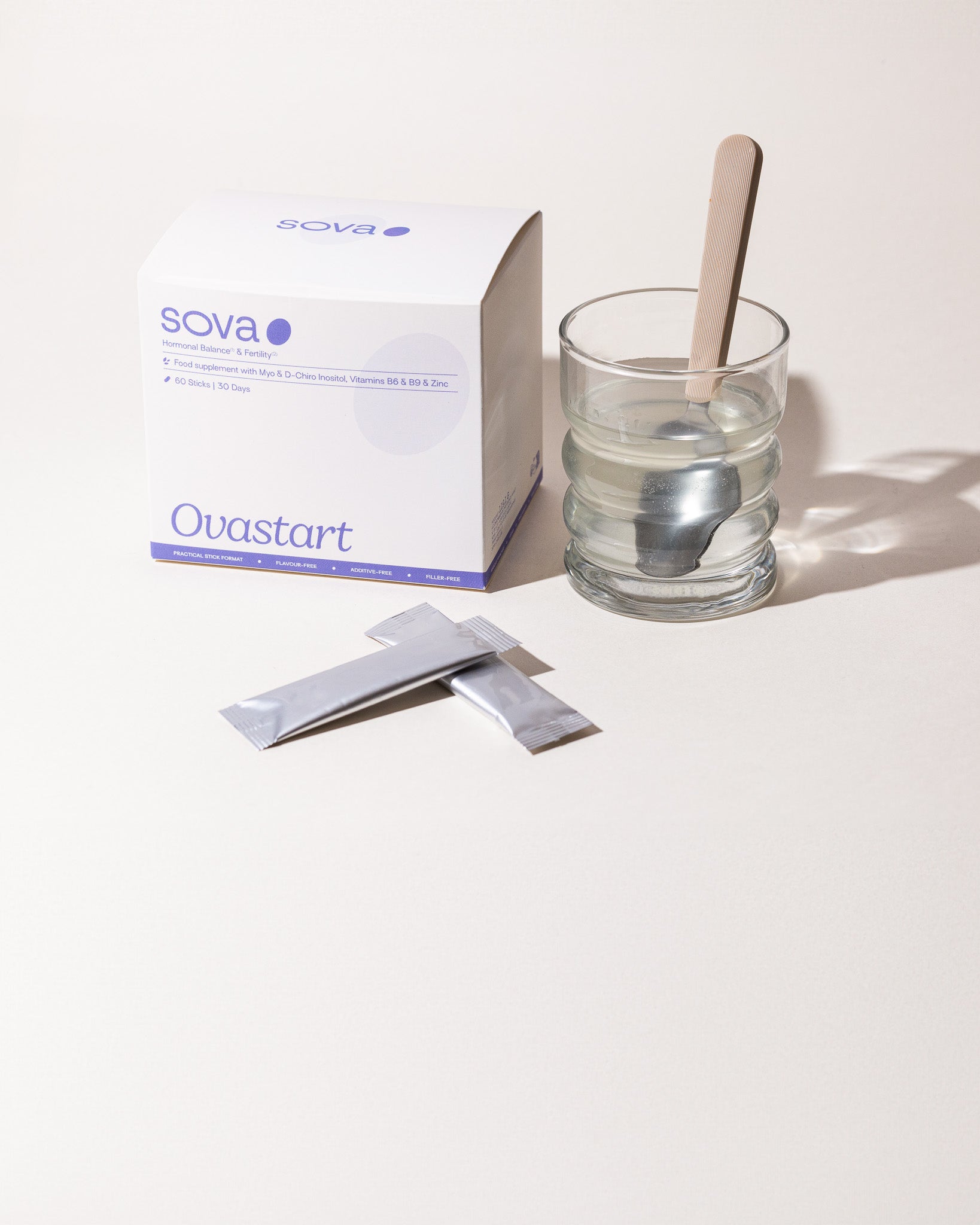
Inositol Powder Supplement for PCOS