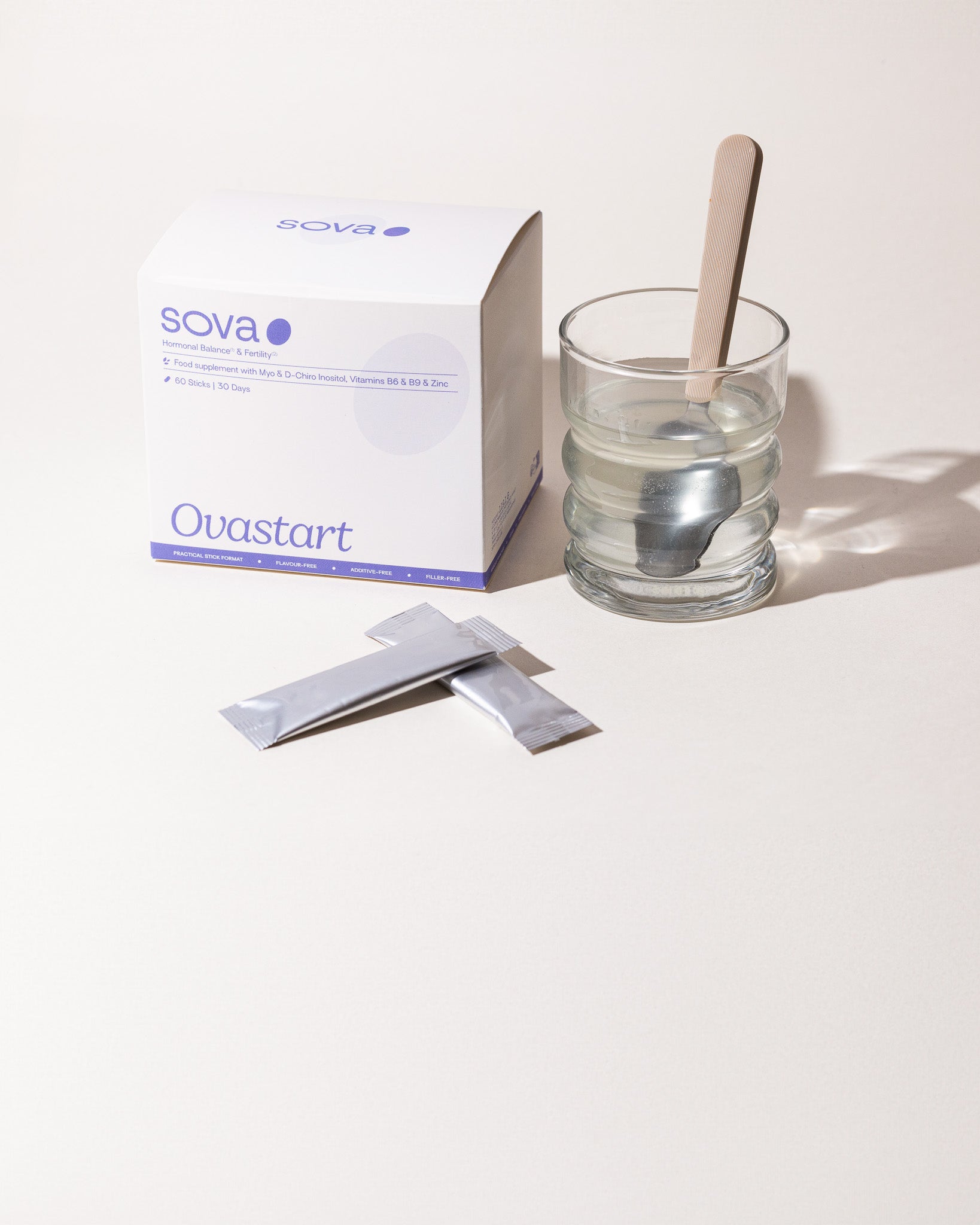




The Balance Bundle
The Hormone Balance Supplements Built for PCOS - Two Products, One Complete System
From £53

Sugar Balance
Berberine Supplement UK - Blood Sugar, Insulin & Metabolic Support for Women with PCOS
From £26
Table of contents
- 01. Decoding PCOS spotting: what counts as spotting vs. breakthrough bleeding?
- 02. Visual guide: what does the colour of your PCOS spotting mean?
- 03. The biological mechanism: why polycystic ovaries cause irregular bleeding
- 04. Differential diagnosis: is it PCOS spotting or something else?
- 05. Is long-term PCOS spotting dangerous? Risks & endometrial health
- 06. When to see a doctor: red flag symptoms vs. normal PCOS spotting
- 07. Evidence-based strategies to stabilise your cycle & reduce spotting
- 08. How to accurately track PCOS spotting (and what to tell your doctor)
📌 Key takeaways: Spotting is one of the most common symptoms of PCOS, and in most cases it is not an emergency. It is usually caused by anovulation (a cycle where no egg is released), which leaves your uterine lining without enough progesterone to shed evenly. Colour, duration and any accompanying pain are the three things to watch. Persistent daily spotting for more than 7-10 days, or no period at all for more than 90 days, is the point where you should book a doctor's appointment rather than wait it out.
Finding unexpected spots of blood on your underwear, or a smear of brown discharge days after your period should have ended, can be genuinely unsettling. Your mind jumps straight to the worst-case questions: is this normal? Could I be pregnant? Is something wrong with me? If you live with polycystic ovaries, that anxiety is often compounded by not knowing whether this is "just PCOS being PCOS" or a sign that something needs attention.
Here is the reassuring part: spotting is one of the most common symptoms of PCOS, and on its own it is rarely a medical emergency. It is your body's way of telling you that ovulation did not happen as expected, and that your hormones are working through an uneven cycle. That said, "common" does not mean "ignore it" - understanding why it happens, what the colour and timing mean, and when it crosses into a red flag will help you feel back in control of your own body.
KEY TAKEAWAYS: PCOS & SPOTTING AT A GLANCE
1. Primary cause: spotting in PCOS is mainly driven by anovulation (no egg release), which leads to low progesterone and an uneven, piecemeal breakdown of the uterine lining.
2. Colour variations: dark brown blood is older, oxidised lining; pink or light red usually means fresh blood mixed with cervical fluid.
3. Duration rules: typical spotting lasts from a few hours to a few days. Persistent daily bleeding beyond 7-10 days needs a medical check.
4. Root cause target: managing insulin resistance through diet, movement and targeted supplementation like myo-inositol is the most reliable lever for long-term cycle stability.
Decoding PCOS spotting: what counts as spotting vs. breakthrough bleeding?
Before you can make sense of what your body is doing, it helps to put a name on it. Not all unexpected bleeding is the same, and the amount of blood is usually the first clue.
Spotting is generally defined by volume rather than colour: it is light enough that a pantyliner is enough to manage it, and it does not soak through a pad or tampon. Breakthrough bleeding, on the other hand, is heavier - it requires proper period protection and can feel and look much closer to an actual period, even though it is happening outside your expected cycle window.
This distinction matters because true cycle spotting (light, brief, low-volume) is far more common in PCOS and rarely needs urgent attention, while heavier breakthrough bleeding - especially if it repeats every few weeks - is more likely to need a conversation with your doctor about your treatment plan. It also helps to distinguish spotting from a naturally light start or tail end of your period, which is a normal part of many women's cycles, PCOS or not.
How many days does PCOS spotting last?
PCOS spotting typically lasts anywhere from a few hours to several days. Because unpredictable hormone levels cause the uterine lining to shed in an uneven, stop-start way, some women experience light breakthrough spotting for two weeks or longer during an anovulatory cycle. As a general rule, spotting that continues daily for more than 7 to 10 days is a signal to book an appointment rather than continue waiting it out at home.
Visual guide: what does the colour of your PCOS spotting mean?
What colour is PCOS bleeding?
PCOS-related bleeding can range from light pink and bright red to dark brown or even black. The shade depends largely on how quickly the blood leaves your uterus: fresh, actively shedding blood looks pink or bright red, while blood that has taken longer to exit the body oxidises and turns brown or black.
Dark brown or black spotting
This is usually old blood that has taken longer than usual to leave the uterus, a common pattern when ovulation is delayed or skipped altogether. The darker colour simply reflects time and oxidation, not a more serious problem in itself.
Light pink spotting
Pink spotting is typically fresh blood mixed with cervical mucus. It is often seen during lower-oestrogen phases of the cycle, or around an attempted ovulation that may not have fully succeeded.
Bright red spotting
Bright red spotting reflects active, fresh shedding of a newly built-up endometrial lining. It tends to appear when the lining has grown thick under the influence of unopposed oestrogen and starts to break down before a full, organised period can occur.
The biological mechanism: why polycystic ovaries cause irregular bleeding
Understanding the "why" behind PCOS spotting can make it feel far less random. Three overlapping mechanisms are usually at play.
The anovulation-progesterone deficit
In a typical cycle, ovulation leaves behind a temporary structure called the corpus luteum, which produces progesterone. Progesterone is what stabilises your uterine lining and keeps it intact until a clear, organised period is triggered. In PCOS, ovulation frequently does not happen. Without it, there is no corpus luteum, and therefore not enough progesterone to hold the lining together - so instead of one clean shed, it breaks down unpredictably in smaller pieces. This anovulation-driven progesterone shortfall is considered one of the central features of PCOS by the 2023 international PCOS guideline, and it is the single biggest reason spotting happens at unpredictable times (2).
Oestrogen dominance & fragmented shedding
Without ovulation to trigger the usual hormonal handover, oestrogen keeps being produced without progesterone to balance it - a state often called unopposed oestrogen. This continues to thicken the uterine lining over time. Eventually, the lining outgrows its own blood supply and starts to collapse in fragments rather than shedding as a single, complete layer, which is what produces the on-and-off spotting many women describe as unpredictable or "random."
The hyperinsulinaemia connection
Insulin resistance is present in a large proportion of women with PCOS, and it does not just affect blood sugar - it reaches into the ovaries too. When insulin levels run high, the ovaries respond by producing more androgens (male-pattern hormones like testosterone), which in turn interferes with the normal maturing and release of an egg. This keeps the anovulation cycle going, which keeps the spotting going. Chronic, low-grade inflammation often travels alongside insulin resistance in PCOS and is thought to reinforce this same hormonal loop, which is part of why anti-inflammatory nutrition is so often part of a PCOS management plan.

Differential diagnosis: is it PCOS spotting or something else?
PCOS is a common explanation for unexpected bleeding, but it is not the only one. Comparing the pattern of your bleeding against a few close look-alikes can help you have a more precise conversation with your doctor.
| Feature | PCOS spotting | Implantation bleeding | Breakthrough bleeding (birth control) |
|---|---|---|---|
| Timing / onset | Random; can occur any time in a long or irregular cycle | 10-14 days after conception, around when a period would be due | Mid-cycle, or during a hormonal transition on the pill |
| Colour & appearance | Dark brown, rusty red, or pale pink | Light pink or brown-rust, very light | Variable; bright red to brown, light to moderate |
| Duration | A few hours up to 14 days, usually on and off | 1 to 3 days maximum | 3 to 7+ days, more continuous |
| Accompanying signs | Mild bloating, acne, no severe pain | Very mild cramping, breast tenderness, fatigue | Moderate cramping, hormonal mood changes |
PCOS vs. birth control breakthrough bleeding
If you are on hormonal contraception, spotting can also come from the synthetic progestin in your pill, patch or IUD rather than from PCOS itself, especially in the first few months of a new method. The lining can shed unevenly as it adjusts to the new hormone dose. This usually settles within three to six months - if it does not, it is worth reviewing your contraceptive choice with your doctor rather than assuming it is "just PCOS." You can read more about this in our guide on birth control and PCOS.
Ruling out co-factors
A handful of other conditions can also cause irregular bleeding and are worth ruling out, particularly if your spotting does not fit the classic PCOS pattern: thyroid dysfunction (both an underactive and overactive thyroid can disrupt your cycle), elevated prolactin, non-classic congenital adrenal hyperplasia (a milder, later-onset genetic condition that can mimic PCOS's irregular cycles and androgen symptoms), and structural causes such as cervical polyps or uterine fibroids. A simple blood panel and, if needed, a pelvic scan are usually enough to exclude these.
Is long-term PCOS spotting dangerous? Risks & endometrial health
Occasional spotting is not dangerous. The concern arises when the underlying cause, unopposed oestrogen without a regular progesterone-driven shed, is left unchecked for months at a time. Over the long term, this can allow the uterine lining to overgrow into a condition called endometrial hyperplasia, which is why women with PCOS carry a higher lifetime risk of developing it, along with a modestly higher risk of endometrial cancer compared with women without PCOS (4).
This is where what clinicians sometimes informally call the "3-month rule" comes in. UK gynaecological guidance recommends that women with PCOS who are not having regular periods should have a withdrawal bleed induced at least every 3 to 4 months, whether through a progestin, the combined pill, or another method your doctor recommends, precisely to prevent the lining from building up unchecked (3). Going more than 90 days without any bleed is generally the trigger point for a doctor to intervene rather than simply "wait and see."
When to see a doctor: red flag symptoms vs. normal PCOS spotting
Use this quick self-check to work out how urgently you need to act. It is not a diagnosis, but it is a good starting point for the conversation with your doctor.
GREEN LIGHT - home monitoring
☐ Spotting is light (pink/brown) and lasts less than 3 days
☐ No severe pelvic pain or fever
☐ Known history of irregular cycles
Next step: log the symptoms in a cycle app and continue your metabolic support routine.
YELLOW LIGHT - schedule a doctor's visit
☐ Continuous, daily spotting for more than 7-10 days
☐ Spotting that consistently follows sexual intercourse
☐ No period at all (amenorrhoea) for more than 90 days
Next step: book a non-urgent OB/GYN appointment and ask about a pelvic ultrasound.
RED LIGHT - seek urgent care
☐ Soaking through one or more pads/tampons per hour for 2 hours
☐ Passing blood clots larger than a coin
☐ Severe, sharp pelvic pain, fever, or dizziness
Next step: seek immediate emergency medical evaluation.
Evidence-based strategies to stabilise your cycle & reduce spotting
Targeting insulin resistance
Because hyperinsulinaemia sits at the root of anovulation for so many women, this is usually the highest-leverage place to start. Practical steps include structuring meals protein-first (protein and fibre before carbohydrates), prioritising fibre-rich whole foods, and adding regular resistance training, which improves how your muscles use glucose. Myo-inositol, taken alongside D-chiro-inositol at a physiological ratio close to what your body naturally produces, has been shown across multiple randomised controlled trials to meaningfully improve insulin sensitivity and support more regular ovulation in women with PCOS (5). You can read more in our deep dive on insulin resistance and PCOS and on inositol for PCOS.

Medical interventions
Alongside lifestyle changes, several medical options can help regulate bleeding and protect the uterine lining. Cyclical progestin therapy or a combined oral contraceptive can be prescribed to induce regular, predictable withdrawal bleeds. Metformin, an insulin-sensitising medication, is often used when insulin resistance is a driving factor, and can indirectly help restore more regular ovulation over time. The 2023 international PCOS guideline recommends discussing these options individually with your doctor, since the right choice depends on your fertility goals, other symptoms, and personal health history (2).
Stress & the HPA-axis
Chronic stress activates your HPA-axis (the hypothalamic-pituitary-adrenal system), raising cortisol. Elevated cortisol can suppress GnRH, the hormone that kicks off the entire ovulation sequence in the brain, which means chronic stress can directly worsen anovulatory spotting on top of whatever else is already driving it. Prioritising sleep, gentle regular movement, and stress-reduction practices is not a "nice to have" here, it is a genuine lever for cycle regulation. Read more in our guide to managing PCOS-related stress.

How to accurately track PCOS spotting (and what to tell your doctor)
Turning chaotic, unpredictable bleeding into clear data is one of the most useful things you can do before an appointment. A cycle-tracking app where you log spotting separately from full flow days, noting colour, volume and any pain, builds a picture that is far more useful to a doctor than "I bleed randomly." You can find a full walkthrough in our article on how to monitor your cycle with PCOS.
Two low-cost tools can add real detail: basal body temperature (BBT), which rises slightly after ovulation and can confirm whether an egg was actually released, and tracking cervical mucus changes, which shift in texture around an attempted ovulation even if it does not fully succeed.
When you do see your doctor, it is worth specifically asking about: a pelvic ultrasound to check the uterine lining, a mid-luteal progesterone test, taken around 7 days after a confirmed ovulation rather than on a fixed "day 21," to check whether ovulation occurred that cycle (day 21 only works for a textbook 28-day cycle, and can give a misleading result if your cycles run longer, as many PCOS cycles do), a fasting insulin test to assess insulin resistance, and serum androgen levels (testosterone, DHEA) to check for hormonal imbalance. Together, these give a far clearer picture than a single ad hoc test.

Spotting can feel chaotic, but it is rarely meaningless. Once you understand what your cycle is telling you, and know exactly where the line sits between "monitor at home" and "call the doctor," a confusing symptom becomes something you can actually work with. Whatever your PCOS journey looks like, you deserve care that takes the full picture, hormones, metabolism and cycle, seriously 💜
- Spotting: very light bleeding outside your period, light enough that a pantyliner is sufficient to manage it. = Spotting: very light bleeding outside your period, light enough that a pantyliner is sufficient to manage it.
- Breakthrough bleeding: heavier unscheduled bleeding that requires a pad or tampon, occurring outside the expected period window. = Breakthrough bleeding: heavier unscheduled bleeding that requires a pad or tampon, occurring outside the expected period window.
- Anovulation: a menstrual cycle in which no egg is released by the ovary. = Anovulation: a menstrual cycle in which no egg is released by the ovary.
- Corpus luteum: the temporary hormone-producing structure that forms in the ovary after ovulation and produces progesterone. = Corpus luteum: the temporary hormone-producing structure that forms in the ovary after ovulation and produces progesterone.
- Progesterone: the hormone that stabilises the uterine lining after ovulation and supports a clean, organised period. = Progesterone: the hormone that stabilises the uterine lining after ovulation and supports a clean, organised period.
- Unopposed oestrogen: a hormonal state where oestrogen keeps stimulating the uterine lining without enough progesterone to balance it, often due to a lack of ovulation. = Unopposed oestrogen: a hormonal state where oestrogen keeps stimulating the uterine lining without enough progesterone to balance it, often due to a lack of ovulation.
- Hyperinsulinaemia / insulin resistance: a state in which cells respond less well to insulin, so the body produces more of it. In PCOS, this pushes the ovaries to make excess androgens. = Hyperinsulinaemia / insulin resistance: a state in which cells respond less well to insulin, so the body produces more of it. In PCOS, this pushes the ovaries to make excess androgens.
- Endometrial hyperplasia: an abnormal thickening of the uterine lining, usually caused by prolonged exposure to unopposed oestrogen. = Endometrial hyperplasia: an abnormal thickening of the uterine lining, usually caused by prolonged exposure to unopposed oestrogen.
- Withdrawal bleed: a period-like bleed triggered by stopping or cycling a hormone (such as a progestin), used to regularly shed the uterine lining. = Withdrawal bleed: a period-like bleed triggered by stopping or cycling a hormone (such as a progestin), used to regularly shed the uterine lining.
- Basal body temperature (BBT): your resting body temperature taken first thing in the morning, which rises slightly after ovulation. = Basal body temperature (BBT): your resting body temperature taken first thing in the morning, which rises slightly after ovulation.
- Cervical mucus: fluid produced by the cervix that changes in texture across the cycle, becoming clearer and stretchier around ovulation. = Cervical mucus: fluid produced by the cervix that changes in texture across the cycle, becoming clearer and stretchier around ovulation.
- Androgens: a group of hormones, including testosterone, present in higher levels in many women with PCOS. = Androgens: a group of hormones, including testosterone, present in higher levels in many women with PCOS.
- Prolactin: a hormone that can, when elevated, disrupt ovulation and cause irregular bleeding; it is a standard test when ruling out other causes. = Prolactin: a hormone that can, when elevated, disrupt ovulation and cause irregular bleeding; it is a standard test when ruling out other causes.
- Myo-inositol: a naturally occurring compound shown in clinical research to improve insulin sensitivity and support ovulation in women with PCOS, typically combined with D-chiro-inositol at a physiological ratio. = Myo-inositol: a naturally occurring compound shown in clinical research to improve insulin sensitivity and support ovulation in women with PCOS, typically combined with D-chiro-inositol at a physiological ratio.
- Rotterdam criteria: the internationally recognised diagnostic criteria for PCOS, requiring at least two of three features: irregular or absent ovulation, clinical or biochemical signs of excess androgens, and polycystic ovarian appearance on ultrasound. = Rotterdam criteria: the internationally recognised diagnostic criteria for PCOS, requiring at least two of three features: irregular or absent ovulation, clinical or biochemical signs of excess androgens, and polycystic ovarian appearance on ultrasound.
- Non-classic congenital adrenal hyperplasia (NC-CAH): a milder, later-onset genetic condition affecting adrenal hormone production, which can closely mimic PCOS with irregular cycles and excess-androgen symptoms. Usually ruled out with a blood test (17-hydroxyprogesterone) = Non-classic congenital adrenal hyperplasia (NC-CAH): a milder, later-onset genetic condition affecting adrenal hormone production, which can closely mimic PCOS with irregular cycles and excess-androgen symptoms. Usually ruled out with a blood test (17-hydroxyprogesterone)
Scientific References
Over 50,000 women have already adopted our routines, rating us an excellent 4.7/5 average (from 3,300+ reviews). Our supplements are formulated in French laboratories using clean, carefully sourced ingredients, with a maximum of patented active ingredients proven for their effectiveness.
- Founded by women with PCOS, we understand the reality of hormonal disorders.
- Clinically studied: High-quality ingredients, including patented forms like Quatrefolic® and an optimal Myo-/D-Chiro Inositol ratio.
- Holistic support: Formulated for hormonal balance, metabolic health, inflammation, mood, and cycle regulation.
- Science-led formulas: Transparent ingredients with absolutely no unnecessary additives.
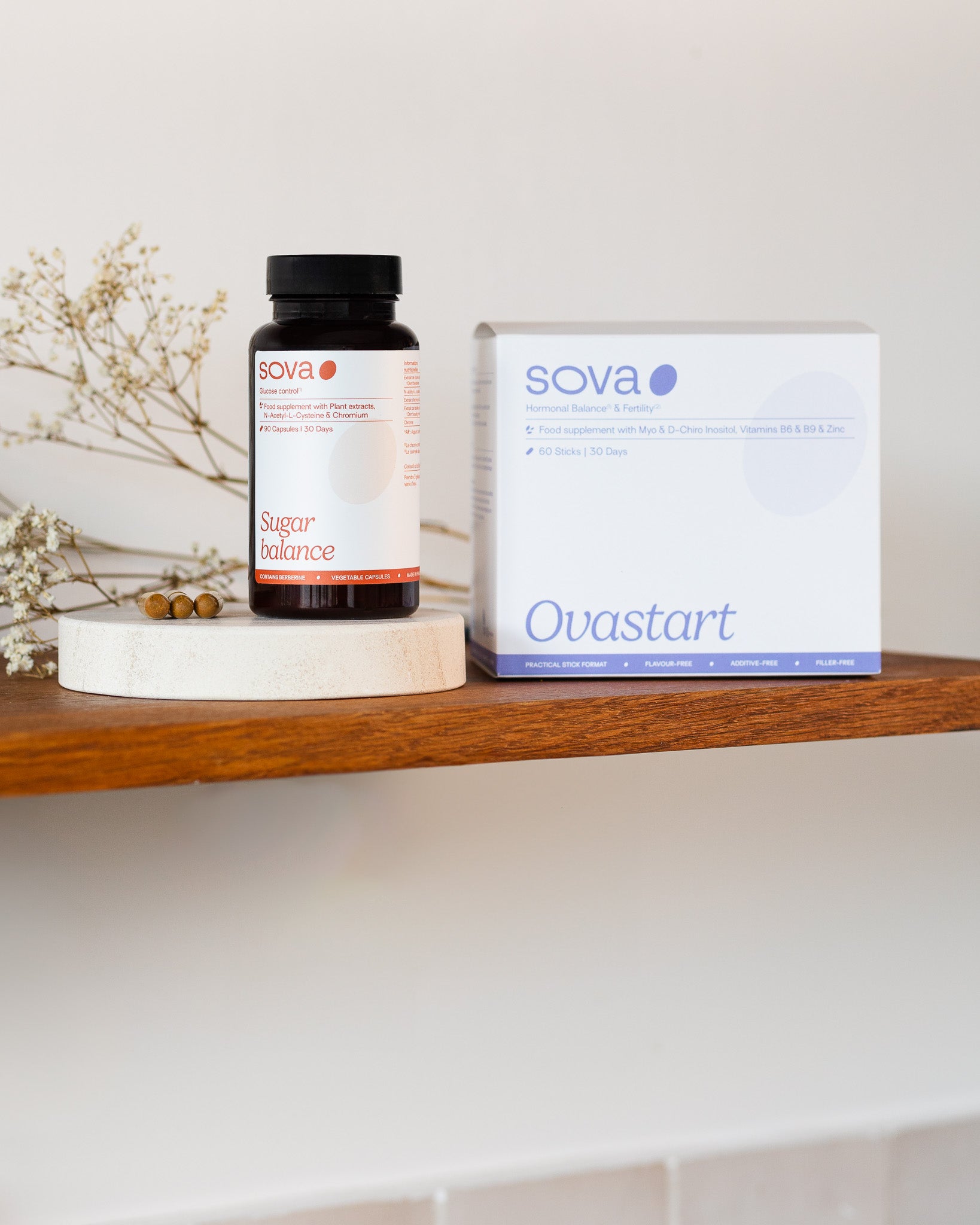
The Hormone Balance Supplements Built for PCOS - Two Products, One Complete System
Berberine Supplement UK - Blood Sugar, Insulin & Metabolic Support for Women with PCOS