


Table of contents
- 01. Why Topicals Fail: The Internal Root of Hormonal Acne
- 02. Essential Vitamins & Minerals for Hormonal Regulation
- 03. Advanced Botanical Compounds for Oestrogen Balance
- 04. Top 5 Hormonal Acne Supplements: 2026 Buyer's Guide
- 05. How to Choose: Identifying Your Specific Hormonal Trigger
- 06. Safety First: Side Effects and "The Purge"
📌 In summary: Hormonal acne - especially along the jawline - is driven by androgens and internal hormonal shifts, not poor hygiene. The most effective supplements work from the inside out: Zinc (blocks DHT), DIM (balances oestrogen), and Inositol (improves insulin sensitivity, especially for PCOS). Most need 8-12 weeks to show results. Always consult a healthcare professional before starting a new supplement regimen.
You've tried the creams, the toners, the spot treatments. Maybe even an antibiotic course. And yet, every month, right on schedule, those deep, sore bumps reappear along your jawline - or your chin, or your neck. You are not imagining it, and it is not because you are washing your face wrong. Hormonal acne is an inside job, and tackling it means addressing what is happening beneath the surface.
In this guide, we break down exactly which supplements have scientific backing, how they work, and how to choose the right ones for your hormonal profile.
📋 Key Takeaways
- Results take time: skin cycles roughly every 28-40 days, so give supplements at least 8-12 weeks before judging.
- The 3 heavy-hitting ingredients: Zinc (DHT blocker), DIM (oestrogen balance), Inositol (insulin & androgen support for PCOS).
- The goal is internal hormonal regulation - not just controlling symptoms topically.
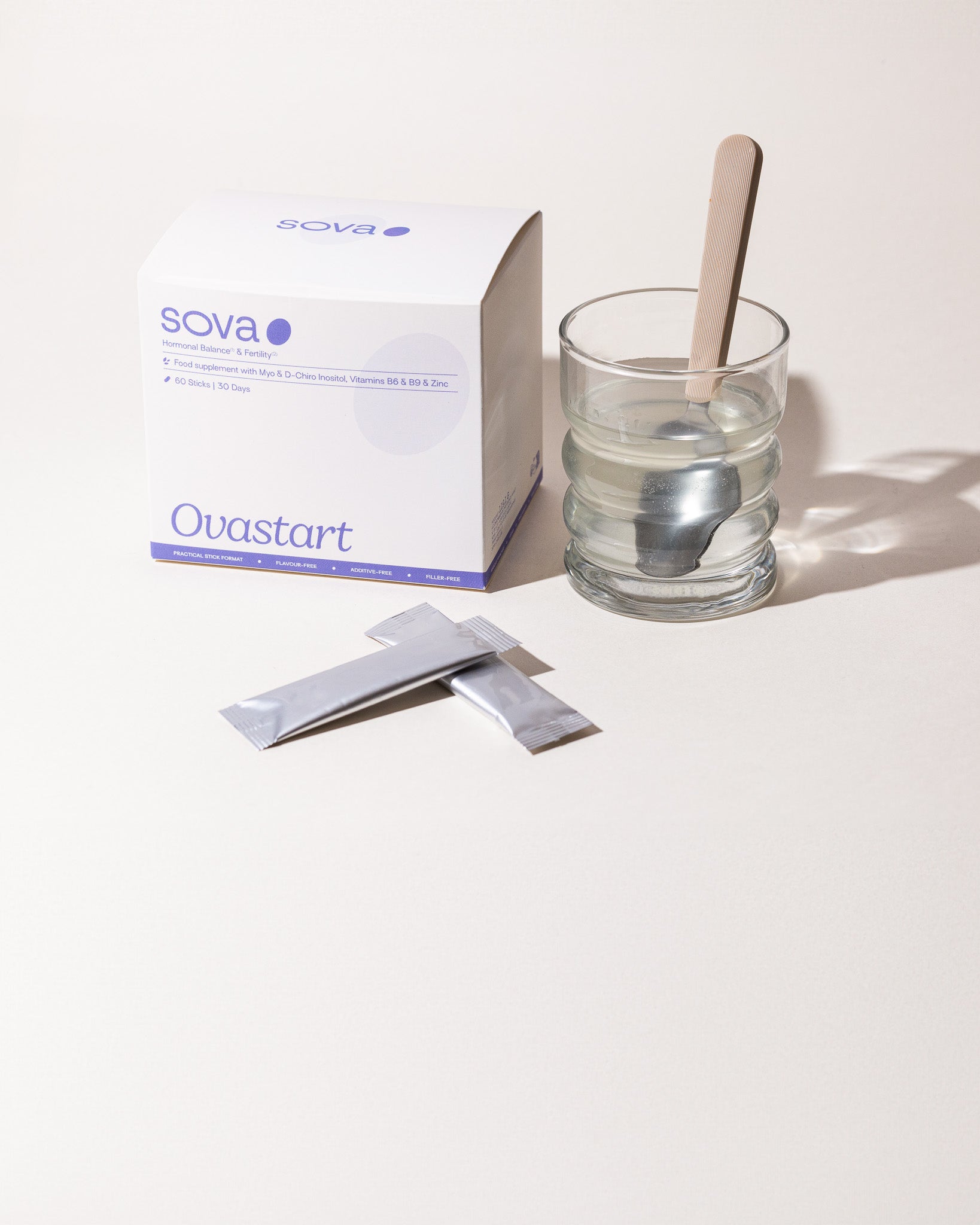
Looking for targeted internal support for hormonal acne and insulin-driven breakouts? Explore our Ovastart Myo-Inositol Supplement to support androgen regulation and ovarian health, or discover Sugar Balance to help stabilize blood sugar levels and curb sebum overproduction from the inside out.


Why Topicals Fail: The Internal Root of Hormonal Acne
Serums and spot treatments have their place - but they can only address the symptom (the spot), not the cause (the hormonal signal that produced it). That cause lies deeper: a spike in androgens, a group of hormones that includes testosterone and its more potent cousin, DHT (dihydrotestosterone).
When androgen levels rise, they bind to receptors in your sebaceous glands - the tiny oil-producing units attached to your hair follicles. The signal they send is simple: produce more oil. More oil means a richer environment for Cutibacterium acnes bacteria, more clogged pores, and more inflammation. The spot is just the final result of that internal cascade.
The Stress Factor: Cortisol and DHEA-S
Stress is more than a mood problem - it has a direct biochemical effect on your skin. When you are under sustained stress, your adrenal glands produce cortisol and, alongside it, DHEA-S (dehydroepiandrosterone sulfate), an androgen precursor. Elevated DHEA-S converts to androgens in the skin, directly amplifying the same sebum-overproduction pathway described above. This is why breakouts often flare during stressful periods - even when nothing else in your routine has changed.
It also explains why supplements alone are rarely the full picture. Supporting your stress response - through sleep, gentle movement, and nervous system care - is a meaningful part of any hormonal skin strategy. Supporting your body with adaptogenic plants or magnesium can be a great step in this direction. 👉 Stress and anxiety: the benefits of magnesium.
The "Jawline Map" Explained
Hormonal acne tends to cluster on the lower third of the face - chin, jaw, and neck - because this is the area with the highest density of androgen receptors. If your breakouts are consistently here, rather than across your forehead or nose, this is a strong indicator that hormones are the root cause.
Upper-face acne (forehead, nose) is more often linked to gut health, stress, or topical irritants. Jawline acne points directly inward.
👉 Learn more about how PCOS affects your hormonal balance in our guide: PCOS symptoms explained.
Essential Vitamins & Minerals for Hormonal Regulation
Zinc: The Natural Androgen Blocker
Zinc is arguably the most researched micronutrient for hormonal acne - and for good reason. It works by inhibiting 5-alpha reductase, the enzyme responsible for converting testosterone into DHT. Less DHT means less stimulation of oil glands.
A 2021 systematic review and meta-analysis found that serum zinc levels are significantly lower in acne patients compared to healthy controls, with a standardised mean difference of -7.66 ng/ml (1). Separately, clinical trials using 30-50mg of elemental zinc daily have shown reductions in inflammatory acne lesions of up to 50% over 12 weeks, a result approaching that of low-dose antibiotics - without the risk of antibiotic resistance or gut disruption (2).
Zinc is also anti-inflammatory: it inhibits NF-kB, a key pathway that drives the redness and swelling of active spots.
Practical note: Take zinc with food to avoid nausea. The most bioavailable forms are zinc bisglycinate or zinc gluconate. Avoid long-term high-dose zinc without medical supervision, as it can deplete copper.
Vitamin D3: The Hormone Precursor
Despite its name, vitamin D functions more like a steroid hormone than a typical vitamin. It plays a role in immune modulation, insulin sensitivity, and the regulation of inflammatory pathways - all of which are directly linked to acne.
A 2021 meta-analysis covering data up to December 2020 confirmed that acne patients have significantly lower serum vitamin D levels than healthy controls (3). A separate randomised clinical trial found that supplementing with active vitamin D over 3 months led to meaningful clinical improvements in acne (4).
For women with PCOS, the connection is even more direct: vitamin D deficiency is associated with worsened insulin resistance, which in turn amplifies androgen production.
👉 Read more about blood sugar and PCOS: Insulin resistance and PCOS: the link explained.
Vitamin A: Internal Retinoid Support
Vitamin A is the natural precursor to retinoids - the compounds found in some of the most prescribed topical acne treatments. Taken internally, it supports two key processes: accelerating skin cell turnover (preventing dead cells from accumulating and clogging pores) and reducing sebaceous gland activity.
Unlike prescription retinoids (which can carry significant side effects), dietary and supplement-level vitamin A supports these processes more gently. Because your safety is our priority, we recommend extra caution with Vitamin A if you are planning a pregnancy or are currently pregnant. A great step forward is to speak with your GP before adding it to your routine.
Advanced Botanical Compounds for Oestrogen Balance
DIM (Diindolylmethane): Clearing "Oestrogen Dominance"
DIM is not something you have likely heard of at the pharmacy counter - but it is one of the most talked-about ingredients in the hormonal skincare space, and the science behind it is genuinely interesting.
DIM is a compound found naturally in cruciferous vegetables like broccoli, kale, and cauliflower - though you would need to eat an unrealistic amount of them daily to reach a therapeutic dose. When digested, your body converts indole-3-carbinol (a precursor found in these vegetables) into DIM. Its main role is to guide how your liver metabolises oestrogen, steering the process towards beneficial metabolites (2-hydroxyestrone) and away from more inflammatory ones (4-hydroxyestrone and 16-hydroxyestrone).
A large retrospective cohort study including 909 women taking DIM, published in a peer-reviewed journal, found statistically significant differences in urinary oestrogen metabolite profiles compared to non-users (5). This shift in oestrogen processing is especially relevant for women with acne that flares in the 10-14 days before their period - a pattern strongly associated with oestrogen imbalance.
Note: DIM is not suitable for everyone. It is not recommended during pregnancy, if you have hormone-sensitive conditions, or if you are on hormonal contraception without medical advice. Start with a low dose (100mg) and increase gradually.
Supporting your body with fibre and liver health while taking DIM: DIM helps process oestrogen into safer metabolites, but the body still needs to physically eliminate those metabolites - and that happens through the liver and the digestive system. Supporting adequate fibre intake (vegetables, legumes, wholegrains) and staying well hydrated ensures that processed oestrogen is properly excreted rather than being reabsorbed from the gut. This is a meaningful part of making DIM work well for you.
Spearmint Leaf: The Anti-Androgen Hero
Spearmint is one of the few herbal remedies for hormonal acne backed by actual randomised controlled trial data. A landmark RCT by Grant P. (2010), published in Phytotherapy Research, found that women with PCOS who drank two cups of spearmint tea daily for 30 days had significantly lower free testosterone levels, alongside increases in LH and FSH (6). Lower free testosterone means less stimulation of your sebaceous glands - and, over time, clearer skin.
The main caveat is timing: hormonal shifts show up in blood tests within 30 days, but visible skin improvements take longer - typically 3-6 months - because skin cell turnover is slow. Consistency is key.
Practical note: Spearmint supplements (available as leaf extract capsules) offer a more standardised dose than tea. Spearmint is generally very safe, but avoid during pregnancy or active conception attempts.
Inositol: Balancing Insulin for PCOS-Related Acne
If your acne is linked to PCOS, inositol may be the most directly relevant supplement on this list. Here is why: in women with PCOS, insulin resistance is extremely common - up to 70% of cases according to some estimates. When insulin spikes, it sends a signal to the ovaries to produce more androgens, creating the cycle that drives acne, hair loss, and irregular cycles.
Myo-inositol is a naturally occurring compound that acts as a second messenger in insulin signalling, essentially helping cells respond to insulin more effectively. A clinical study of 50 women with PCOS found that 6 months of myo-inositol supplementation led to significant improvements in acne and hirsutism scores, alongside reductions in free testosterone and insulin markers (7).
The combination of myo-inositol (MI) and D-chiro-inositol (DCI) at the physiological 40:1 ratio appears particularly effective for PCOS-related hormonal symptoms, based on a randomised controlled trial from the University of Pisa (8).
Top 5 Hormonal Acne Supplements: 2026 Buyer's Guide
Not all supplements are created equal. Here is an honest breakdown of the five most evidence-supported options for hormonal acne in 2026, along with what each one is genuinely best suited for.
| Supplement | Best For | Primary Benefit | Typical Dosage |
|---|---|---|---|
| Zinc | All hormonal acne types | Reduces DHT & inflammation | 25-50mg elemental/day |
| DIM | Oestrogen-dominant / PMS acne | Balances oestrogen metabolites | 100-200mg/day |
| Myo-Inositol | PCOS-related acne | Insulin sensitivity & androgen reduction | 2-4g/day |
| Vitamin D3 | General hormonal imbalance | Immune & insulin regulation | 1,000-2,000 IU/day |
| Spearmint leaf | Mild androgen excess | Reduces free testosterone | 2 cups tea/day or 450mg extract |
How to Choose: Identifying Your Specific Hormonal Trigger
Hormonal acne is not one-size-fits-all. Your breakout pattern can tell you a lot about which hormonal pathway is most active. Use this checklist to narrow down your profile.
| Cluster A - High Androgens | Cluster B - Oestrogen Imbalance |
|---|---|
Try: Zinc + Spearmint + DIM |
Try: DIM + Magnesium + Vitamin B6 |
⚠️ Important: These clusters are not mutually exclusive - many women experience both. The idea is not to put yourself in a single box, but to identify which levers are most relevant for you and start there. Working with a GP or gynaecologist who understands hormonal health can make this process much clearer.
Safety First: Side Effects and "The Purge"
Supplements are not overnight fixes - and understanding the timeline will save you a lot of frustration.
The 90-Day Rule
Your skin cycles approximately every 28-40 days. That means a supplement has to influence at least 2-3 full skin cycles before you can fairly judge its impact. Most people begin to see meaningful changes between 8 and 12 weeks - some later. Patience is part of the protocol.
What is "The Purge"?
Some women experience a temporary increase in breakouts during the first 2-4 weeks of a new supplement regimen, particularly with DIM. This is sometimes called "the purge." It is worth noting that this is primarily a common anecdotal report and a clinical observation - it has not yet been formally documented in large-scale clinical trials, so it is something to watch for rather than expect as a guaranteed physiological stage. The prevailing explanation is that as your hormonal environment begins to shift, the skin may temporarily react before settling. If any increase in breakouts is severe or lasts beyond 4 weeks, we invite you to speak with a healthcare professional.
Side Effects to Know
- Zinc: can cause nausea on an empty stomach - always take with food.
- DIM: start at 100mg and increase gradually. Some women notice changes in urine colour (harmless) or temporary headaches when starting.
- Inositol: very well tolerated. Some mild digestive adjustment in the first week.
- Spearmint: generally very safe. Avoid during pregnancy.
- Vitamin D3: safe at standard doses. High-dose supplementation should be monitored with blood tests.
Always consult your GP or a qualified healthcare professional before starting any new supplement, particularly if you are pregnant, breastfeeding, trying to conceive, or taking medication.
We hope this guide has helped you understand the internal side of hormonal acne - and given you a clearer starting point for your own journey. You are not alone in this, and you deserve a solution that actually addresses the root cause. 💜
FAQ
Which supplements help with hormonal acne?
The most effective supplements for hormonal acne work by regulating androgen levels and reducing internal inflammation. Top choices include Zinc (lowers DHT), DIM (balances oestrogen), Vitamin A (skin cell turnover), and Myo-inositol (insulin support, especially for PCOS).
What can I take to clear up hormonal acne?
To clear hormonal acne, combining targeted supplements such as Zinc and DIM with lifestyle changes (low-glycaemic diet, stress management, sleep) gives the best results. For more severe cases, clinical options include oral contraceptives to stabilise hormones, or oral antibiotics to reduce acute inflammation. Always consult a doctor for clinical options.
What is the best pill for hormonal acne?
Co-cyprindiol is widely considered the most effective clinical pill for severe hormonal acne resistant to other treatments. For a natural alternative, many women find DIM supplements helpful for regulating the oestrogen-progesterone balance. A conversation with your GP or dermatologist is the best starting point.
How long do supplements take to work for hormonal acne?
Most supplements need 8-12 weeks of consistent use to show visible results, because they need to influence several full skin cycles. Some women notice hormonal shifts (e.g. in cycle symptoms) sooner, but visible skin changes take longer. Stick with it for at least 3 months before deciding if something works for you.
Can I take these supplements if I have PCOS?
Yes - in fact, several are particularly well-suited to PCOS. Inositol directly targets the insulin resistance that drives PCOS-related androgen excess. Zinc and spearmint help lower elevated testosterone. DIM can support oestrogen metabolism. That said, PCOS is a complex condition and supplement choices should ideally be guided by a healthcare professional familiar with your individual hormonal profile.
Is it safe to combine multiple supplements?
Many of these supplements can be taken together - for example, Zinc and Inositol are commonly combined for PCOS-related acne. However, always start with one at a time so you can identify what is working (or causing any reaction), and seek medical advice before combining supplements with prescription medications.
- Androgen A group of hormones (including testosterone and DHT) that regulate male characteristics. Present in both men and women, but elevated levels in women can trigger hormonal acne, excess facial hair, and hair thinning. = Androgen A group of hormones (including testosterone and DHT) that regulate male characteristics. Present in both men and women, but elevated levels in women can trigger hormonal acne, excess facial hair, and hair thinning.
- DHT (Dihydrotestosterone) A more potent form of testosterone, converted from testosterone by the enzyme 5-alpha reductase. DHT is a key driver of sebum overproduction and acne in women with hormonal imbalances. = DHT (Dihydrotestosterone) A more potent form of testosterone, converted from testosterone by the enzyme 5-alpha reductase. DHT is a key driver of sebum overproduction and acne in women with hormonal imbalances.
- 5-Alpha Reductase The enzyme that converts testosterone into DHT. Zinc and spearmint both inhibit this enzyme, reducing DHT production. = 5-Alpha Reductase The enzyme that converts testosterone into DHT. Zinc and spearmint both inhibit this enzyme, reducing DHT production.
- Sebaceous Gland Tiny glands in the skin, attached to hair follicles, that produce sebum (oil). Overactivation by androgens leads to excess sebum, clogged pores, and acne. = Sebaceous Gland Tiny glands in the skin, attached to hair follicles, that produce sebum (oil). Overactivation by androgens leads to excess sebum, clogged pores, and acne.
- DIM (Diindolylmethane) A compound produced when the body digests indole-3-carbinol, found in cruciferous vegetables. DIM supports the metabolism of oestrogen into less inflammatory forms. = DIM (Diindolylmethane) A compound produced when the body digests indole-3-carbinol, found in cruciferous vegetables. DIM supports the metabolism of oestrogen into less inflammatory forms.
- Oestrogen Dominance A term used to describe a relative excess of oestrogen compared to progesterone, or an imbalance in how oestrogen is metabolised. Associated with PMS-related acne, bloating, and mood changes. = Oestrogen Dominance A term used to describe a relative excess of oestrogen compared to progesterone, or an imbalance in how oestrogen is metabolised. Associated with PMS-related acne, bloating, and mood changes.
- Myo-Inositol A naturally occurring compound (sometimes classified as a B-vitamin) that acts as a second messenger in insulin signalling. Particularly studied in the context of PCOS for improving insulin sensitivity and reducing androgen levels. = Myo-Inositol A naturally occurring compound (sometimes classified as a B-vitamin) that acts as a second messenger in insulin signalling. Particularly studied in the context of PCOS for improving insulin sensitivity and reducing androgen levels.
- Insulin Resistance A state in which the body's cells respond less effectively to insulin. The pancreas compensates by producing more, and high insulin levels stimulate the ovaries to produce excess androgens - a key driver of PCOS and hormonal acne. = Insulin Resistance A state in which the body's cells respond less effectively to insulin. The pancreas compensates by producing more, and high insulin levels stimulate the ovaries to produce excess androgens - a key driver of PCOS and hormonal acne.
- Sebum The oily substance produced by sebaceous glands. Sebum is normal and protective, but excess sebum production (triggered by androgens) creates an environment where acne bacteria thrive. = Sebum The oily substance produced by sebaceous glands. Sebum is normal and protective, but excess sebum production (triggered by androgens) creates an environment where acne bacteria thrive.
Scientific References
Over 50,000 women have already adopted our routines, rating us an excellent 4.7/5 average (from 3,300+ reviews). Our supplements are formulated in French laboratories using clean, carefully sourced ingredients, with a maximum of patented active ingredients proven for their effectiveness.
- Founded by women with PCOS, we understand the reality of hormonal disorders.
- Clinically studied: High-quality ingredients, including patented forms like Quatrefolic® and an optimal Myo-/D-Chiro Inositol ratio.
- Holistic support: Formulated for hormonal balance, metabolic health, inflammation, mood, and cycle regulation.
- Science-led formulas: Transparent ingredients with absolutely no unnecessary additives.