


Table of contents
- 01. ✦ Key Takeaways
- 02. Beyond the Cup: Why Tea Is More Than a Warm Drink for PCOS
- 03. The Three Root Causes of PCOS: Which Tea Targets Yours?
- 04. The PCOS Tea Directory: Your 7 Teas at a Glance
- 05. Synergistic Blending: Creating Your PCOS "Power Brew"
- 06. The Cycle-Syncing Tea Protocol: What to Drink and When
- 07. The Stress–Cortisol Connection: Why Your Nervous System Is Part of This
- 08. From Steep to Sip: Maximising Potency & Safety
- 09. The Realistic Timeline: A Gentle Map, Not a Deadline
- 10. Common Pitfalls: What Might Be Getting in the Way
- 11. Frequently Asked Questions
- 12. A Final Word
If you've been living with PCOS, you already know how it feels to have your own body work against you. The irregular cycles. The acne that shows up no matter what products you try. The fatigue. The frustration of being told to "just lose weight" or "just go on the pill."
What you're looking for isn't a miracle cure — it's small, daily habits that feel nurturing and actually do something. And that's exactly what a well-chosen tea ritual can be.
This guide is here to help you understand which teas are backed by science for PCOS, which symptoms each one targets, and how to build a practical, enjoyable routine around them. Not as a replacement for medical care, but as a powerful, gentle complement to it.
✦ Key Takeaways
- The Gold Standard: Spearmint tea (2 cups/day) has demonstrated anti-androgen effects in clinical trials.
- The Metabolic Ally: Green tea and Ceylon cinnamon tea can support insulin sensitivity, a key issue in PCOS.
- The Calm Foundation: Chamomile can help reduce stress hormones and improve cycle regularity.
- The Timeline: You may notice skin clarity and energy improvements within 30–60 days. Deeper hormonal shifts — including changes in hair growth — take closer to 90 days of consistency.
- The Vibe: Tea is a ritual of care — not a chore. If you miss a day, just start again tomorrow with kindness.
Beyond the Cup: Why Tea Is More Than a Warm Drink for PCOS
There's a reason so many traditions around the world use plants as medicine. When herbs are brewed into tea, their active compounds — polyphenols, flavonoids, volatile oils — become water-soluble and highly bioavailable. That means your body can absorb them relatively quickly compared to some supplements in solid form.
But the benefits of tea for PCOS go beyond what's in the cup. There's something called the Ritual Effect: the act of pausing, brewing, and sipping something warm is itself a gentle signal to your nervous system to slow down. And this matters enormously. Cortisol, the stress hormone produced by your adrenal glands, is one of PCOS's quiet saboteurs. When cortisol stays elevated over time, it disrupts ovulation, lowers progesterone, and stimulates androgen production — making almost every PCOS symptom worse.
A daily tea ritual, practised consistently and mindfully, creates a moment of genuine calm in your day. That is, in itself, a small but real act of hormonal support.
The Three Root Causes of PCOS: Which Tea Targets Yours?
PCOS is not one thing. It's a syndrome — meaning it can manifest differently from woman to woman. Most cases, however, involve some combination of three core imbalances. Understanding which ones apply to you is the first step to choosing the right teas.
Taming the Androgens: For Acne, Hair Loss & Unwanted Hair Growth
Excess androgens (male hormones like testosterone) are the root of some of the most visible PCOS symptoms: acne along the jaw and chin, thinning hair on the scalp, and unwanted hair growth on the face or body (hirsutism). If these symptoms sound familiar, spearmint tea is your most powerful herbal ally.
If hair thinning is one of your most pressing concerns, our complete guide — PCOS Hair Loss: Causes, Regrowth & Restoration — walks you through exactly why it happens and what you can do about it.

The research here is particularly compelling. A randomised controlled trial by Grant (2009) found that drinking two cups of spearmint tea per day for 30 days led to a significant reduction in both total and free testosterone levels in women with PCOS and hirsutism.[1] This was supported by earlier research from Turkey (Akdoğan et al., 2007) which first identified spearmint's anti-androgenic properties,[2] and a more recent randomised controlled trial of 150 participants (JAND, 2024) confirming significant reductions in DHEA and androstenedione following 12 weeks of twice-daily spearmint consumption.[3]
⚠️ A note on iron absorption: Spearmint — like green tea — contains tannins, which can inhibit the absorption of iron from food. If you have heavy periods, have been told your iron is low, or suspect anaemia, it's worth drinking spearmint tea between meals rather than alongside them. A small but meaningful way to protect your energy levels.
Managing the Insulin Spike: For Sugar Cravings, Weight & Cycle Irregularity
Up to 70% of women with PCOS have insulin resistance — meaning their cells don't respond properly to insulin, causing the body to produce more of it. High insulin then signals the ovaries to produce more testosterone, which worsens hormonal imbalance and disrupts ovulation. If you notice intense sugar cravings, difficulty managing your weight, or irregular cycles, this metabolic piece is likely part of your picture.
If you're looking to support your hormones through food as well as your tea ritual, check out our guide to 22 Easy PCOS Lunch Recipes: Hormone-Balancing Meals That Actually Fill You Up.
Two teas stand out here. Green tea is rich in a compound called EGCG (epigallocatechin-3-gallate), which supports insulin sensitivity and helps regulate blood sugar. A double-blind randomised clinical trial on 60 overweight women with PCOS found that 12 weeks of green tea consumption significantly reduced both fasting insulin levels and free testosterone, while also supporting weight loss.[4] A systematic review and meta-analysis published in Frontiers in Endocrinology (2022) confirmed these findings across multiple trials.[5]
⚠️ Green tea & iron: Like spearmint, green tea contains tannins. For the best of both worlds — blood sugar support and optimal iron absorption — drink your green tea mid-morning or mid-afternoon, away from your main meals.
Cinnamon tea is equally impressive for metabolic support. A randomised double-blind placebo-controlled trial (Hajimonfarednejad et al., 2018) demonstrated that cinnamon significantly reduced fasting insulin levels and insulin resistance markers in women with PCOS after 12 weeks.[6] A pilot study (Wang et al., 2007) confirmed significant reductions in insulin resistance,[7] and a randomised controlled trial by Kort & Lobo (2014) found that cinnamon improved menstrual cycle frequency in women with PCOS over six months.[8]
⚠️ Cinnamon safety — Ceylon vs. Cassia: This matters more than most people realise. The most commonly sold cinnamon (Cassia) contains high levels of coumarin, a compound that can be toxic to the liver when consumed regularly — and women with PCOS may have heightened liver sensitivity due to metabolic stress. Always choose Ceylon cinnamon (labelled Cinnamomum zeylanicum) for daily use. It contains far lower coumarin levels and is the variety used in the research above.
⚠️ Medication note: If you are currently taking Metformin or any other blood sugar medication, please speak with your doctor before making cinnamon tea a daily habit. The combined blood sugar-lowering effect may risk hypoglycaemia (blood sugar falling too low).
To understand exactly how insulin affects your hormones and what you can do about it, read our full guide: Insulin Resistance and PCOS – What's the Link?

Quelling Chronic Inflammation: For Fatigue, Skin & General Wellbeing
PCOS is associated with a state of low-grade chronic inflammation — the kind you can't always see but can definitely feel. It contributes to fatigue, brain fog, skin issues, and metabolic dysfunction. Think of it as the body running a low-level background alarm, constantly.
Turmeric tea (or golden milk) is one of the most studied natural anti-inflammatories. A systematic review and meta-analysis published in Frontiers in Endocrinology (2022) concluded that curcumin — turmeric's active compound — has beneficial effects on hormonal balance, insulin resistance, and inflammatory markers in women with PCOS.[9] In a randomised double-blind clinical trial (Jamilian et al., 2020), curcumin supplementation for 3 months significantly improved antioxidant enzyme activity in PCOS patients.[10]
💡 Getting the most from turmeric: Curcumin is fat-soluble, which means it needs fat to be properly absorbed. A cup of turmeric tea made with only water offers very limited benefit. For meaningful absorption, prepare your golden milk with coconut milk, oat milk with added fat, or almond milk — or drink it alongside a meal that contains healthy fats. Adding a small pinch of black pepper (piperine) increases curcumin absorption dramatically.
Ginger tea is a powerful partner to turmeric. A randomised clinical trial published in Frontiers in Nutrition (2022) compared ginger, cinnamon, and metformin in women with PCOS. Notably, ginger was the only supplement to significantly reduce FSH, LH, and SHBG — three key hormones involved in cycle regulation — effects not seen with metformin alone.[11] Its active compound, 6-gingerol, carries potent antioxidant and anti-inflammatory properties that may help interrupt the inflammation-androgen cycle at the core of PCOS.[12]
The PCOS Tea Directory: Your 7 Teas at a Glance
|
Tea |
Primary Benefit |
Key Compound |
Best Time to Drink |
|
Spearmint |
Lower androgens, clearer skin, less facial hair |
Rosmarinic acid, flavonoids |
Between meals — mid-morning & mid-afternoon |
|
Green Tea |
Insulin sensitivity, weight support |
EGCG |
Between meals — not with food if iron is a concern |
|
Cinnamon (Ceylon) |
Blood sugar balance, cycle regularity |
Cinnamaldehyde, polyphenols |
After meals |
|
Turmeric / Golden Milk |
Anti-inflammation, antioxidant support |
Curcumin |
Evening — always with a source of fat |
|
Ginger |
Hormone regulation, anti-inflammation |
6-Gingerol, shogaol |
Morning or before meals |
|
Chamomile |
Cortisol reduction, cycle regularity |
Apigenin, flavonoids |
Evening, before bed |
|
Raspberry Leaf |
Uterine toning, cycle support |
Fragarine, tannins |
Luteal phase: ovulation to period |
A Closer Look at Chamomile
Chamomile deserves special mention. Two randomised clinical trials have studied its effects specifically on women with PCOS. A 2022 trial (Afiat et al.) found that chamomile treatment significantly reduced symptoms of both hirsutism and oligomenorrhea (infrequent periods).[13] A separate study (Heidary et al., 2018) observed a significant decrease in testosterone levels in PCOS women who received chamomile over three months.[14] Chamomile's compound apigenin interacts with GABA receptors in the brain — the same pathways involved in stress regulation and sleep — helping to gently lower cortisol levels and support more regular ovulation signalling.
Synergistic Blending: Creating Your PCOS "Power Brew"
One of the most enjoyable things about herbal teas is that they can be combined. When you choose complementary herbs, their benefits work in concert.
The Anti-Androgen Blend: Spearmint + Green Tea. Brew both together for a light, refreshing cup that targets androgens from two angles — spearmint reducing testosterone synthesis, and EGCG preventing its conversion into a more potent form. A particularly lovely morning brew. Remember to drink it away from iron-rich meals.
If your androgen excess seems to be stress-driven rather than ovarian, our guide Adrenal PCOS: Is Stress Driving Your Hormone Imbalance? explores how your adrenal glands may be at the root of your symptoms — and how to address them.
The Metabolic Reset Blend: Ceylon Cinnamon + Ginger. Add a cinnamon stick and a few slices of fresh ginger to hot water, steep for 10 minutes, and finish with a squeeze of lemon. Drink after meals to help buffer blood sugar spikes. Warming, grounding, and genuinely effective.
The Evening Calm Blend: Chamomile + Turmeric Golden Milk. Brew chamomile in warm coconut milk with a pinch of turmeric and black pepper for a cup that simultaneously calms the nervous system and supports overnight anti-inflammatory activity. The fat in the coconut milk ensures your curcumin is actually absorbed — so it's beauty as well as function.
The Cycle-Syncing Tea Protocol: What to Drink and When
Your hormones shift throughout the month. Your tea ritual can gently shift with them.
Days 1–5 (Period): Ginger tea for its anti-inflammatory and anti-cramping properties, alongside chamomile for rest and pain relief. This is a time for warmth and gentleness.
Days 6–13 (Follicular Phase): Spearmint and green tea to support lower androgen levels and healthy follicle development ahead of ovulation. This is the phase where your energy begins to rise — let your teas support that momentum.
Days 14–17 (Ovulation): Continue spearmint and green tea. This is when many women with PCOS find ovulation most irregular — if supporting cycle regularity is a goal, focus on consistency here.
Days 18–28 (Luteal Phase): Shift to chamomile in the evenings for sleep and cortisol regulation. Turmeric golden milk and ginger support inflammation and PMS. This is often the phase where PCOS symptoms flare most intensely — your teas here are acts of compassionate preparation.
A note for those with irregular cycles: many women with PCOS don't follow a 28-day pattern, and that's completely valid. Use these phases as loose, aspirational guidelines rather than a rigid schedule. The most important thing is finding teas that feel supportive right now, and returning to them consistently.
The Stress–Cortisol Connection: Why Your Nervous System Is Part of This
For some women with PCOS, stress isn't just a trigger — it's a root cause. If your symptoms seem to worsen dramatically during periods of anxiety, burnout, or life upheaval, you may be dealing with what's sometimes called adrenal PCOS, where the adrenal glands are at the centre of your hormonal picture rather than the ovaries.
For these women in particular, chamomile and ginger teas aren't just nice additions — they're medicine. Chamomile's interaction with GABA receptors actively supports the downregulation of the stress response, while ginger's anti-inflammatory compounds help address the systemic inflammation that chronic cortisol triggers. A warm, intentional cup in the evening is a small but genuine act of adrenal recovery.
If you want to go further in supporting your stress response, our guide Lowering Cortisol with PCOS: Which Supplements Actually Help? breaks down the key nutrients and adaptogenic plants — from Magnesium to Rhodiola — that can make a real difference.
From Steep to Sip: Maximising Potency & Safety
The Hormonal Harmony Checklist:
- [ ] Use loose leaf where possible — avoid bleached tea bags, which may contain endocrine-disrupting compounds.
- [ ] Steep for at least 7–10 minutes, covered — this keeps volatile plant oils in the cup rather than letting them escape as steam.
- [ ] Skip the refined sugar — adding sugar counteracts the blood sugar benefits you're working to build. Try monk fruit, stevia, or a small amount of raw honey instead.
- [ ] Choose organic where possible — pesticide residues on non-organic herbs are a real concern for hormonal health, as some act as endocrine disruptors.
- [ ] Always use fat with turmeric — coconut milk, almond milk, or a meal containing healthy fats. Without fat, curcumin simply won't be absorbed.
- [ ] Drink green tea and spearmint between meals — especially if you have low iron, heavy periods, or anaemia.
- [ ] Choose Ceylon cinnamon, not Cassia — check the label. If it just says "cinnamon," it's likely Cassia.
The Realistic Timeline: A Gentle Map, Not a Deadline
Hormones move slowly. This is not a reason to be discouraged — it's simply biology, and knowing it in advance means you won't give up too soon.
Within 30–60 days of consistent daily teas, many women begin to notice softer signals: skin that feels a little calmer, fewer mid-afternoon energy crashes, slightly less intense sugar cravings, or a more settled mood. These early improvements are real, and they matter.
At 60–90 days, hormonal markers in the blood begin to shift more meaningfully. The studies on spearmint showing reduced testosterone, for example, were conducted over 30-day periods — but fuller clinical benefit builds with time.
Hair changes take the longest. Hair follicles have their own growth cycle of approximately 90 days, which is why the reduction in androgens doesn't immediately translate to visible hair changes. If you're drinking spearmint tea for hirsutism or hair thinning, the hormonal shift is likely already underway — even if you can't see it yet. Trust the process.
Consistency is a gift to your hormones. And if you miss a day — or a week — that's okay. Just come back to your ritual with kindness, not criticism. You're not starting from zero.
Common Pitfalls: What Might Be Getting in the Way
Inconsistency. The clinical studies that demonstrated spearmint's effect on androgens used daily, sustained consumption over weeks. An occasional cup is lovely, but it won't shift your hormones. Think of it less as a treatment and more as a daily act of maintenance — like brushing your teeth.
Adding sugar. A sweetened cinnamon tea actively counteracts the blood sugar stability you're seeking. It's worth experimenting with monk fruit or stevia until the spiced warmth of the tea itself becomes enough.
Expecting visible results before 30 days. Internal hormonal changes begin before they surface on the outside. Keep going.
Forgetting the foundations. Sleep, daily movement, and a diet centred on whole foods are not optional extras in PCOS management — they are the ground that tea rituals grow from. If those foundations are shaky, even the best herbal protocol will only do so much.
Using poor-quality herbs. Spearmint should smell vivid and fresh when steeped. Turmeric should be a deep, earthy gold. If your teas smell faint or dusty, their active compounds may have degraded. Investing in quality loose-leaf, organic herbs is genuinely worth it.
Frequently Asked Questions
What should I drink when I have PCOS?
The best starting point for PCOS is spearmint tea, drunk twice daily between meals. Its anti-androgen properties are the most directly relevant to the hormonal imbalance at the core of PCOS. For metabolic support — especially if you experience sugar cravings, irregular cycles, or difficulty managing weight — add green tea (between meals) or Ceylon cinnamon tea after meals. If stress and poor sleep are driving your symptoms, chamomile tea in the evening is a deeply meaningful daily ritual.
What tea is good for hormonal imbalance?
The best tea for hormonal imbalance depends on which hormones are out of balance. For excess androgens (acne, hirsutism, hair thinning): spearmint tea. For insulin and blood sugar imbalance: green tea or Ceylon cinnamon tea. For elevated cortisol and stress-driven symptoms: chamomile tea. For chronic inflammation: turmeric golden milk (with fat) or ginger tea. For cycle irregularity: chamomile and raspberry leaf tea in the luteal phase.
Can chamomile tea balance hormones?
Chamomile can support hormonal balance through several gentle mechanisms. Clinical research on women with PCOS has shown that chamomile reduced symptoms of both hirsutism and oligomenorrhea, and significantly lowered testosterone levels.[13] It also interacts with GABA receptors in the brain, promoting relaxation and helping lower cortisol — the stress hormone that worsens PCOS symptoms and disrupts the hormonal signalling needed for regular ovulation.[14] As a consistent evening ritual, chamomile is a genuinely useful, well-researched tool for women with PCOS.
A Final Word
Living with PCOS means navigating a condition that is often invisible to others but deeply felt by you. The irregular cycles, the frustrating skin days, the energy dips, the appointments where you leave feeling more confused than when you arrived — they are real, and they deserve real attention.
A tea ritual won't solve everything. But it can be a daily act of intention: a few minutes each day where you choose something that actively supports your body rather than fighting it. Over time, those small acts accumulate into something meaningful.
Start with one tea. Pick the one that speaks to your most pressing symptom. Brew it with care. Drink it without your phone for just a few minutes. And give it time.
You deserve to feel at home in your body. 💜
Key Terms
Androgens — Hormones such as testosterone that, when elevated in women, can cause acne, hirsutism, and cycle disruption. Lowering excess androgens is a central goal in PCOS management.
Insulin resistance — A metabolic condition common in PCOS where cells don't respond normally to insulin, leading the body to produce more — which in turn stimulates androgen production.
Cortisol — The primary stress hormone. When chronically elevated, it can disrupt ovulation, lower progesterone, and worsen androgen imbalance.
Oligomenorrhea — Infrequent menstrual periods — cycles longer than 35 days. A common feature of PCOS.
EGCG (Epigallocatechin-3-gallate) — The most active compound in green tea, associated with improved insulin sensitivity and reduced androgen activity.
Curcumin — The active polyphenol in turmeric, with powerful anti-inflammatory and antioxidant properties relevant to PCOS. Fat-soluble — must be consumed with a source of healthy fat to be absorbed.
Coumarin — A naturally occurring compound found in high concentrations in Cassia cinnamon. When consumed regularly in large amounts, it may place stress on the liver. Ceylon cinnamon contains significantly lower levels and is the preferred variety for daily use.
Tannins — Plant compounds found in green tea, spearmint, and many herbal teas. While beneficial as antioxidants, they can inhibit iron absorption when consumed with meals — relevant for women with heavy periods or anaemia.
Scientific references
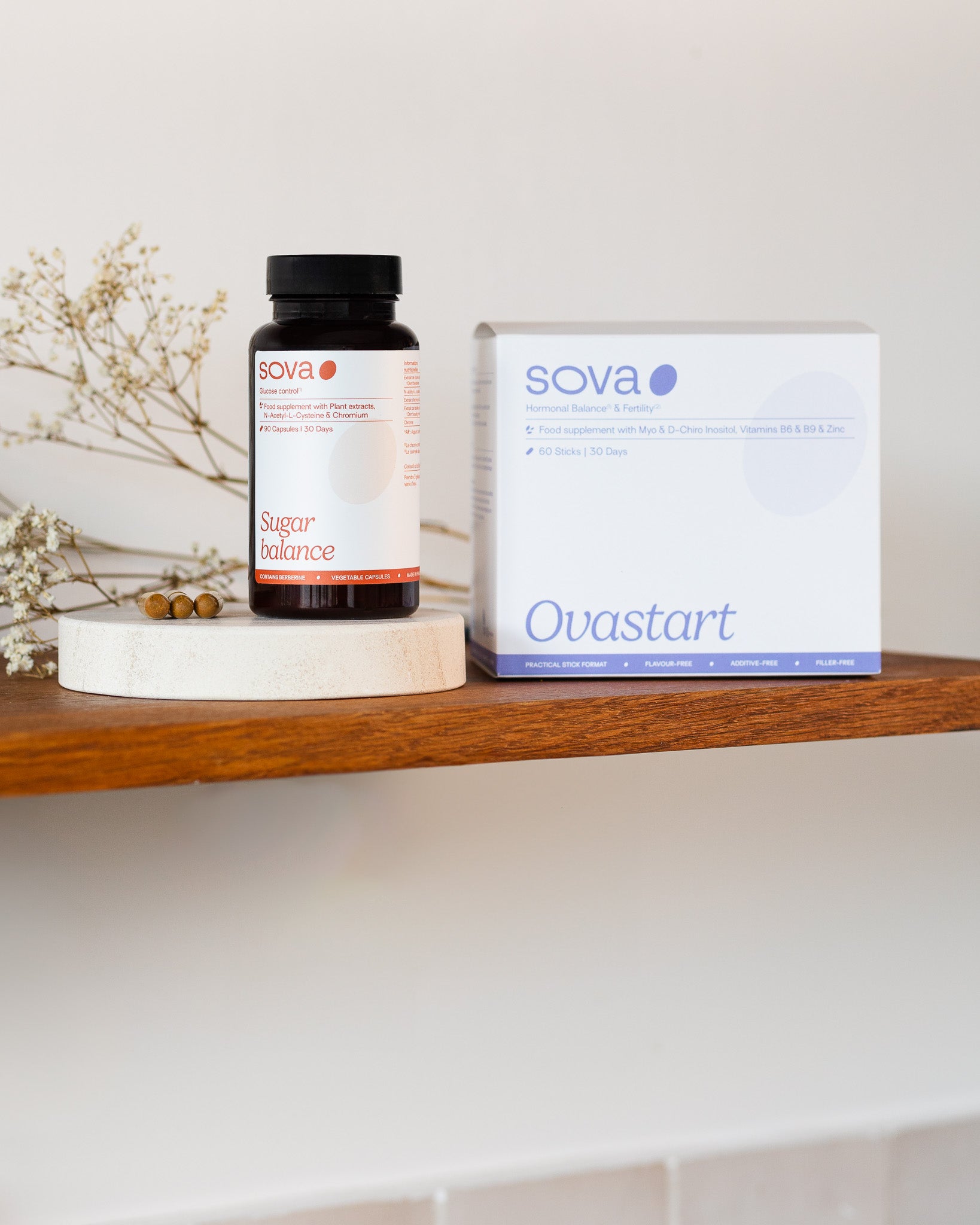
SOVA was created by two sisters with PCOS who wanted products that truly worked. Our formulas are developed in-house with women’s health and micronutrition experts, using ingredients backed by clinical studies and compliant with European regulations.
- Built by women with PCOS, we know the reality of the symptoms.
- Clinically studied, high-quality ingredients, including patented forms like Quatrefolic® and an optimal Myo-/D-Chiro Inositol ratio.
- Holistic support for hormonal balance, metabolic health, inflammation, mood and cycle regulation.
- Transparent, science-led formulas with no unnecessary additives.