




Table of contents
- 01. Why Myo-Inositol is the "Master Regulator" for women's health
- 02. Understanding inositol ratios: why synergy matters most
- 03. Targeted benefits: how inositol supports your body
- 04. Myo-Inositol vs. Metformin: a natural alternative?
- 05. How to choose a high-quality Myo-Inositol supplement
- 06. Dosage and safety: getting the best results
- 07. Final thoughts: reclaiming your hormonal health
If you have PCOS, you've probably been given the same handful of options by your doctor - the pill, metformin, or "just lose weight." And if you're here, you're likely looking for something that actually works with your body rather than masking what's going on.
That's exactly where myo-inositol comes in. It's one of the most researched supplements for PCOS - and for good reason. It works by supporting your body's own insulin signalling, helping to rebalance androgens and supporting healthy ovarian function from the inside out. In this guide, we cover everything you need to know: how myo-inositol works, what benefits you can realistically expect, and how to choose the right formula for your symptoms.
Why Myo-Inositol is the "Master Regulator" for women's health
Myo-inositol is often called a vitamin-like substance, though technically it's a type of sugar alcohol that your body produces naturally. It plays a crucial role in cellular communication, particularly in how your cells respond to insulin.
Think of myo-inositol as a messenger that helps insulin deliver its message more effectively. When insulin signals your cells to absorb glucose (sugar) from your bloodstream, myo-inositol ensures that message gets through clearly. This is especially important for women with PCOS, where insulin resistance is incredibly common.
Research shows that about 75% of women with PCOS experience some degree of insulin resistance (1). This means their cells don't respond properly to insulin, leading to elevated blood sugar levels, increased insulin production, and a cascade of hormonal disruptions, including excess androgen production.
By improving insulin sensitivity, myo-inositol helps lower excess androgens like testosterone. This can reduce many of the visible symptoms of PCOS, including acne, unwanted hair growth (hirsutism), and hair loss.
What does myo-inositol actually do?
Myo-inositol acts as a "second messenger" in the body, helping cells communicate effectively with the hormone insulin. By improving insulin sensitivity, it helps regulate blood sugar and lowers excess androgens (male hormones), which is essential for healthy ovarian function.
Beyond insulin regulation, myo-inositol also supports the health of your ovaries. It's involved in the maturation of ovarian follicles (the tiny sacs that contain your eggs) and influences the quality of eggs released during ovulation. Studies have shown that supplementing with myo-inositol can improve egg quality and support regular ovulation in women with PCOS (2).
Is myo-inositol right for your PCOS type?
It's important to understand that PCOS isn't a one-size-fits-all condition. Researchers recognise several different PCOS phenotypes, each with slightly different characteristics and underlying drivers.
The most common phenotypes include:
-
Insulin-resistant PCOS: Characterised by elevated insulin levels, difficulty managing blood sugar, weight gain (particularly around the midsection), and strong sugar cravings.
-
Inflammatory PCOS: Driven primarily by chronic inflammation, which can be triggered by stress, gut health issues, or environmental factors.
-
Post-pill PCOS: Temporary hormonal disruption following discontinuation of hormonal contraception.
-
Adrenal PCOS: Driven by elevated stress hormones rather than ovarian dysfunction.
While myo-inositol can offer benefits across different phenotypes, it is particularly effective for insulin-resistant PCOS, which affects the majority of women with the condition. If your symptoms include persistent sugar cravings, unexplained weight gain (especially around the middle), and difficulty managing your blood sugar, myo-inositol is likely to be especially helpful for you.
That said, many women with PCOS have overlapping phenotypes, and myo-inositol's ability to support ovarian function and hormone balance means it can still be beneficial even if insulin resistance isn't your primary concern.
Understanding inositol ratios: why synergy matters most
If you've researched myo-inositol supplements, you've probably come across different ratios. The most commonly mentioned is a 40:1 ratio of myo-inositol to d-chiro-inositol. This specific ratio has been studied extensively and is often cited as the "gold standard."
But here's what's important to understand: the ratio itself isn't magic. What truly matters is the synergy between these two forms of inositol and how well they work together in your body.
Both myo-inositol and d-chiro-inositol occur naturally in your body, and each plays a distinct role. Myo-inositol is primarily active in the ovaries, where it supports follicle development and egg maturation. D-chiro-inositol, on the other hand, is more active in tissues like muscle and liver, where it helps with glucose storage and metabolism (3).
Your body naturally converts myo-inositol into d-chiro-inositol through an enzyme called epimerase. However, in women with PCOS, this conversion process is often impaired. Research suggests that the epimerase enzyme may not function optimally in PCOS, which can lead to an imbalance between the two forms of inositol in different tissues (4). This is precisely why supplementing with both forms together can be so beneficial: it bypasses the conversion issue and ensures your body has adequate amounts of each type where it's needed most.
Rather than fixating on a single number, focus on finding a precision blend that mimics your body's natural environment. High-quality supplements combine both forms of inositol with attention to purity, bioavailability, and the absence of unnecessary fillers.
The key is choosing a formula that delivers both types of inositol in a way that supports your unique hormonal needs, not just following a one-size-fits-all ratio.
Targeted benefits: how inositol supports your body
What does inositol do for the female body?
In the female body, inositol supports reproductive health by promoting ovarian follicle development and egg quality. It helps restore regular menstrual cycles, reduces PCOS-related acne and hirsutism, and supports healthy ovulation by balancing FSH levels.
Let's explore the specific ways myo-inositol can transform your hormonal health:
Restoring ovulation and cycle regularity
One of the most frustrating aspects of PCOS is irregular or absent periods. When your cycles are unpredictable, it's difficult to plan your life, and can make the journey to conception feel much more difficult and uncertain if you're hoping to start a family.
Research shows that myo-inositol supplementation can help restore regular ovulation in women with PCOS. A study published in the European Review for Medical and Pharmacological Sciences found that women taking myo-inositol experienced significant improvements in menstrual regularity compared to those who didn't supplement (5).
Myo-inositol works by improving how your body responds to follicle-stimulating hormone (FSH), the hormone responsible for triggering egg maturation. When FSH signals are received more effectively, your ovaries can develop and release eggs in a more regular, predictable pattern.
For women trying to conceive, this can be life-changing. Studies have shown that myo-inositol supplementation not only improves ovulation rates but also increases the chances of pregnancy in women with PCOS (6). If you're on your journey to conception, myo-inositol can be a valuable ally in supporting your reproductive health naturally.
Managing insulin resistance and sugar cravings
If you've ever felt trapped in a cycle of intense sugar cravings, where you feel like you need something sweet, only to feel worse an hour later, you're not alone. Insulin resistance is a major driver of these cravings, and it's incredibly common in women with PCOS.
When your cells don't respond well to insulin, your blood sugar remains elevated, and your pancreas pumps out even more insulin to compensate. High insulin levels promote fat storage (especially around your midsection) and trigger inflammation, which worsens PCOS symptoms.
Myo-inositol helps break this cycle. By improving insulin sensitivity, it allows your cells to absorb glucose more efficiently, which stabilises your blood sugar levels throughout the day. Research has demonstrated that women with PCOS who take myo-inositol experience significant improvements in insulin sensitivity and reductions in fasting insulin levels (7).
The practical result? Fewer sugar cravings, more stable energy, and less of that mid-afternoon crash that leaves you reaching for biscuits or chocolate. To learn more about how insulin resistance affects PCOS, you can read our in-depth guide on insulin resistance and PCOS.
Improving skin clarity (Hormonal Acne)
Hormonal acne, especially along the jawline, chin, and lower cheeks, is one of the most visible and emotionally challenging symptoms of PCOS. It's caused by elevated androgens, which increase oil production in your skin and promote inflammation.
Because myo-inositol helps lower excess androgen levels, many women notice significant improvements in their skin after several months of consistent use. A study in Gynecological Endocrinology found that women with PCOS who took myo-inositol experienced reductions in both total testosterone and free testosterone levels, leading to improvements in acne and hirsutism (8).
It's important to set realistic expectations: myo-inositol isn't a quick fix. It typically takes 3 to 6 months to see meaningful changes in your skin, as your body needs time to rebalance hormone levels and complete several full skin-cell turnover cycles.
But for women who've struggled with hormonal acne for years, the gradual, lasting improvements can be truly transformative.
The symptom-targeting matrix:
|
Symptom |
How Myo-Inositol Helps |
Expected Timeline |
|
Irregular cycles |
Improves FSH sensitivity and supports regular ovulation |
3 to 6 months |
|
Sugar cravings |
Stabilises blood sugar and improves insulin sensitivity |
4 to 12 weeks |
|
Hormonal acne |
Reduces excess androgens and inflammation |
3 to 6 months |
|
Unwanted hair growth |
Lowers testosterone levels |
6+ months |
|
Difficulty conceiving |
Improves egg quality and ovulation rates |
3 to 6 months |
|
Weight gain (especially around the middle) |
Supports healthy glucose metabolism and reduces insulin |
3 to 6 months |
Myo-Inositol vs. Metformin: a natural alternative?
Metformin is a prescription medication commonly used to manage insulin resistance in women with PCOS. While it can be effective, it's not without drawbacks, and many women are curious about whether myo-inositol could serve as a natural alternative.
Let's compare the two:
|
Aspect |
Myo-Inositol |
Metformin |
|
Type |
Naturally occurring compound |
Synthetic pharmaceutical drug |
|
How it works |
Improves insulin signalling as a cellular messenger |
Reduces glucose production in the liver |
|
Common side effects |
Mild digestive discomfort (rare, usually temporary) |
Nausea, diarrhoea, stomach upset (common) |
|
Impact on egg quality |
May improve egg quality and support fertility |
No direct benefit to egg quality |
|
Prescription required? |
No |
Yes |
|
Long-term safety |
Well-tolerated with long-term use |
Generally safe, but requires monitoring |
Research has directly compared myo-inositol and metformin in women with PCOS. A study published in Human Reproduction found that myo-inositol was just as effective as metformin in improving insulin sensitivity and restoring ovulation, but with significantly fewer side effects (9).
Another study found that myo-inositol may actually be more effective than metformin at improving egg quality in women undergoing fertility treatment (10).
That said, metformin can still be an important tool, especially for women with severe insulin resistance or type 2 diabetes. Some women benefit from using both myo-inositol and metformin together, under the guidance of a healthcare provider.
The key is finding what works best for your individual needs. If you're currently taking metformin and want to explore myo-inositol, speak with your doctor before making any changes to your treatment plan.
How to choose a high-quality Myo-Inositol supplement
Not all myo-inositol supplements are created equal. With so many options on the market, it's important to know what to look for to ensure you're getting a product that's pure, effective, and safe.
Here's what to prioritise:
The "Clean Label" Checklist:
-
[ ] Does it contain both Myo and D-Chiro inositol? Look for a formula that includes both forms to support the full range of metabolic and reproductive benefits.
-
[ ] Is it free from maltodextrin and artificial fillers? Maltodextrin is a cheap filler that can spike blood sugar, the exact opposite of what you want when managing PCOS. Choose supplements with clean ingredient lists.
-
[ ] Does it include supporting nutrients (like B6 or Folate)? Some high-quality formulas include complementary nutrients that support hormone balance and methylation (the process by which your body activates and uses certain vitamins).
One excellent example is Ovastart from SOVA. This precision-formulated inositol complex combines both myo-inositol and d-chiro-inositol in a carefully designed blend, free from unnecessary fillers. It also includes folate (as L-Methylfolate) and vitamin B6, two nutrients that work synergistically with inositol to support hormonal health and reproductive function.
You can learn more about Ovastart here.
When choosing a supplement, read the label carefully and don't be swayed by marketing claims alone. Focus on transparency, purity, and quality.
Dosage and safety: getting the best results
What happens if I take myo-inositol every day?
Taking myo-inositol daily leads to cumulative improvements in metabolic and hormonal stability. Within 3 to 6 months, most users experience more regular cycles and reduced symptoms. It is safe for long-term use, though it is always recommended to start with a standard dose to ensure digestive comfort.
The most commonly studied dose of myo-inositol for PCOS is 2 to 4 grams per day, typically taken in divided doses (for example, 2 grams in the morning and 2 grams in the evening). Some women find that starting with a lower dose and gradually increasing helps minimise any digestive discomfort.
Myo-inositol is generally very well tolerated. The most common side effect, if any, is mild digestive upset, such as bloating or loose stools. This is usually temporary and resolves within the first week or two of use.
Safety considerations:
- Myo-inositol is safe for long-term use and has been studied in clinical trials lasting 6 months or longer with no adverse effects (11).
- It can be taken alongside most other supplements and medications, though it's always wise to check with your healthcare provider if you're on prescription medications, especially diabetes medications, as myo-inositol can lower blood sugar.
- If you're pregnant or trying to conceive, myo-inositol is considered safe. In fact, research shows it may reduce the risk of gestational diabetes when taken during pregnancy (12).
Tips for best results:
-
Be consistent. Myo-inositol works best when taken daily over several months. Think of it as supporting your body's foundational processes, not as a quick fix.
-
Take it with or without food. Myo-inositol is flexible and can be taken on an empty stomach or with meals, whichever you prefer.
-
Pair it with a balanced lifestyle. While myo-inositol is powerful, it works best when combined with a diet that supports stable blood sugar (plenty of protein, fibre, and healthy fats) and regular movement.
-
Give it time. Most women begin to notice improvements within 3 months, but some symptoms, like hirsutism or stubborn acne, may take longer to resolve.
If you're not seeing the results you'd hoped for after 6 months, it may be worth working with a healthcare provider or nutritionist to explore additional support, such as adjusting your diet, managing stress, or addressing other underlying factors.
Final thoughts: reclaiming your hormonal health
Living with PCOS can feel overwhelming, especially when it seems like your body is working against you. But myo-inositol offers a science-backed, natural way to support your hormones from within, helping to restore regular cycles, reduce symptoms, and improve your overall quality of life.
The key is consistency, patience, and choosing a high-quality supplement that delivers both myo-inositol and d-chiro-inositol in a clean, effective formula.
You deserve to feel balanced, energised, and in control of your health. Myo-inositol can be a powerful tool on that journey.
- Androgens : Often called "male hormones," such as testosterone.
- Bioavailability : A measure of how much of a supplement actually reaches your bloodstream and is used by your cells. High-quality formulas prioritize bioavailability to ensure efficiency.
- D-Chiro-Inositol : A specific form of inositol primarily active in muscles and the liver, where it aids in glucose storage and metabolism.
- Epimerase : A specialized enzyme that naturally converts myo-inositol into d-chiro-inositol in the body. This process is often impaired in women with PCOS.
- Follicle-Stimulating Hormone (FSH) : The hormone responsible for triggering the maturation of ovarian follicles (egg sacs). Inositol helps the body respond more effectively to FSH signals.
- Hirsutism : A condition resulting from excess androgens that causes unwanted, dark, or coarse hair growth on the face, chest, or back.
- L-Methylfolate : The active, highly absorbable form of folate (vitamin B9) used in precision supplements to support methylation and reproductive health.
- Methylation : A vital biochemical process in the body used to activate vitamins and support hormonal balance.
- Myo-Inositol : A naturally occurring compound (sugar alcohol) that acts as a "second messenger" for insulin, helping cells absorb glucose and balancing hormones.
- Phenotypes : Different "types" or categories of a condition. In PCOS, phenotypes are defined by different underlying drivers like insulin resistance or inflammation.
Scientific references
SOVA was created by two sisters with PCOS who wanted products that truly worked. Our formulas are developed in-house with women’s health and micronutrition experts, using ingredients backed by clinical studies and compliant with European regulations.
- Built by women with PCOS, we know the reality of the symptoms.
- Clinically studied, high-quality ingredients, including patented forms like Quatrefolic® and an optimal Myo-/D-Chiro Inositol ratio.
- Holistic support for hormonal balance, metabolic health, inflammation, mood and cycle regulation.
- Transparent, science-led formulas with no unnecessary additives.

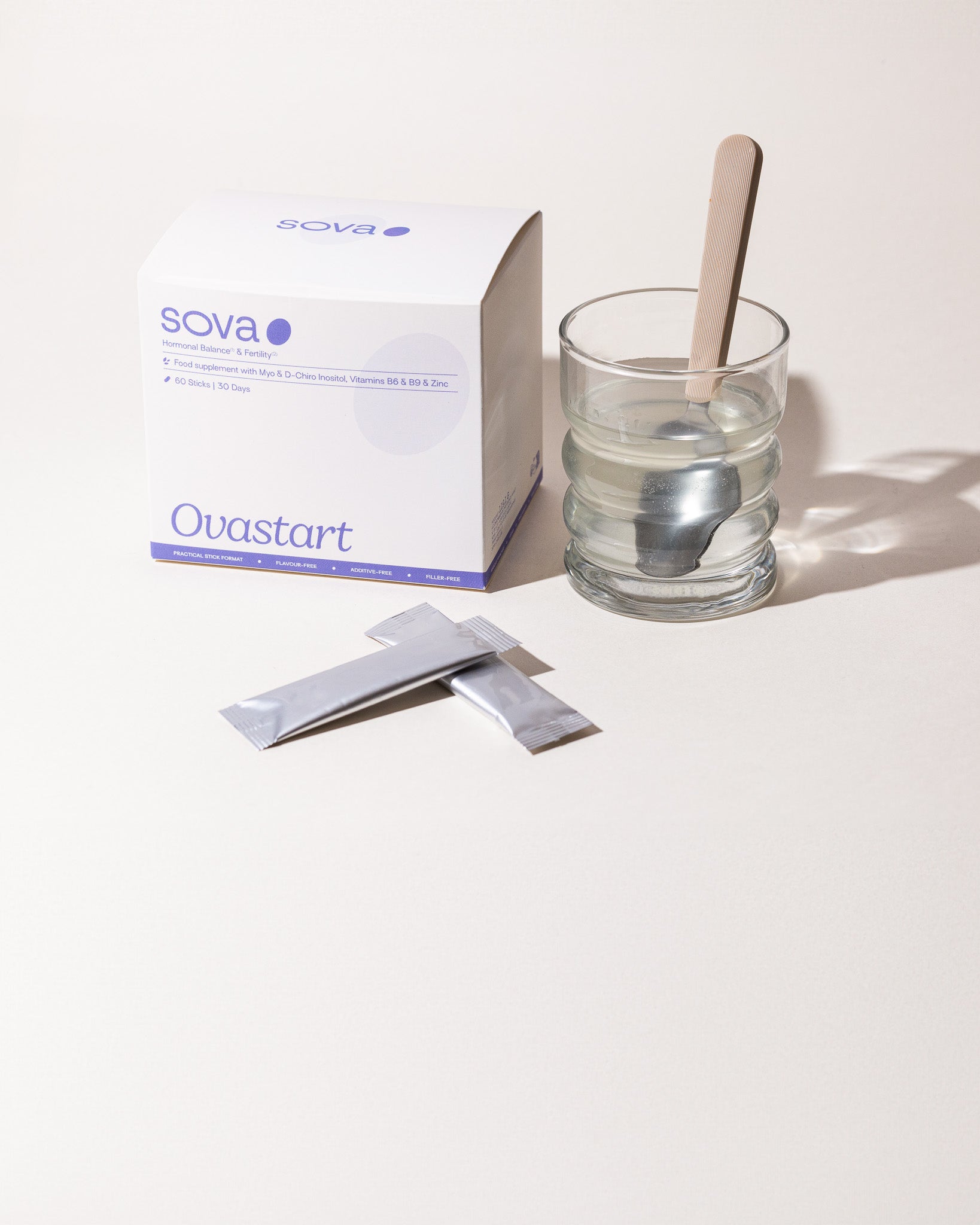
Inositol Powder Supplement for PCOS